

 By
By By Ugochukwu Ugwuanyi
When people dabble in subjects beyond their depth, they are bound to expose ignorance and contradict themselves along the way. That appears to be the case with Seun Kuti, the youngest son of the legendary Fela Aníkúlápó Kuti. Despite admitting that he has never prayed in his life, Seun recently dismissed prayer as ineffectual and childish. “I don’t believe prayer works,” he declared categorically. But who repudiates the efficacy of what they have never practised? His pontification would have carried more weight if it were grounded in personal experience.
In one breath, the Afrobeat musician and activist confessed ignorance of how to pray; in another, he ridiculed those who pray as being theatrical and performative. Yet prayer is integral to human existence and daily life. Worship and prayer go hand in hand. Libations poured and incantations chanted by traditionalists are forms of prayer. The oath taken by public officials at inauguration is framed as prayer. Even the National Pledge recited by citizens is, in essence, a prayer. Perhaps it is experiences such as these that fuel the notion of prayer’s inefficacy.
Seun justified his rejection of prayer by recalling his release from incarceration while prayerful inmates—some of whom had been prophesied freedom—remained behind bars. That anecdote, however, does not redeem the muddle of his arguments in the now-viral video. For instance, his attempt to equate a Christian’s lifestyle with prayer is a false equivalence. “Your life is the prayer. What you do with your life is the only prayer. Your act, your action, is prayer,” he said.
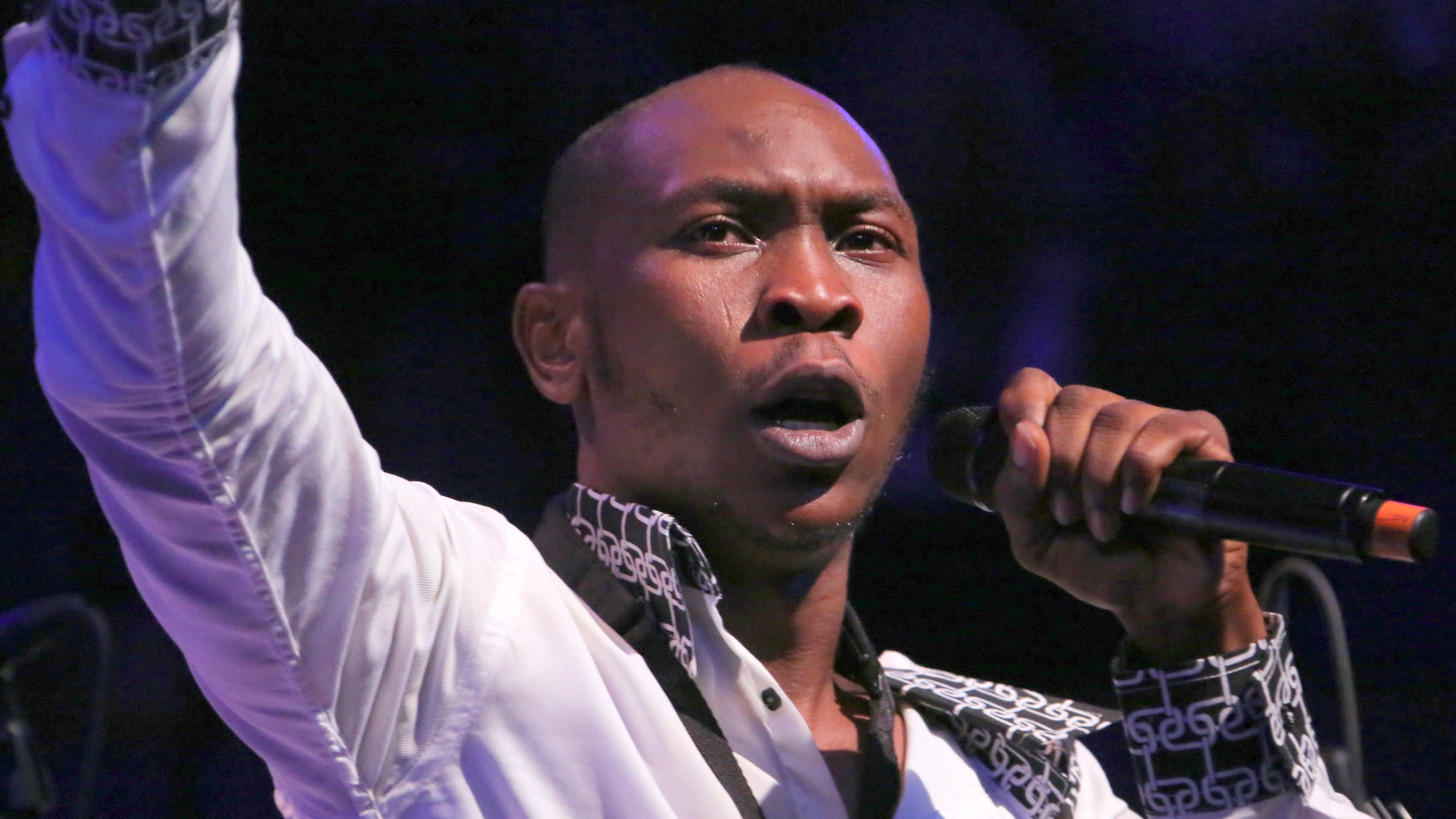
 Afrobeat star Seun Kuti has shared his views on prayer, saying he does not believe in it.
On the face of it, people do not use their lifestyle to seek the face of God, which is essentially the purpose of prayer. Rather than a means of supplication, virtuous living is better suited to soul-winning, where a believer’s conduct becomes a living epistle to unbelievers. One could only agree with Seun’s “lifestyle-as-prayer” analogy in the limited context of “faith it till you get it,” where believers move from praying into living out their expectations until they materialise. Even then, it is doubtful this nuance was what he intended.
For someone who dismisses prayer as eye service, what term would he reserve for believers who “call those things which be not as though they were”? Had he lived in Abrahamic times, could Seun have tolerated Abram—who, childless as he was, lived as the father of multitudes long before Isaac was born?
Thankfully, the glaring holes in Kuti’s reasoning should temper whatever demoralising effect his commentary might have on the faithful. Being an online thought leader does not automatically confer expertise. Given how impressionable his interlocutors appeared in the studio, one can only hope that the influencer’s musings do not shape people’s disposition toward prayer. If that were to happen, many imminent testimonies could be imperilled.
Although Seun briefly referenced other faiths, his fixation was clearly on Christianity, evident in his mockery of speaking in tongues. He needs only to be reminded of Hannah to understand that what he derides is not melodrama. Scripture records in 1 Samuel 1:13-14 that Hannah prayed silently, her lips moving without sound, prompting Eli the priest to mistake her for a drunk. If a high priest of Eli’s stature failed to recognise intense prayer, how much more a sceptical musician? The difference, however, is that Eli, once enlightened, validated her prayer and blessed her. The result was Samuel.
Prayer works. The real problem, as Leonard Ravenhill observed in Why Revival Tarries, is that “we have left agonising and gone into organising.” God does not reward showmanship.
 The Afrobeat pioneer and activist Fela Kuti performs at Orchestra Hall in Detroit in 1986.
Seun went on to argue that prayer is nullified by people’s flawed conception of God, noting that if God’s will is supreme and predetermined, prayers that do not align with it will go unanswered. On this point, he deserves some credit. Indeed, God does not respond to man; man responds to God. Were the Almighty to pander to human whims, His sovereignty would be diminished.
Yet here again, Seun contradicted himself by failing to understand that the prayer expressions he mocked are often prompted by the Holy Spirit. The Holy Spirit—part of the Godhead—helps believers pray in alignment with the Father’s will, as articulated in Romans 8:26-27. This dimension of prayer is both intoxicating and liberating, offering an experience unmatched by any earthly high.
Seun might benefit from such an encounter someday, though it remains the exclusive privilege of believers. By accepting the death, burial, and resurrection of Jesus Christ and confessing Him as Lord, he too could access that spiritual realm. He would not be the first sceptic to later delight in what he once dismissed.
VIS Ugochukwu, a sage, poet and essayist, can be reached on X via @sylvesugwuanyi