

 By
By By Ugochukwu Ugwuanyi
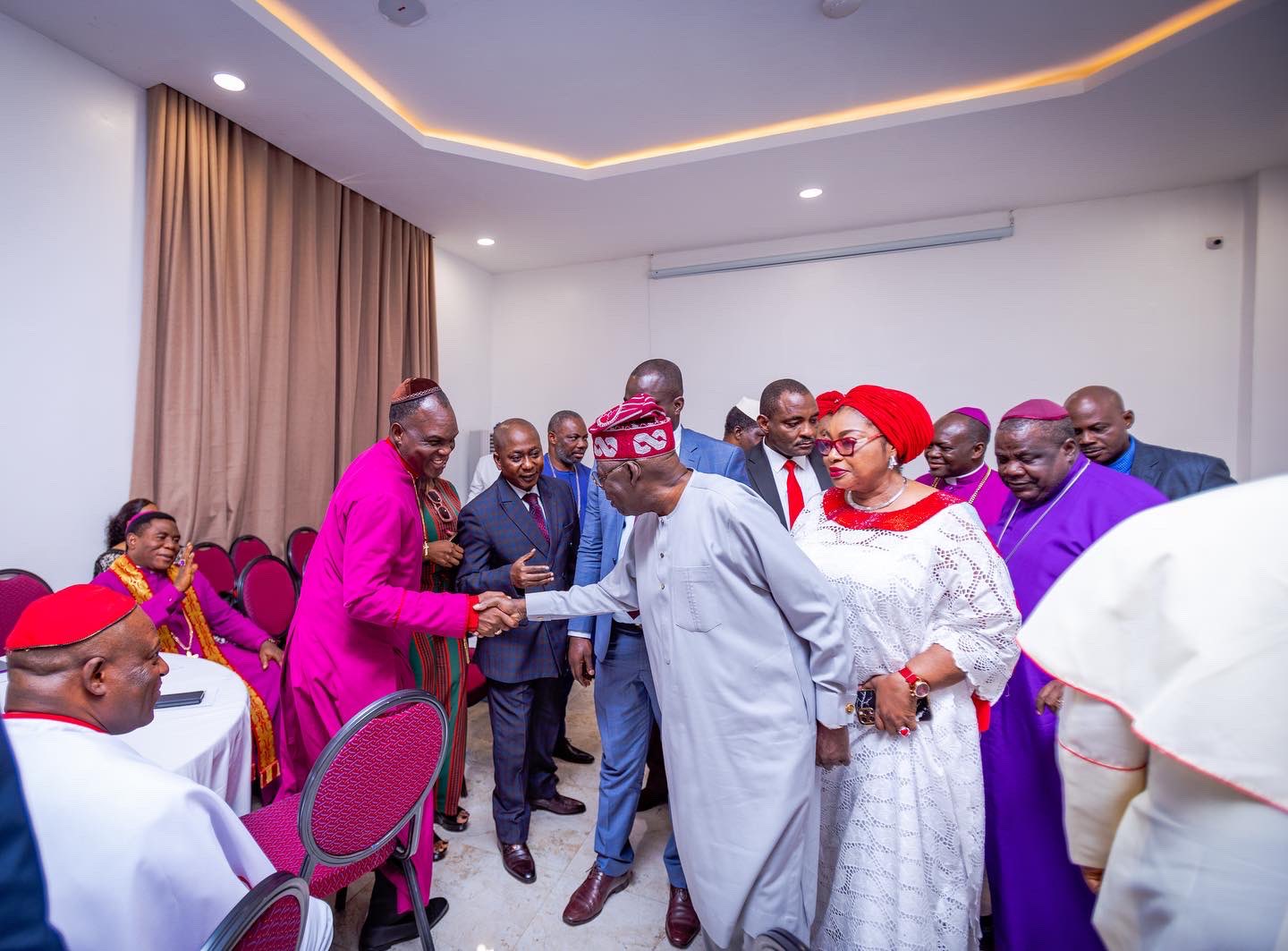
When President Bola Ahmed Tinubu received a delegation from the Christian Association of Nigeria, led by its President, Daniel Okoh, during a Christmas homage at his Lagos residence, he acknowledged the daunting security challenges confronting his administration. Still, he expressed confidence in Nigerians’ spirituality.
“We are very religious. We are prayer warriors,” Tinubu said, urging his guests to remain focused, vigilant, and cooperative.
A wise choice of words, one might say.
Yet there is a distinction between being deeply religious and being prayer-driven. For instance, I do not approach Christianity merely as a religion but as an intimate relationship with God, enabled by the resurrected Christ. To the President, however, whether one is conventionally religious or simply prayerful, everyone has a role to play in confronting insecurity. Analysts may debate whether this civic duty falls under kinetic or non-kinetic strategies in counter-insurgency.
Tinubu spoke appropriately to his audience and should not be misinterpreted as shirking his constitutional responsibility to protect lives, limbs, and livelihoods. Such an accusation would be unfounded, especially given his emphasis on cooperation and vigilance. Citizens cooperate by meeting government halfway, through vigilance, intelligence sharing, and community awareness. As Thomas Jefferson famously observed, “The price of liberty is eternal vigilance.”
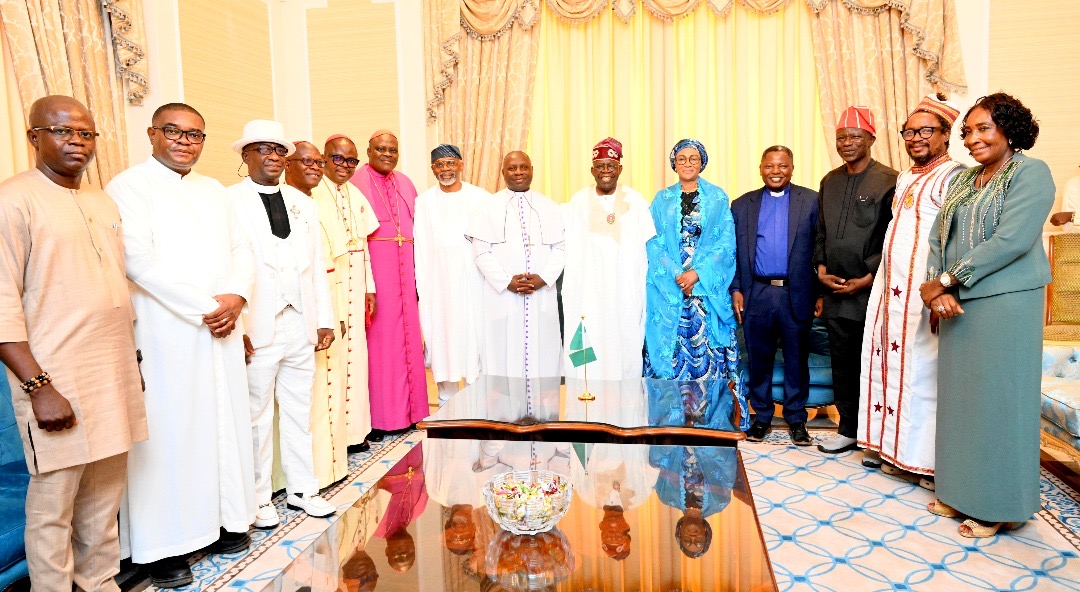 President Bola Ahmed Tinubu meets with a delegation of the Christian Association of Nigeria led by Daniel Okoh at his Lagos residence on Friday, where he assured Nigerians of improved security outcomes.
There is, however, something about Nigeria’s war on terror that consistently drives authorities to solicit prayers from citizens. In 2015, the Adamawa State government announced it had earmarked ₦200 million for prayers seeking divine intervention against Boko Haram. In 2019, the Nigerian Army organised a seminar on spiritual warfare themed “Countering insurgency and violent extremism in Nigeria through spiritual warfare.”
Then-Chief of Army Staff, Tukur Buratai, argued that the military alone could not defeat terrorism without religious institutions stepping to the forefront of the “spiritual battle.” Similarly, in 2021, the then Theatre Commander of Operation Hadin Kai, Christopher Musa, attributed the surrender of over 1,000 Boko Haram fighters to Nigerians’ prayers, describing it as “divine intervention.”
Against this backdrop, when President Tinubu urges citizens to wage war on their knees in support of soldiers on the battlefield, he knows precisely what he is saying. Indeed, he offered perhaps his clearest justification during the CAN meeting when he disclosed that Nigeria’s “ungoverned spaces are so large.”
Ungoverned spaces, areas where state presence is weak or absent, enable non-state actors such as bandits, kidnappers, terrorists, and insurgents to operate freely. One such area, reportedly in Sokoto State, recently housed an ISIS-linked camp that was struck by U.S. air raids. One might even wonder whether prayers played a role in prompting President Donald Trump to unleash decisive force against violent militias terrorising Nigerians.
Where the reach of the state ends, the appeal to divine intervention begins. Scripture captures this aptly: “The eyes of the Lord run to and fro throughout the whole earth, to show Himself strong on behalf of those whose heart is loyal to Him” (2 Chronicles 16:9). This may explain why leaders so often solicit public prayers.
While writing this piece, I attempted to determine what proportion of Nigeria’s 923,768 square kilometres constitutes ungoverned space. Google’s AI Overview offered this telling response: “There is no official, specific percentage or total land size cited for Nigeria’s ungoverned spaces.” The absence of such critical data underscores the enormity of the challenge, much like the difficulty of policing Nigeria’s 4,477-kilometre land border. In such circumstances, Abuja could indeed use divine assistance.
Perhaps the prayer point should be for God to watch over Nigeria’s ungoverned spaces, and transform them into terrain hostile to those who seek to devour the nation.
Scripture again comes to mind: “Pray for the peace of Jerusalem: they shall prosper that love thee.” In Nigeria’s case, the prayer is less about prosperity and more about preservation. Ezekiel 9:4-6 suggests that interceding for one’s troubled land can be a means of insulation against chaos and its grim consequences. It is, therefore, in the enlightened self-interest of Nigerians to heed the President’s call to become prayer warriors in the fight against terrorism.
That said, one cannot help but wonder, purely aloud, what form of participation or support is expected from atheists and others who do not believe in prayer.
VIS Ugochukwu, a sage, poet, and essayist, tweets @sylvesugwuanyi