

 By
By Israel’s mass strikes across Lebanon in a matter of minutes left hundreds dead, with civilians and children bearing the brunt of the devastating massacre.
Lebanon woke up in mourning on Thursday, a day after one of the deadliest days in the country’s recent history, in a wave of deadly, indiscriminate Israeli air strikes that lasted just minutes but left over 200 dead.
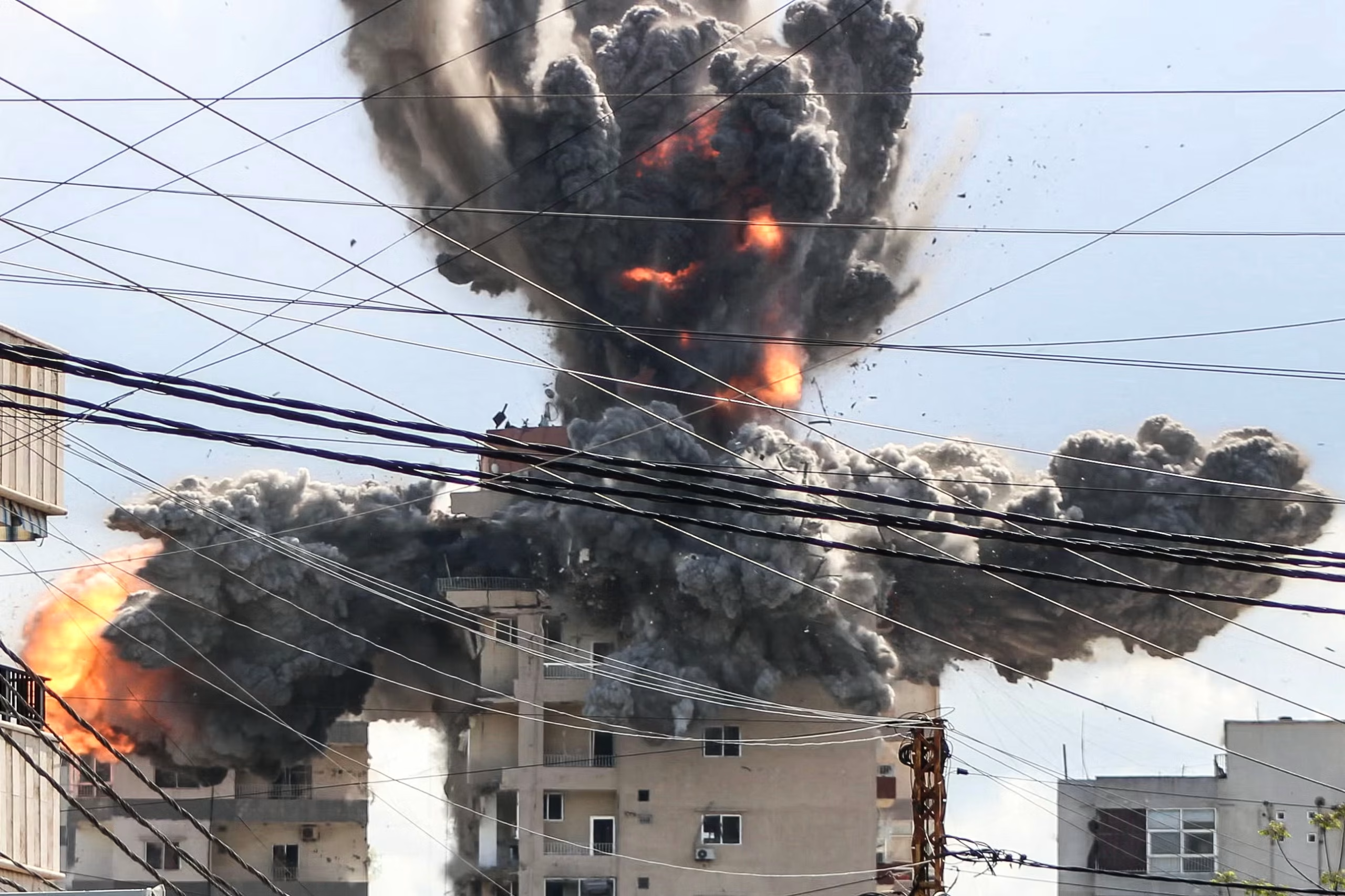
The attacks on Wednesday afternoon saw Israel launch over 100 strikes in just 10 minutes, targeting Beirut, its southern suburb, southern Lebanon, the Bekaa Valley and Baalbek.
The Israeli army openly boasted about the scale and speed of the assault, but what emerged on the ground was not a battlefield, but scenes of civilian carnage.
Behind the numbers are lives abruptly cut short; families buried under the rubble of their homes; children pulled from debris of residential towers; entire buildings reduced to dust with residents still trapped inside.
Families killed in their homes
Many of those killed were in their own homes after some 50 Israeli fighter jets dropped 160 bombs on Lebanese residential areas at around 2pm local time (1am UTC/12pm BST).
Homes in densely populated neighbourhoods were flattened without any prior evacuation orders.
In Hayy el-Sellom, Alia Badreddine, her elderly mother, and her three adult children, Mohammad, Ali and Fatima el-Atrach, were killed when a strike hit their home while they gathered.
In Kayfoun, Dr Nadim Chamseddine, his wife Asrar, and their three young children were killed in their home, wiping out an entire family.
In Tallet el-Khayat, poet Hatun Salma and her husband were killed together in a strike on their home.
“The South is gone. The house is gone. The olive groves are gone. Life is gone,” wrote her sister, Maha Salma, a Lebanese journalist.
In areas such as Mazraa, Ain el-Mreisseh and Bashamoun, entire blocks burned as people scrambled through smoke and debris searching for loved ones.
Survivors described running through the streets as missiles struck one after another.
“We saw death with our own eyes,” one woman told L’Orient-Le Jour newspaper after fleeing a strike that hit near her home.
Another survivor recalled seeing a residential building collapse as debris fell around them, with families still inside.
“There were many children inside,” she said after fleeing the scene.
One household of 13 was struck, killing multiple members and leaving children critically injured, the report added.
Elsewhere, a mother shielded her family with her body as a building collapsed, suffering severe injuries to her heart and lungs.
 Images of victims shared on social media reflect a cross-section of civilians, including children, media workers, the elderly, and women [TNA/social media]
Children among the victims
Rescue workers and residents spoke to local media about missing children, with many feared buried under rubble.
In one case, a baby just 40 days old was carried into the hospital in the arms of a woman who had rushed from the scene of a strike.
In another, images of missing children from a targeted building circulated online as families desperately searched for them.
“There were many children inside,” one survivor said after a strike hit a residential building in the Bir Hassan area of Beirut.
Talin Ahmed Hamzi and Yasmine Hussein Alam, two students at Al Karama School in Shueifat, were killed in Israeli airstrikes, according to the school.
Hospitals overwhelmed with dead and injured
Hospitals across Beirut quickly became scenes of chaos as doctors described an unprecedented influx of bodies and critically wounded patients.
Morgues overflowed as additional refrigeration units had to be opened to store remains and body parts, the Al-Akhbar newspaper reported.
At one hospital, medical staff said the number of dead far exceeded the number of survivors arriving alive, according to the report.
Many of the injured required emergency surgeries, particularly for severe head trauma, while intensive care units filled within minutes.
Meanwhile, ambulances flooded the streets, with the Lebanese Red Cross alone deploying around 100 vehicles, while hospitals issued urgent calls for blood donations.
“What happened exceeded all expectations,” Dr Saad Bou Hmein at Beirut Government Hospital told Al-Akhbar, describing an unprecedented influx of casualties.
The Lebanese Civil Defence said that in Beirut alone, 92 people were killed and 742 were injured, while 61 were killed and 200 were wounded in Beirut’s southern suburb.
In Baalbek, 18 people were killed, and 28 were injured, with further casualties reported in Hermel, where nine were killed, and six were wounded. In Nabatieh, 28 people were killed, and 59 were injured, while 17 were killed and six were wounded in the Aley district.
In Sidon, 12 people were killed, and 56 were injured, and in Tyre, 17 were killed, and 68 were wounded.
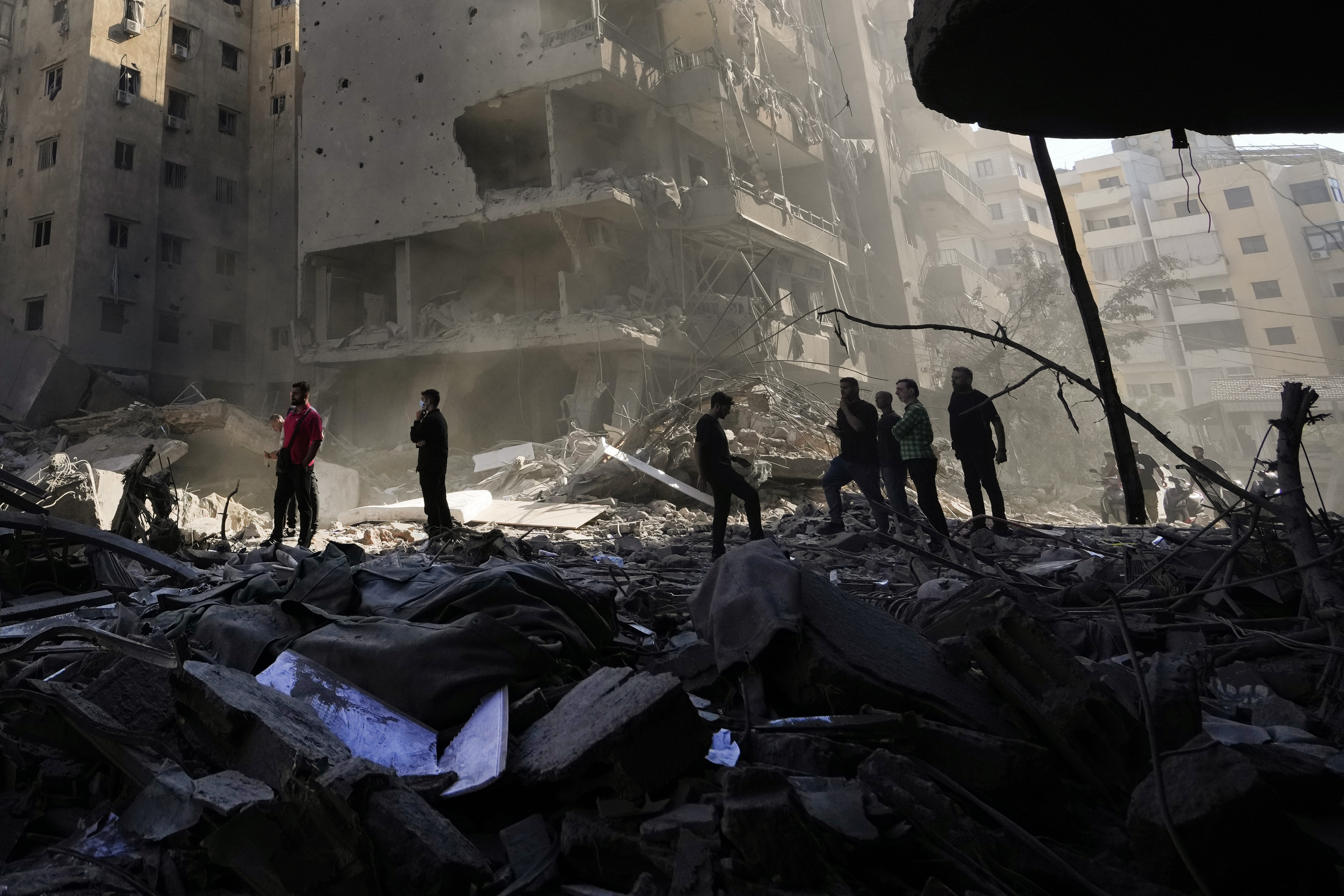 People at the site of the assassination of Hezbollah leader Hasan Nasrallah in Beirut’s southern suburbs on Sunday. (Hassan Ammar/AP)
Media workers among dead
At least two media workers were killed in the strikes. Lebanese radio presenter Ghada Dayekh died when an Israeli strike destroyed her apartment building in Tyre, while Suzanne Khalil, who worked for Al-Manar TV, was killed in a strike on Kayfoun in the Aley district.
Their deaths brought the number of journalists killed by Israel in Lebanon since 2 March to at least six.
The Committee to Protect Journalists condemned the killings as part of a wider pattern of Israeli attacks affecting civilians and media workers, raising serious concerns under international law.
Survivors of past tragedy killed
Some victims had already endured previous national trauma. According to local media reports, the widow of a victim of the 2020 Beirut port explosion was among those killed, leaving behind two young daughters.
Alaa Mohammad al-Attar was part of a group representing the families of those killed, injured and affected by the Beirut port blast, where she had long campaigned for truth, justice and accountability for her husband, Hamad Medhat al-Attar.
Rana Hessaiki Mlaheb, a young woman from Baissour, was killed in an Israeli strike on Kayfoun while buying medication to distribute to displaced families affected by the war, which had forced over 1.1 million people to leave their homes.
Young soldiers among the dead
Among the dead were also members of the Lebanese army, including four soldiers killed in Israeli strikes across the country.
They were identified as Staff Sergeant Hussein Khaled Yassin, 32, from Kfouar in Nabatieh, who was married and had one child; First Sergeant Mohammad Bassam Shhitli, 29, from Shmistar in Baalbek; conscript Ali Hassan Qassem, 19, from Mazraat al-Dallil in Baalbek; and trainee Ali Nassereddine, 22, from al-Hermel.
All four were described as having received commendations from the army leadership during their service.
A country in mourning
Lebanon declared a national day of mourning on Thursday as the scale of the massacre became clear. More than 200 people were killed and over 1,000 wounded in the highest single-day death toll in the country since the start of the current war.
Many bodies remain under rubble, suggesting the final toll may rise further.
The strikes had come just hours after a ceasefire agreement between the United States and Iran was announced, in which Lebanon was supposed to be included.
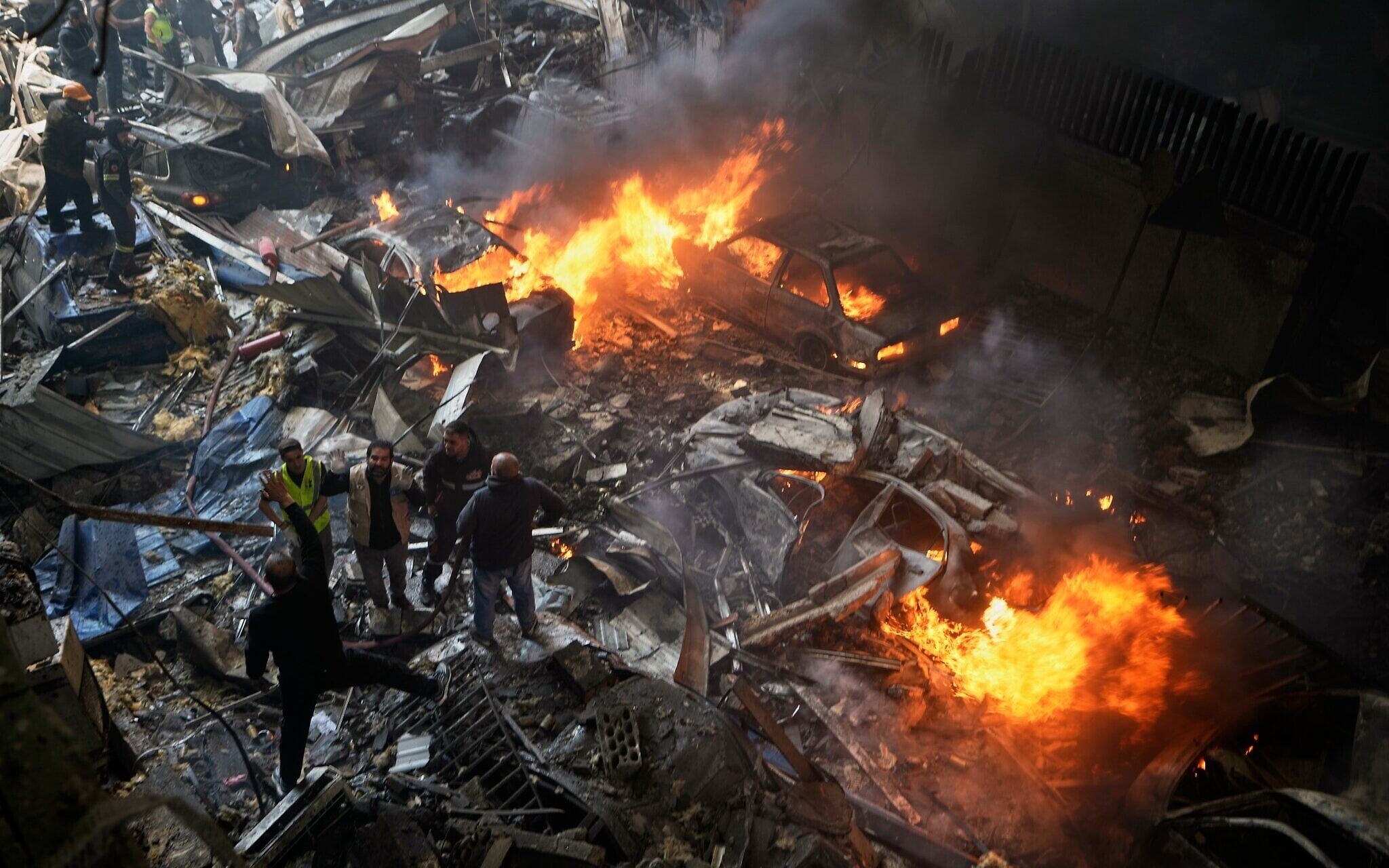 First responders and volunteers search through the rubble beside burning cars at the site of an Israeli airstrike that struck an apartment building in Beirut, Lebanon, April 8, 2026. (AP Photo/Bilal Hussein)
AfrikTimes takes a look at some of the civilians killed in Israel’s most recent massacre in Lebanon.
Ghada Dayekh
 Ghada Dayekh, a presenter and reporter at the privately owned Sawt Al-Farah radio station, was killed in an Israeli air strike on her home in the southern city of Sour. She had worked at the outlet since the 1980s and had been broadcasting on air for the past 37 years.
Suzanne Khalil
 .A journalist and presenter with Al-Manar TV channel, Suzanne Khalil was killed in an Israeli attack in the village of Kaifoun in Mount Lebanon governorate.
Khatoon Salma Kershet
 Khatoon Salma Kershet, a poet and researcher, was killed along with her husband Mohammed by a strike on Tallet al-Khayyat in central Beirut. Her death was announced by the American University in Beirut (AUB), of which she was a graduate.
Talin Ahmed Hamzi and Yasmin Hussein Allam
 Student Talin Ahmed Hamzi and graduate Yasmin Hussein Allam, both from Al-Karama High School in Choueifat, were killed in Israeli strikes, according to the school’s Instagram page.
Rana Hessaiki Mlaheb
Rana Hessaiki Mlaheb was killed by an Israeli strike on the village of Kaifoun in Mount Lebanon governorate. According to L’Orient Today, she was killed while buying medication to distribute to those displaced by Israeli air strikes.
Nadim Shamseddine
 A physician, Nadim Shamseddine was killed in a strike on Kaifoun along with his wife Asrar and their three children. L’Orient Today said the strike hit their family home, where Shamseddine also carried out some of his work.
Ola Attar
 Ola Attar was killed in an Israeli strike on Beirut, according to L’Orient Today. Her husband, Hamad Attar, was killed by the Beirut Port explosion on 4 August 2020. She leaves behind two children.