

 By
By By: Oluwatayo Ogundare and Lawrence Oseghale
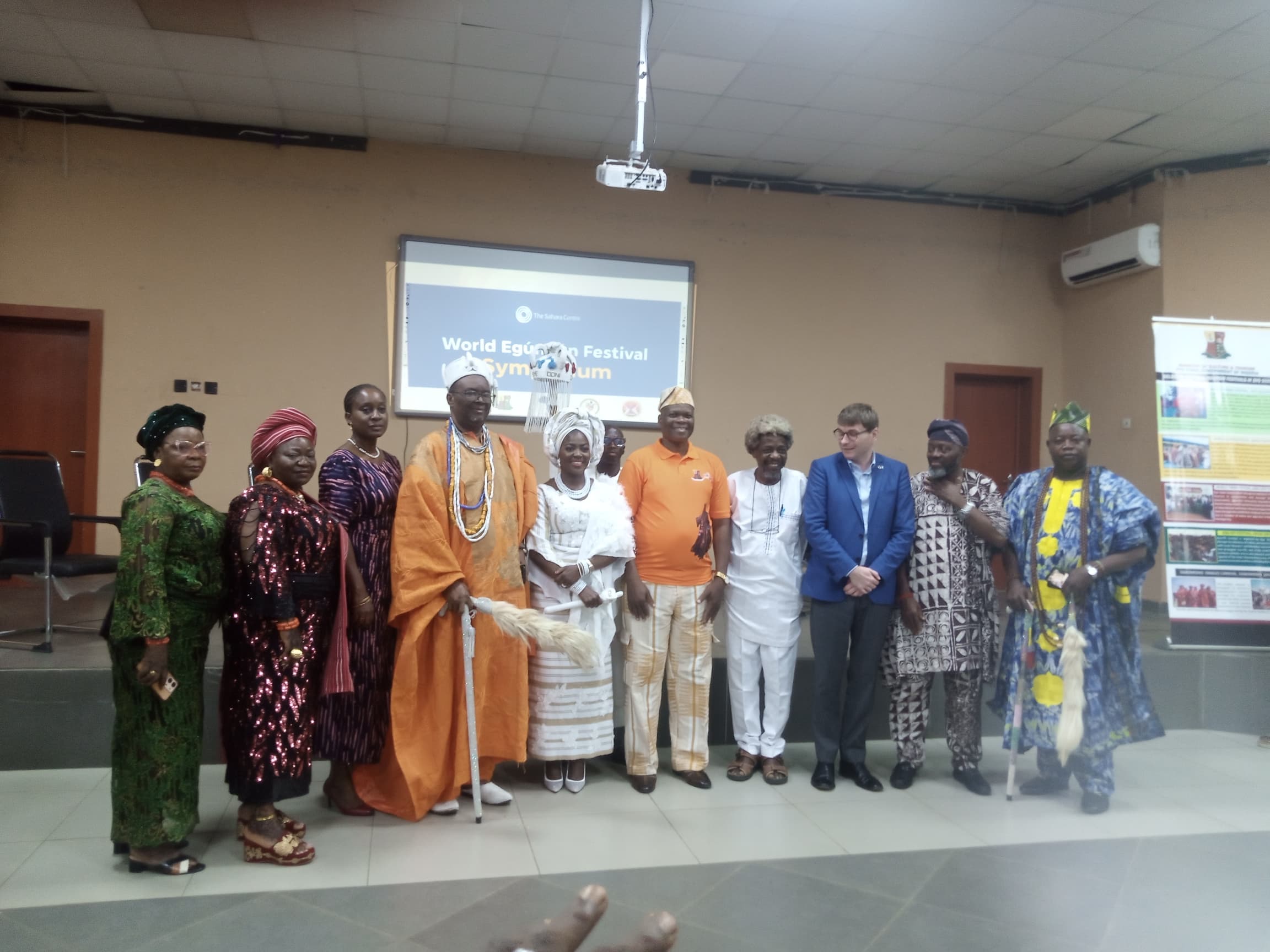
As part of activities lined up for the World Egúngún Festival 2026, the Oyo State Ministry of Culture and Tourism on May 1, 2026, convened a symposium at the New Local Government Hall, Secretariat, Ibadan.
The symposium brought together scholars, cultural custodians, and industry stakeholders who discussed how egúngún practitioners can balance sacred heritage with emerging opportunities within the global creative economy.
The symposium, themed “The Creative Economy of Egúngún,” was organised by Adayeba Tourism Foundation and the Ministry of Tourism and Culture under Commissioner Wasiu Olatunbosun in conjunction with Ijo Oje Parapo Welfare Association Nigeria and Overseas, The Sahara Centre, and Institute of African Studies, University of Ibadan.
Discussions centred on how the Egúngún practitioners can balance sacred heritage with emerging opportunities within the global creative economy. While presenting the keynote address, Dr. Adun Okupe, Executive Director, Sahara Centre, challenged long-standing narratives that portray indigenous practices as inferior, noting that such perceptions undermine the depth and endurance of cultural heritage. She emphasised that traditions like Egúngún have demonstrated resilience over time and should instead be seen as models of sustainability.
.“Over the years, we’ve been made to believe that what we practice is primitive. It is important to note that a culture that has lasted this long shows us its resilience, relevance, and it teaches us about understanding what sustainability can be,” she said.
Dr. Okupe further expanded the discourse beyond preservation, calling for a deliberate exploration of the creative economy embedded within the Egúngún tradition. According to her, elements such as costuming, fashion, and music form part of a broader value chain with economic potential, particularly for younger generations.
She described the Egúngún masquerade as a medium of ancestral communication that has evolved across time and space beyond Africa. Dr. Okupe urged custodians of the culture to approach its promotion with strategic intelligence and respect, insisting that not all aspects should be made easily accessible, as what is valuable must be protected, including its intellectual and cultural integrity.
“We also need to understand the danger that comes when you try to package the spiritually of this practice for tourism. As custodians of our culture, we must see the relevance of not making our heritage easily accessible because what is valuable must be protected . We have to treat it with strategic intelligence and respect. We must protect the intellectual property of this practices,” she added.
In a panel presentation, Abisoye Elesin examined the survival of Egúngún practice within the urban landscape of Lagos. Speaking on the paradox of sustaining a deeply spiritual tradition in a cosmopolitan environment, he traced its roots on Lagos Island to migrants from Yoruba hinterlands such as Oyo and Ile-Ife, as well as returnees from Brazil, notably the Aguda and Saro communities.
He explained that these groups reshaped the practice through diasporic influences, with the leadership structure headed by the Aláàgbà. He also identified notable Egúngún lineages on the island, including Paramole, Pelebi, Labijan, and Bamgbose, as evidence of its continued adaptation.
Also speaking, Mr. Biodun Ashiyanbi, Research Fellow African Visual Arts Digital Heritage, focused on Èkú, Ancestral Presence and Creative Economy of Egungun. He noted that èkú is a central aesthetic form that drives the economy during the festival.
According to him, the intricate layering of fabrics such as jepe, okolombo, and èkú, combined with detailed appliqué and embroidery, creates a visual identity that sustains market demand, encourages competition among Egúngún groups, and supports seasonal economic cycles. He argued that in addition to its symbolic value, èkú should be recognised and developed as a viable economic investment within the cultural industry.
The event also featured other panelist sessions, live Egúngún performances and goodwill messages from invited guests, further reinforcing the cultural and communal significance of the tradition.
In his closing remarks, Professor Olorunyomi, from the Institute of African Studies, University of Ibadan, called for the integration of indigenous languages into formal education as a means of preserving and transmitting m knowledge. He also advocated for the digitisation of all scholarly contributions from the symposium in collaboration with the ministry, traditional institutions, and regulatory bodies.
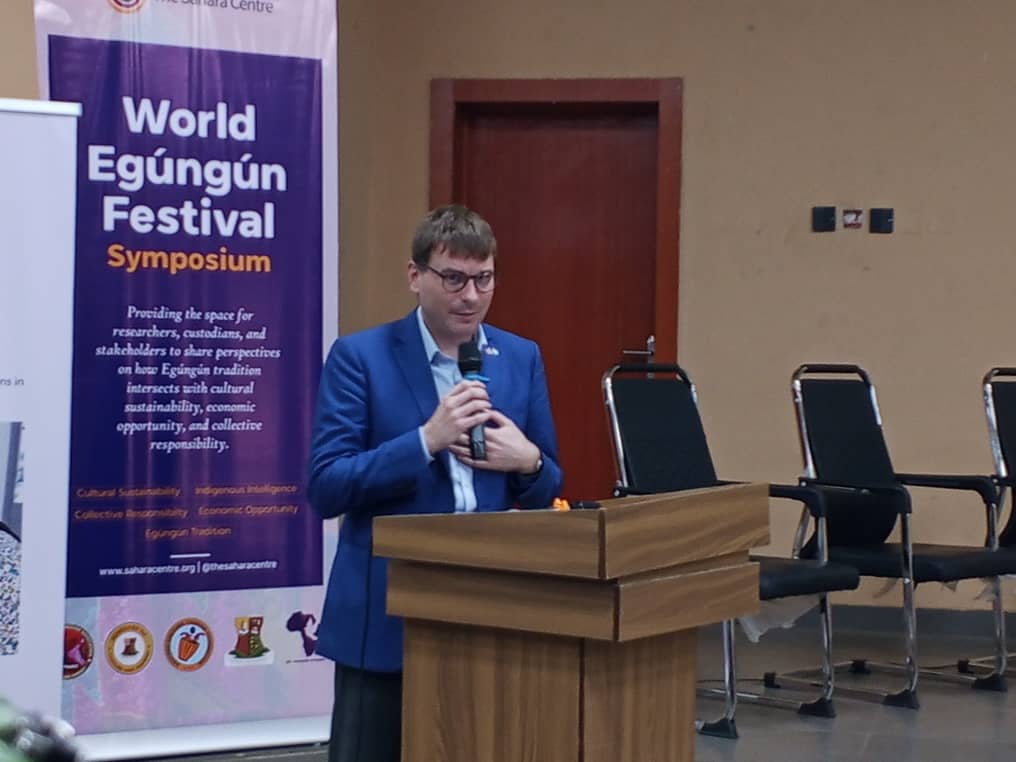
Among dignitaries in attendance included Permanent Secretary A.R. Babalola; Olori Ashley Folashade Ogunwusi; Special Adviser on Culture, Prince Adisa; Director of Tourism, Mrs. M.A. Agboola; Mr. Simon Field, Deputy Head of Mission, British Deputy High Commission, Lagos; Baba Ojebode, Chairman of Ijo Oje Oyo Chapter; and Dr. Kola Lawal of The Polytechnic, Ibadan, among others..