

 By
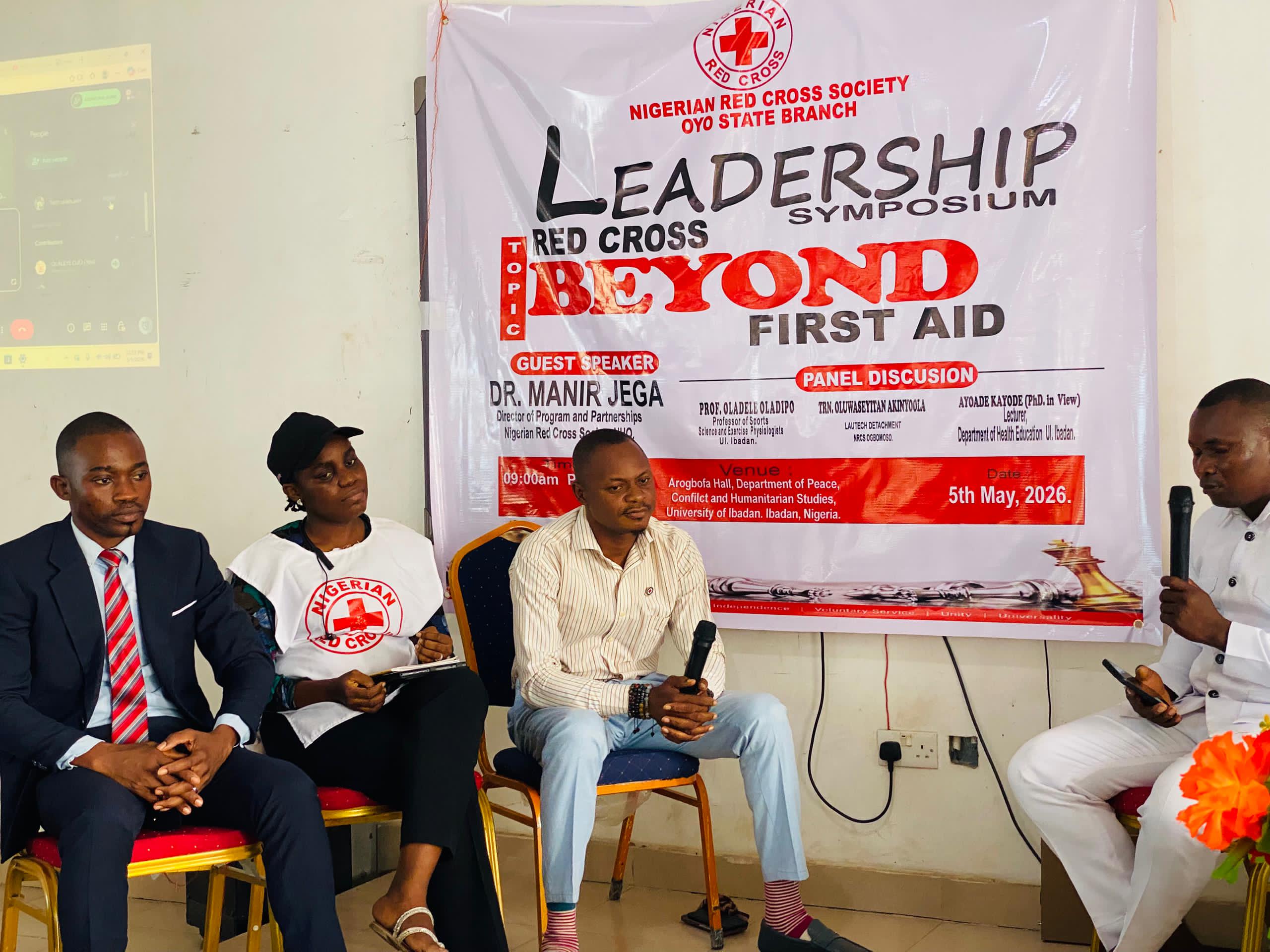
By The Nigerian Red Cross Society, Oyo State Branch, on Tuesday, May 5, held a leadership symposium at the Department of Peace, Conflict and Humanitarian Studies, University of Ibadan, Ibadan, as part of efforts to reposition the role of volunteers beyond emergency response.
The symposium, themed “Red Cross Beyond the First Aid,” was organised to discuss the relevance of the organisation within communities and to explore untapped opportunities across sectors outside the traditional medical focus.
Delivering his address, the guest speaker, Dr. Manir Jega, Director of Programmes and Partnerships at the National Headquarters, stressed that the organisation must evolve beyond reactive interventions. According to him, the Red Cross must expand its preventive efforts in areas such as health and education as such gaps present opportunities for meaningful impact
“The Red Cross is more than first aid. Any branch that waits for emergencies before they act can never succeed and it will be very difficult for partners to engage them. Branches are encouraged to be visible and become problem solvers. We encourage branches to be able to practically prepare for prevention in health, education, among others. Education has remained a very big challenge and there are a lot of out-of-school children. These are areas we can look into for relevance.”
While acknowledging funding limitations, he observed that the Oyo State branch has distinguished itself in visibility.
“Oyo branch is categorised in category C in terms of funding. But in terms of visibility, Oyo is ranked as category A+. I know there are deliberate efforts they make to ensure this. Oyo is doing very well to ensure visibility,” he added.
Dr. Jega further emphasised the need for, strategic partnerships, volunteer recognition to strengthen accountability, and sustained youth investment. He described them as drivers of growth, transparency, and community-level information dissemination, as well as agents that challenge unethical practices in the society.
“Over 70% of Red Cross members are youth. The youth ensure the continuous presence of the Red Cross in their communities. They are the drivers of growth and development in their community. They ensure information reaches the whole community of either the beneficiaries or the providers. The youths are like a pressure group. Without the youth, there won’t be transparency because it is only the youth that ask questions,” he said.
The event also featured panel sessions where experienced members examined the interdisciplinary nature of the organisation and its expanding scope.
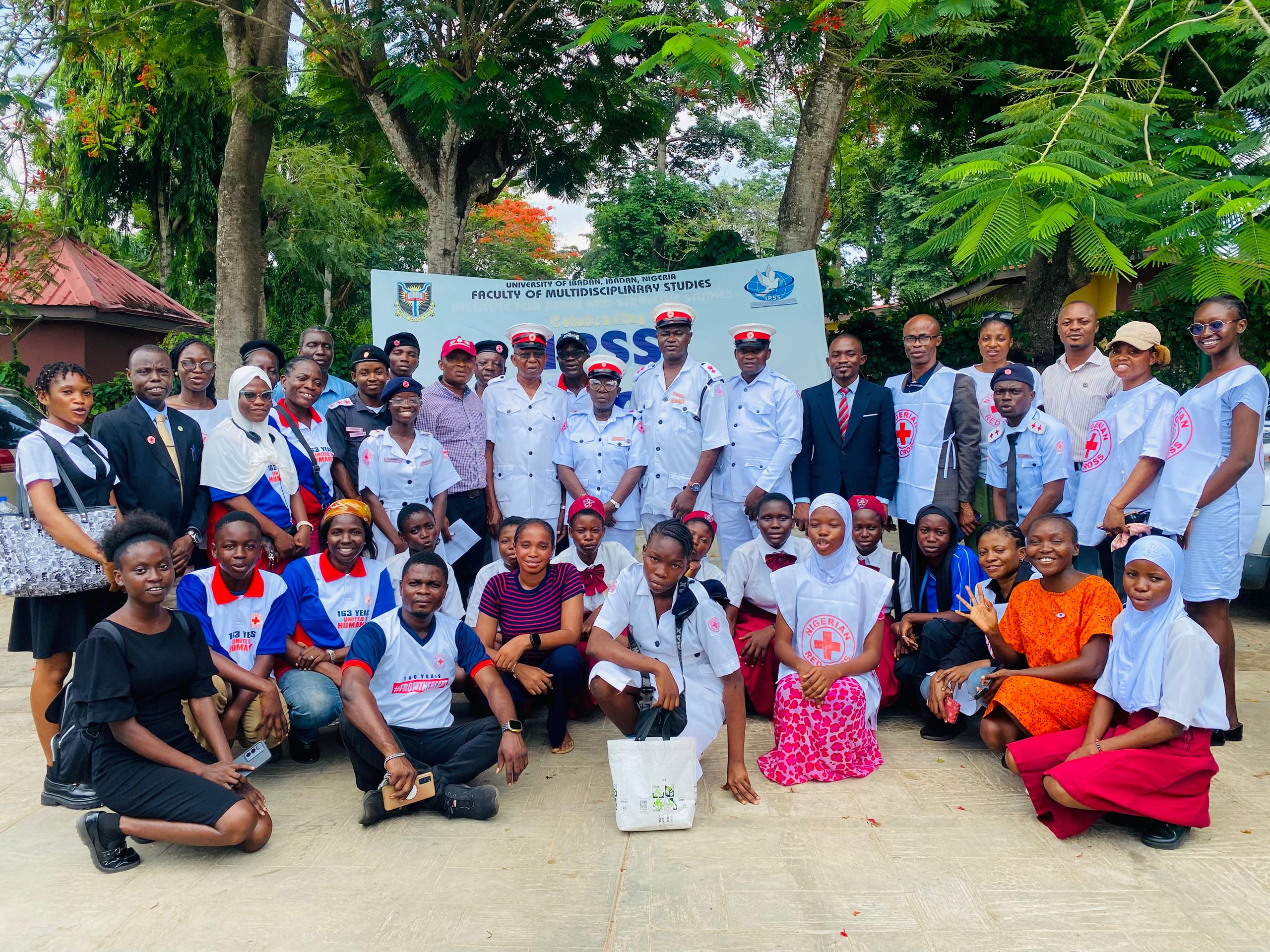
Speaking during the session, Mr. Ayoade Kayode, a former commandant of the UI detachment, noted that participation in the Red Cross cuts across professions, stating that everybody is welcome to express their disciplines.
Similarly, Osun State Branch Secretary and trainer, Ebenezar Ogunleye, highlighted the versatility of roles within the organisation. He explained that individual talents can be adapted to humanitarian service.
“The same way you look at yourself within the confines of Red Cross is what you’ll bring from it. If you like drawing, as an artiste, you’re also a doctor. There are some people that look at your painting and find relief psychologically,” he noted.
He outlined various professional pathways within the Red Cross, including logistics, procurement, disaster management, counselling, and public health.
Adding to the discussion, trainer Boluwatife Lawal pointed to the organisation’s role in advocacy and communication, stating that “the Red Cross is involved in awareness, through which you can join the media and advocacy,” while encouraging members to maximise their experiences for personal and professional development.”
Dignitaries present at the event included the Oyo State Branch Chairman, Engr. Olaleye Babalola Famade; Branch Treasurer, Past Isaac Taiwo Oladele; immediate past Miss Red Cross Oyo State, Adura Alalade; Divisional Secretary for Ibadan North, Mr. Bassey; alongside other division representatives and youth leaders.
The Nigerian Red Cross Society (NRCS) was officially established in 1960 through an Act of Parliament, recognising the society as a voluntary humanitarian organisation in the country. The society often provides relief and support including emergency items like food, water, shelter and media care to victims of natural and man-made disasters across the 36 states and the Federal Capital Territory, Abuja.