


 By
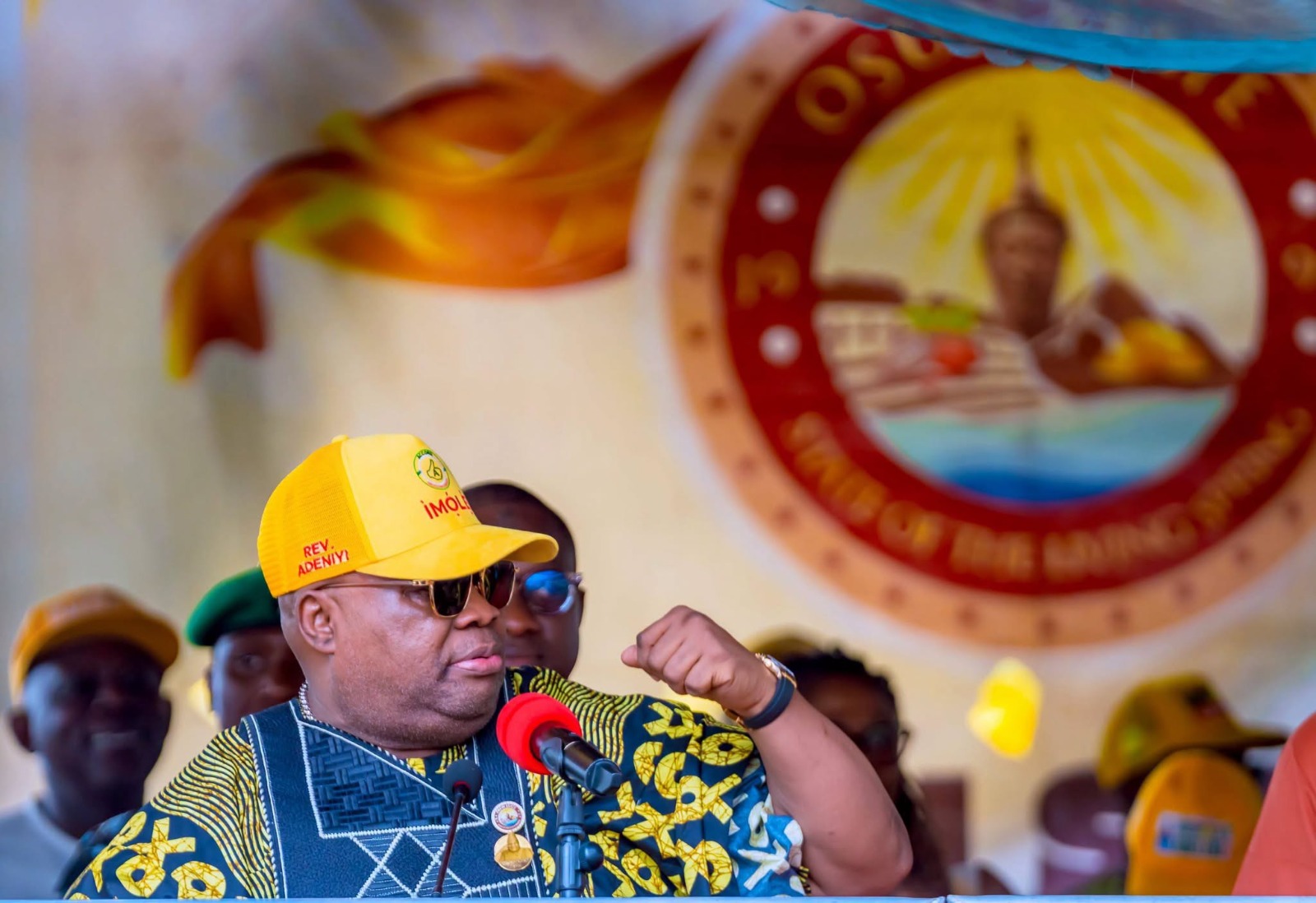
By The Independent National Electoral Commission has declared Governor Ademola Adeleke of the Accord Party winner of Saturday’s Osun State governorship election, returning him to office for a second term after he secured victory in 19 of the state’s 30 local government areas.
The State Returning Officer, Vice-Chancellor of the Federal University, Oye-Ekiti, Prof. Joshua Ogunwole, announced the result at the INEC collation centre in Osogbo at about 7:24 a.m. on Sunday, roughly 24 hours after polls opened across the state on Saturday.
Adeleke polled a total of 511,067 votes to defeat his closest rival, Bola Oyebamiji of the All Progressives Congress, who won 11 local government areas. The African Democratic Congress candidate, Najeem Salaam, trailed in third place.
Declaring the outcome, Ogunwole read out the full breakdown of votes cast: Accord (A) polled 511,067; AA, 2,308; AAC, 1,458; ADC, 17,180; ADP, 2,946; APC, 444,815; APGA, 1,475; APM, 234; APP, 114; BP, 111; NNPP, 118; PRP, 83; SDP, 155; YPP, 534; and ZLP, 2,482. Total valid votes stood at 985,079, with 207 rejected votes, out of 1,005,800 total votes cast and 1,010,684 accredited voters.
“That Ademola Nurudeen-Jackson Adeleke, having satisfied the requirements of the law, is hereby declared the winner of the August 15 governorship election and returned elected,” Ogunwole announced, after agents of the political parties present had signed the results.
Local Government Breakdown
Adeleke’s Accord Party won in Ede North, Ede South, Ejigbo, Iwo, Egbedore, Ife North, Ife East, Ife Central, Oriade, Ifelodun, Orolu, Ayedaade, Ayedire, Odo-Otin, Boluwaduro, Ilesa West, Ifedayo, Osogbo and Ila local government areas.
Oyebamiji’s APC took Irewole, Isokan, Olorunda, Atakumosa East, Atakumosa West, Ilesa East, Boripe, Irepodun and Obokun, along with Ife South and Olaoluwa, bringing his total to 11.
A local-government-by-local-government tally, in Accord/APC/ADC order, showed the scale of the contest across the state. In Boluwaduro, Adeleke narrowly edged Oyebamiji 7,118 to 7,050, with the ADC managing 179. Ede South went comfortably to Adeleke, 26,188 to 6,219, with the ADC picking up 390. In Ife North, Adeleke polled 13,879 against Oyebamiji’s 9,613, with the ADC on 333, while Ilesa West gave Adeleke 16,196 votes to Oyebamiji’s 12,756 and the ADC’s 673.
Ifedayo was another tight Adeleke win, 7,427 to 6,836, with the ADC trailing on 115. Ilesa East, by contrast, went to Oyebamiji, who polled 16,208 against Adeleke’s 12,280, with the ADC managing 504. Ife Central favoured Adeleke, 21,171 to 15,913, with the ADC on 747, while Boripe swung to Oyebamiji, 19,963 to 12,448, with the ADC on 379.
Irepodun and Obokun both went to the APC, where Oyebamiji polled 15,713 to Adeleke’s 14,504 in Irepodun, and 16,120 to 12,023 in Obokun, with the ADC picking up 249 and 205 votes respectively. Orolu returned to Adeleke, 12,352 to 10,622, with the ADC on 236, and Osogbo gave the governor his single largest haul, 36,480 votes against Oyebamiji’s 30,474, with the ADC polling 1,503, its strongest single-LGA showing outside Ejigbo.
Oriade went comfortably to Adeleke, 21,343 to 14,863, with the ADC on 423, as did Odo-Otin, 18,003 to 15,435, with the ADC on 377. Ife East gave Adeleke 27,201 votes to Oyebamiji’s 18,600, with the ADC polling 935, and Ifelodun followed a similar pattern, 21,107 to 18,396, with the ADC on 509.
Atakumosa West went to Oyebamiji, 10,037 to Adeleke’s 7,479, with the ADC on 213. Iwo was a solid Adeleke win, 27,085 to 19,660, with the ADC on 588, and Ede North was even more emphatic, 35,427 to 10,283, with the ADC managing just 307. Ila rounded out Adeleke’s column at 16,211 to Oyebamiji’s 12,934, with the ADC on 259.
Irewole delivered Oyebamiji one of his widest margins, 29,972 votes to Adeleke’s 10,934, with the ADC on 275. Ayedire went to Adeleke, 11,073 to 9,910, with the ADC on 148, while Atakumosa East favoured Oyebamiji, 9,936 to 7,872, with the ADC on 333. Egbedore returned to Adeleke, 19,278 to 11,194, with the ADC on 363, and Ayedaade followed suit narrowly, 16,681 to 15,719, with the ADC on 331.
Isokan went to Oyebamiji by a slim margin, 14,063 to 13,765, with the ADC on 384, as did Olaoluwa, 10,782 to 10,063, with the ADC on 213, and Ife South, 14,678 to 13,507, with the ADC on 290. Ejigbo stood out for the ADC’s best showing anywhere in the state, with Salaam’s party polling 5,053 votes against Adeleke’s winning 18,458 and Oyebamiji’s 16,195. Olorunda closed out the count as one of Oyebamiji’s tightest wins, 24,671 to Adeleke’s 23,514, with the ADC on 666.
The results show Adeleke drawing his strongest margins from his Ede North/Ede South base and from Osogbo, while Oyebamiji’s tightest wins came in Irewole and Olorunda, both decided by relatively narrow margins.
Fifteen Parties, Two-Horse Race
A total of 15 political parties fielded candidates in the election, but only the Accord Party and the APC made a significant impact across the state’s 30 local government areas. Salaam’s ADC, despite its visible campaign presence in the state, including a grand finale rally in Osogbo attended by national leaders Atiku Abubakar and David Mark, finished a distant third.
The declaration brings to a close an unusually tense campaign season and election day, which saw a string of incidents including a cult-related clash in Ilesa that left three dead, viral videos alleging incitement against Accord members attributed to Senator Francis Fadahunsi and APC candidate Francis Eniade, an international appeal by Assembly Speaker Adewale Egbedun over an alleged siege on his residence, and election-day flashpoints ranging from agent-exclusion complaints to a tear gas scare in Modakeke.