

 By
By Thousands of children who lost their families in Israeli strikes navigate grief, trauma and adulthood with little support
Every morning, 13-year-old Jana al-Motouq wakes up alone.
The Palestinian girl prepares her own breakfast, washes her clothes and gets ready for school.
Not long ago, those small tasks were done by her mother.
“She used to wake us up, make breakfast, brush our hair,” al-Motouq said. “Now I do everything by myself.”
That is because al-Motouq was the sole survivor of her family after an Israeli strike killed them on November 17 2023 in the Gaza Strip. The attack on a residential building in Jabalia killed her parents, Ahmed and Heba; her twin sister Saja; and her younger brothers, Hossam, eight, and Mohammed, four.
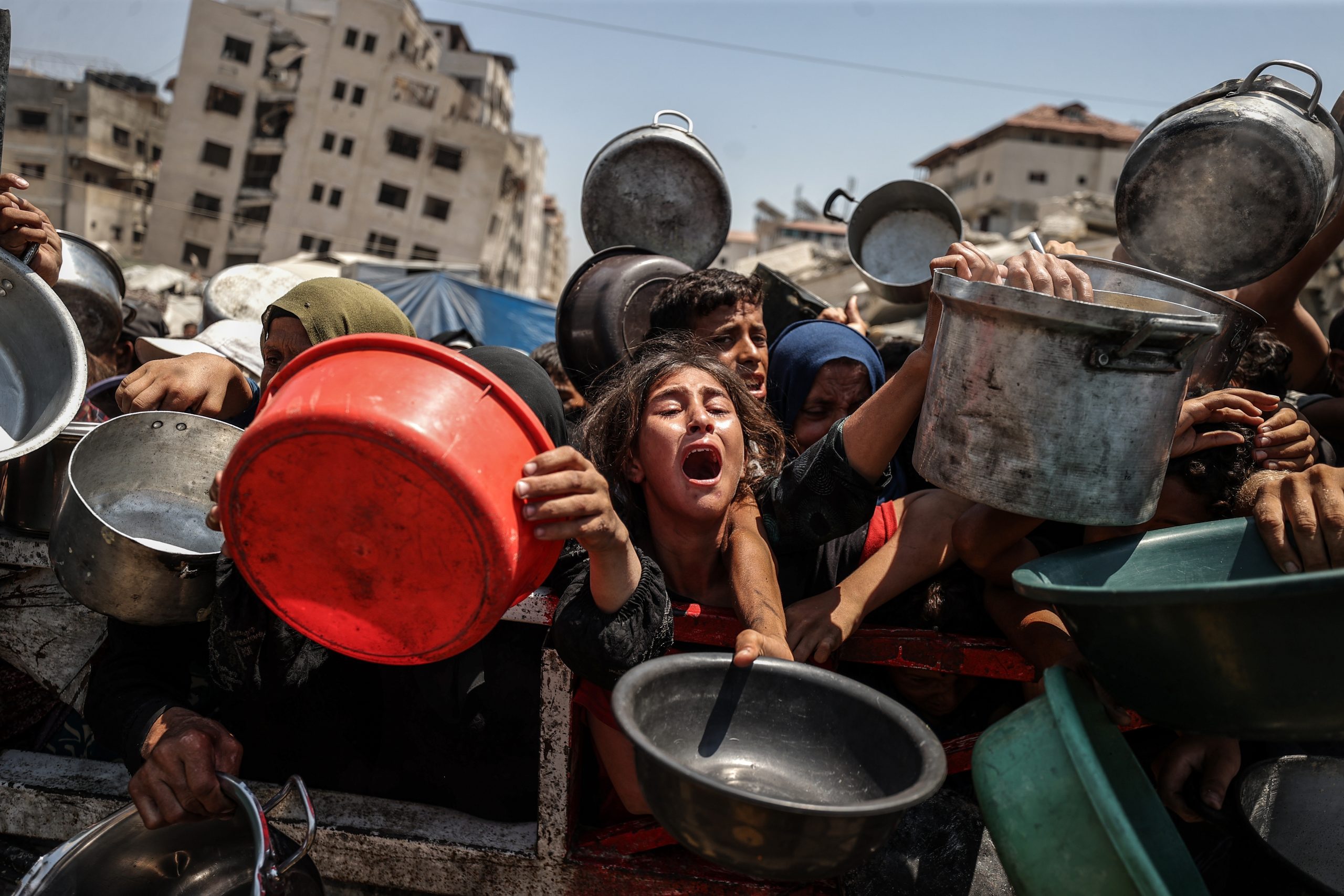
She is among thousands of children left without parents, siblings or extended family after Israeli bombardment killed more than 73,000 people over two years.
Most of Gaza’s 2.2 million people have also been displaced repeatedly, stripped of their homes, schools and the routines that once gave their lives structure.
The result is a generation being forced to grow up amid grief, displacement and profound uncertainty.
Another 35 members of al-Motouq’s extended family, including uncles and cousins, were also killed in the strike.
Al-Motouq survived because she had slept at her grandmother’s house across the street that night after falling ill.
When the explosion shook the neighbourhood shortly before dawn, she rushed outside.
“Our house wasn’t there anymore,” she recalled.
“I kept calling for my mum and dad. I sat on the rubble calling them. Nobody answered.”
 Flames erupt from a building following an Israeli military strike in Gaza City on Sunday, September 13, 2025.
Survivor Guilt
For days afterwards, al-Motouq returned to the ruins each morning, searching for traces of the family she had lost.
She picked up bloodstained blankets from the debris, hugging and kissing them, before relatives pulled her away from the danger.
“I wished I had been with them,” she told AfrikTimes. “I thought, if I had died with them, maybe I could rest.”
That guilt is common among people like al-Motouq in Gaza, according to Sereen al-Absi, a psychologist who has worked with survivors like her.
“They always feel that they are guilty: Why did I survive while they are gone? I didn’t protect them,” al-Absi, 29, told AfrikTimes.
“Even though logically they know they had nothing to do with what happened, their feelings cannot control the amount of pain they have experienced.”
Al-Motouq now lives with her maternal grandparents in a tent, after displacement destroyed the life she once knew.
Before the war, she and her twin sister were inseparable.
“We wore the same clothes,” she remembered with a faint smile. “If one of us wore something different, we’d get upset.
“She wasn’t just my twin, she was my life partner.”
 Palestinians searching for casualties after an Israeli airstrike on Tuesday in Jabaliya refugee camp in the Gaza Strip.
‘I Wasn’t Even Able to Cry’
According to Riad al-Bitar, undersecretary at the Palestinian Ministry of Social Development in Gaza, the war has left more than 68,000 children and adults as sole survivors of their families, as well as more than 75,000 orphans who have lost one or both parents.
The scale of the phenomenon is such that medical personnel in Gaza have adopted the acronym WCNSF – “Wounded Child, No Surviving Family” – to describe patients who arrive at hospitals wounded and alone.
Eighteen-year-old Dima Junina, who lives in Gaza City, was one of them.
An Israeli bombing on October 30 2023 caused a building next door to collapse onto their house.
Her father, Ahmed, her mother, Noor, and her three younger brothers – Anas, Baraa and six-year-old Mufeed – were all killed.
Junina survived because a door shielded her beneath the rubble. For hours, she believed the rest of her family were still alive. Doctors treated a wound to her head as she begged rescuers for news.
“I kept saying, ‘Please bring my parents and my brothers out.’”
Only at dawn did relatives tell her they had all been killed.
“I wasn’t even able to cry,” she said. “It still feels like they’re going to walk through the door.”
Unlike many people around her, Junina rarely describes herself as a sole survivor. She dislikes being pitied.
“I don’t want people treating me differently because I’m an orphan.”
Sympathy can also bring painful reminders. Classmates sometimes mention her mother without thinking. Teachers occasionally ask students to bring a parent to school.
One English teacher, despite knowing her circumstances, told her to return with her mother after she missed class because she was ill.
“He remembered halfway through the sentence,” she said.
She never returned to his classroom.
Instead, she found teachers who quietly made space for her grief without turning it into a spectacle.
 A man arranges the bodies of Palestinians killed in Israeli strikes, as they are buried in a mass grave, after they were transported from Al Shifa hospital in Gaza City for burial, in Khan Younis in the southern Gaza Strip, November 22.
Strength and Grief
Both teenagers are now being forced to learn to carry responsibilities their parents once shouldered.
Al-Motouq talks about making tea before school, studying alone, and trying to remain strong because her parents always encouraged her education.
Junina describes becoming “five people in one” – taking on everything her father once handled and everything her mother once managed. “The war made my personality stronger,” she said. “It had to.”
But strength does not erase grief.
Al-Motouq still accidentally calls classmates by her twin sister’s name. Sometimes she reaches for a pencil expecting Saja to hand it to her.
The trauma she and Junina experience can cause them to withdraw from others or become intensely attached to people who remind them of those they have lost, according to al-Absi.
“It doesn’t necessarily have to be their face; it could be a feeling. So they become attached to that person,” she explained.
The opposite can also happen.
“It can also cause isolation, where you want to isolate yourself.”
Al-Absi said the trauma is compounded because sole survivors carry the grief of every person they have lost.
“It’s caused by losing one, two, three or more people, and it can create a complex form of trauma,” she said.
 A displaced Palestinian child fleeing Beit Lahia in the northern Gaza Strip, walks on Gaza’s main Salah al-Din road on the outskirts of Gaza City, on November 5, 2024, amid the ongoing Israeli genocidal campaign in Gaza.
Wishes
But despite everything, both teenagers insist on completing their education.
Before the war, al-Motouq’s school average was 96 percent. She dreamed of memorising the Quran alongside her twin sister. Today, she has memorised nine of its 30 parts and hopes to continue.
Junina recently finished high school and is considering studying psychology at university.
People often ask what she wants to become, but she no longer has a clear answer.
“I just want to finish school,” she said, before a brief pause.
“I want to build a water well as an ongoing charity for my family’s souls.”
Asked what they wished for, both said they just want what children elsewhere take for granted.
“A home, a school, a place where we can live without fear,” al-Motouq said.
“We have the right to learn. We have the right to play. We have the right to have dreams.”
Junina asks for something simpler.
“Treat me like a person,” she said. “Not just as the girl whose family was killed.”
 A Palestinian girl carries cans to collect water as she walks by houses which were destroyed in an Israeli strike, amid the ongoing Israeli genocidal campaign in Gaza, May 22, 2024.