

 By
By Beijing says it will defend Chinese companies against secondary sanctions
China on Tuesday warned the US that it could retaliate if Washington expands its sanctions campaign against Iran to target Chinese companies, potentially opening a new front in tensions between the world’s two largest economies.
The warning came after US Treasury Secretary Scott Bessent on Monday announced measures aimed at further isolating Iran and threatening countries that continue to trade with Tehran with exclusion from the dollar-based financial system.
The Financial Times reported that Beijing had warned against any significant extension of secondary sanctions to Chinese businesses, with a foreign ministry spokesperson saying that China would take “all necessary measures” to protect its interests.
The spokesperson reiterated Beijing’s opposition to unilateral sanctions imposed without UN Security Council authorization, while calling for de-escalation and a return to negotiations over the US-Iran conflict, according to the Financial Times.
Washington’s latest package sanctioned 60 individuals, companies and vessels, including entities in mainland China and Hong Kong. But it stopped short of targeting major Chinese banks suspected of facilitating Iranian oil trade. Asked about Chinese financial institutions on Monday, Bessent said nobody was beyond the reach of US sanctions, although he did not specify which countries or institutions could face further measures or when they might be imposed.
Bessent described the plans for sanctions as “the single greatest financial offensive ever” against Iran, warning banks and businesses would share in Iran’s isolation if they refused to cut ties with the country.
He declined to focus on specific nations, but said US President Donald Trump would be phoning world leaders “with specific requests to cease their interactions with the regime”.
The prospect of sanctions against major Chinese companies is particularly sensitive because China has for years been the biggest buyer of Iranian crude.
China purchases about 90 percent of Iran’s oil exports, much of it through smaller independent refiners known as “teapots”. While China’s major state-owned refiners have generally avoided sanctioned Iranian crude, private refiners have continued buying it.
Iranian shipments to China have nevertheless fallen sharply since the US renewed its blockade of Iranian ports in mid-July.
A broader sanctions push could complicate relations between Washington and Beijing just weeks before US President Donald Trump is expected to meet Chinese President Xi Jinping in Washington.
The two leaders are expected to discuss the fragile trade truce agreed last year. Beijing has also developed an extensive legal framework allowing it to retaliate against foreign sanctions and restrictions affecting Chinese companies.
The stakes for Washington are significant because China dominates the supply of several critical minerals used by American manufacturers and hi-tech industries. Previous Chinese export restrictions demonstrated Beijing’s ability to use those supply chains as leverage in trade disputes.
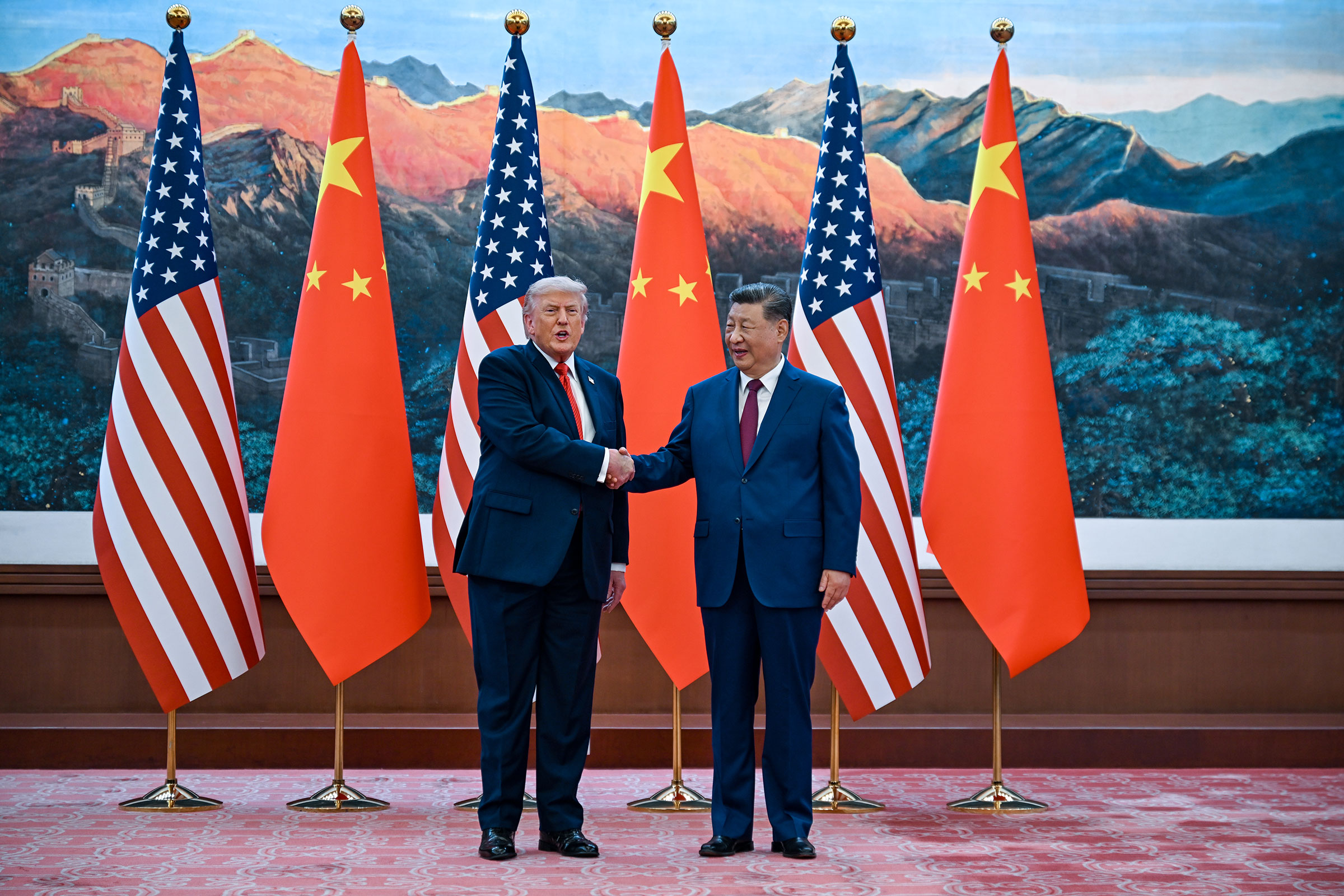 U.S. President Donald Trump and Chinese President Xi Jinping participate in a welcoming ceremony at the Great Hall of the People in Beijing, China on May 14, 2026.
Defend economic interests
Wang Dong, a scholar at Peking University, told the Reuters it remained unclear whether Washington’s threat of secondary sanctions was intended primarily as pressure or would translate into sweeping measures against China. But he said Beijing would defend its economic interests if Chinese entities were targeted.
China is simultaneously seeking to prevent the Iran conflict from further disrupting Middle Eastern energy supplies.
Although Iranian crude is important to China, Beijing also relies heavily on Saudi Arabia and Iraq for oil, making the continued disruption of shipping through the Strait of Hormuz a broader economic concern.
Traffic through the strait stood at about five million barrels a day on Monday, according to provisional Vortexa data cited by Reuters, compared with more than 20 million barrels before the war.
Xi has in recent days met Jordan’s King Abdullah II, while Chinese Foreign Minister Wang Yi held talks with his Kuwaiti counterpart, with regional conflicts featuring in both discussions.
Zhu Feng, an international relations scholar at Nanjing University, told the Financial Times that Beijing did not want to become directly embroiled in the US-Iran conflict but was increasingly concerned about the economic consequences of continued disruption in the Gulf.
China’s message to Tehran was that negotiations should continue, he said.
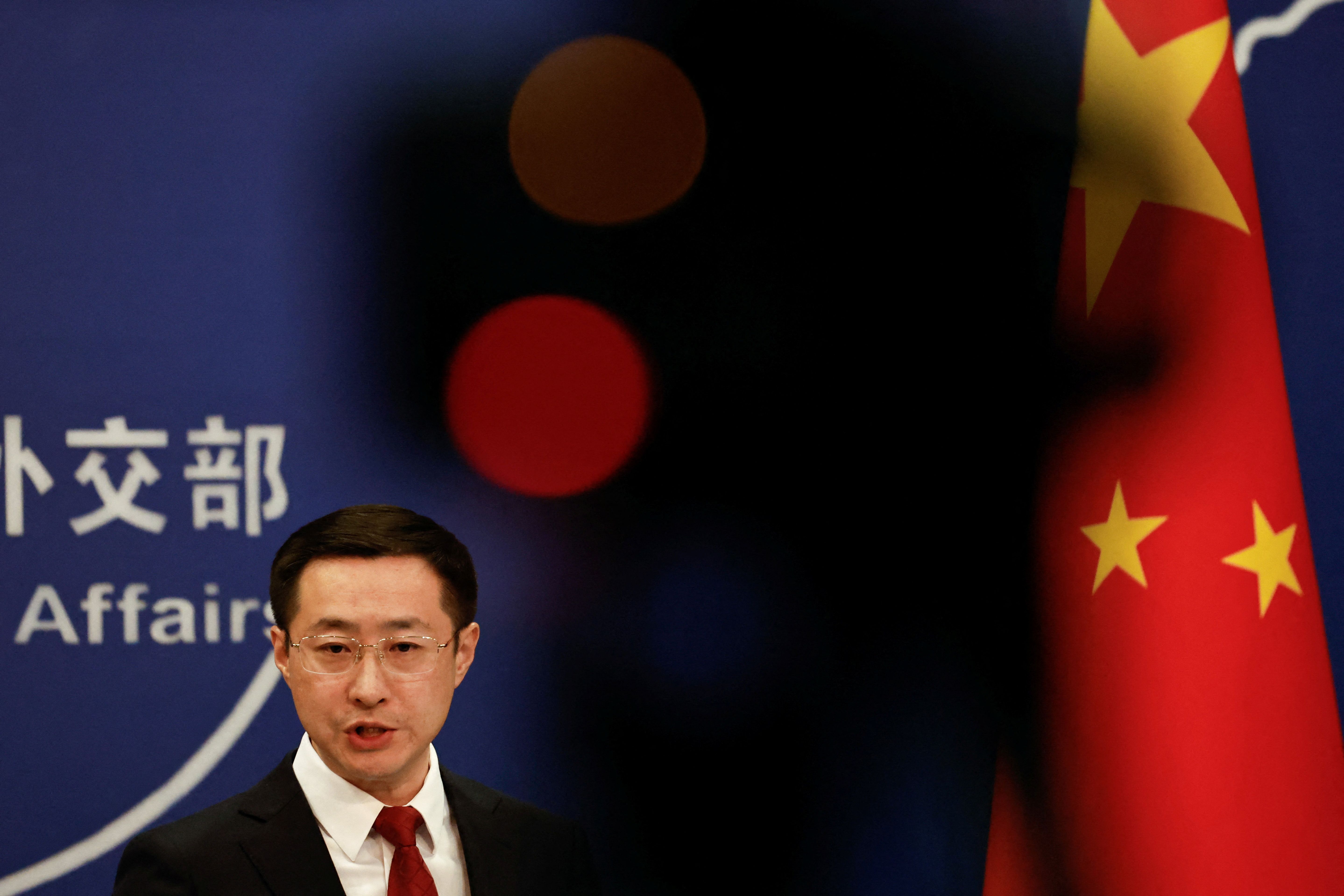 Chinese Foreign Ministry spokesperson Guo Jiakun takes a question from a journalist at a press conference in Beijing, China, April 27, 2026.
 U.S. Treasury Secretary Scott Bessent speaks during a press conference to outline further sanctions against Iran, at the Treasury Department in Washington, D.C., U.S., August 24, 2026.