

 By
By On the morning of October 5, an Air Force ATR-42, NAF 931, left Benin City for Lagos and came down in a swamp opposite the naval base at Igbokoda.
According to reports, 25 died.19 were said to be military personnel. The rest were civilians, and some reports say family members of servicemen were among them. By the next day, the Air Force had released names, the president had declared three days of mourning, and the Chief of Air Staff, Air Marshal Sunday Kelvin Aneke, had ordered an investigation. The Air Force promised timely and verified updates and asked the public not to speculate.
This sequence of events is, however, familiar to Nigerians; we have heard that sentence before, after almost every crash on the list below. This editorial ask what became of the earlier investigations, because the answer decides whether this one deserves any trust.
A Ledger Nobody Owns
When you ask how many military aircraft Nigeria has lost and you get a different number from every newspaper. The Guardian counted 16 losses in a decade. Leadership counted 17 crashes between 2015 and 2024. ICIR counted 14 under the Buhari years alone. Other outlets this week speak of 19, and one body text says at least 21.
These differences are not carelessness, at the risk of glorifying inconsistent data from a non-existent database. The Air Force publishes no register of its losses, so each outlet rebuilds one from press statements and memory. Even the severity of an event can be argued over. The March 2024 Super Mushshak mishap in Kaduna is called a minor accident in one report and a crash in another. Although unfortunate, a country cannot learn from accidents it cannot agree on.
What Each Year Left Behind
2021
On February 21, a King Air 350i reported engine failure after leaving Abuja, turned back and fell short of the runway. All seven aboard returned to their Maker. It was on its way to support the search for the abducted Kagara students. Exactly a month later, on March 31, an Alpha Jet went off radar during an operation in Borno with two pilots, Flight Lieutenants John Abolarinwa and Ebiakpo Chapele. The Air Force later said intelligence pointed to a crash.
Boko Haram claimed it shot the jet down. Neither version was ever confirmed. On May 21 a second Beechcraft B300 King Air 350i went down near Kaduna airport in bad weather, killing all 11 aboard, including Chief of Army Staff Ibrahim Attahiru. On July 18, bandits shot down an Alpha Jet over Zamfara, and the pilot ejected.
The Kaduna crash got the most serious inquiry of the six years. A joint board of Air Force safety officers and the civilian Accident Investigation Bureau handed an interim report to the Chief of Air Staff on September 15, 2021. It carried 27 findings and eight recommendations for immediate action. Nobody outside the Air Force has seen the findings or learned how many recommendations were carried out. The Air Force said at the time that the aircraft were bought new and that age was not the problem. If age was not the problem, something else was, and that something has never been named in public.
2022
On April 19 a Super Mushshak trainer crashed at Kaduna and both pilots died. An accident investigation board was set up. The Defence Minister told reporters the losses were draining the Air Force of skilled personnel. That was the government admitting the cost while keeping the cause private.
2023
A Cessna Citation belly-landed in Lagos on February 6 after losing its tyres. An FT-7NI trainer crashed at Makurdi on July 14 and both pilots ejected.
On August 14, a Mi-171 helicopter on a casualty evacuation flight crashed at Chukuba in Niger State and the crew died. The Chief of Air Staff at that time said an investigation board had been set up and a safety institute strengthened to end such crashes.
On December 1, a Mi-35P went down shortly after take-off at Port Harcourt on a mission against oil thieves, and the crew survived with minor injuries.
The safety promise came in August. Another helicopter went down in December.
2024 and 2025
A Super Mushshak had a mishap on its approach to Kaduna on March 7, 2024, and both pilots walked away. In July 2025, the Air Force said it had gone a full year without an aircraft mishap and credited better training, inspections and safety management. No outside body checked that claim. In August, the Air Force said it was driving serviceability from about 73% toward 90 by year-end.
On December 6, an Alpha Jet crashed near Kainji during a check flight after inspection. The pilots ejected, and a board of inquiry was ordered.
A crash during a flight meant to prove the aircraft fit after maintenance says something about the maintenance, or at least that nobody can yet say otherwise.
2026
Then came the ATR-42. It is a maritime patrol and surveillance aircraft that was sent to Rheinland Air Service in Germany in 2022 and returned in late 2024. The BBC reports it is the deadliest Nigerian military crash since the 1992 C-130 disaster in Lagos, which killed 158 or 159 people and has been widely reported as an overloaded take-off with multiple engine failures. That is the one military crash whose cause Nigerians have been able to discuss, and it happened 34 years ago.
The same script, every time
Read the official responses side by side, and a pattern appears, then, now, and maybe tomorrow, if the same unfortunate event comes up. The crash happens. The Chief of Air Staff orders an investigation, and in different years a Board of Inquiry, an Accident Investigation Board or a joint panel. The president mourns. The Air Force asks for patience. Then nothing comes out, and the next crash begins the sequence again.
The first reports on this crash show how little the public is told even in the first hours. The Aviation Minister said 32 were on board, 25 passengers and seven crew, and the presidency repeated it. The next day the Air Force gave 25, with 20 passengers and five crew. Nobody has said how a minister and a presidency got it so wrong, or what became of the seven. The minister also made clear that the control and regulation of military aircraft lie completely outside his ministry and the civil aviation authority.
Who investigates the investigators?
The Nigerian Safety Investigation Bureau says it cannot investigate the Ondo crash unless the Air Force invites it. It cites the 2022 law that creates the bureau and standard international practice, which puts military accidents under military authority. It is ready to offer technical help if asked, including its flight safety laboratory. So the Air Force, which flew the aircraft, maintained it and employed the crew, will investigate its own crash and decide what the rest of us may learn.
The Kaduna inquiry in 2021 shows an alternative was possible. Civilian investigators sat on that board. And still the public never saw what they found.
A retired officer quoted by Dataphyte argued that military findings are not meant to be published, and it is true that military investigations everywhere are less open than civil ones. However, the same source records that the broad principle in accident investigation is that final reports are released to improve safety, not to assign blame. The dead of Kaduna and Igbokoda were passengers, and crew paid for by the public. The Air Force does not own their deaths.
Avoidable, or only unexplained
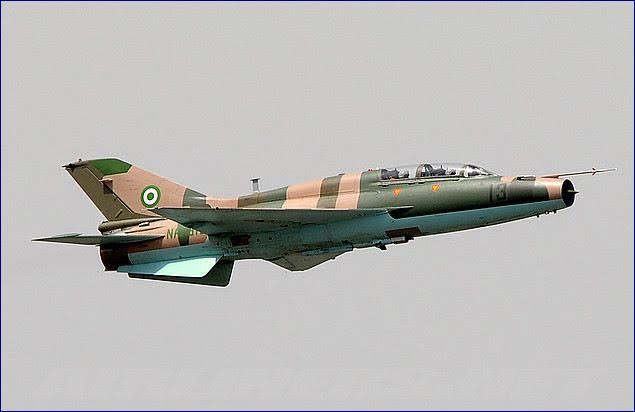
Nobody outside the Air Force can honestly say these crashes were avoidable, and that is the point. Some on the list were war losses. An Alpha Jet was shot down in Zamfara. Another vanished in combat. Alpha Jets are an old platform. The Air Force has itself said production stopped, and it has contracted a firm to recondition former French airframes to keep them flying. Combat flying carries risk that no safety office can remove.
But much of the list is not combat. It is a King Air on a staff flight, a trainer on a routine exercise, a check flight after maintenance and a surveillance aircraft carrying people on a domestic run. For those crashes, the burden of proof belongs to the Air Force, which holds every record and every black box. A force that will not publish what it knows cannot ask the public to believe nothing could have been done.
How long, then
For as long as the Air Force is allowed to mark its own work. The president’s order tells the Air Force to investigate the Air Force. The defence committees of the Senate and House have the power to ask for something else and have not used it at any scale that changed the practice.
Three steps would show whether Abuja means it. The Chief of Air Staff should formally invite the Safety Investigation Bureau now, as the bureau has said it is waiting to be asked, and should fix a date by which a report will be published. The Air Force should publish its full register of losses since 2015, with tail numbers, dates, dead and stated cause, and release the Attahiru report with the status of each of its eight recommendations. And the National Assembly should call the Air Force to open hearings on the passenger flight, the 32 and 25 figures and the maintenance history of NAF 931.
The Air Force promised timely and verified updates. That is a promise the public can measure, starting this week.