

 By
Nigeria is tracing dozens of people after confirming its first Ebola infection linked to the outbreak that began in Central Africa in May. Officials in Abuja, Kampala and the Africa Centres for Disease Control and Prevention (Africa CDC) are giving different accounts of who the patient is and where she was infected.
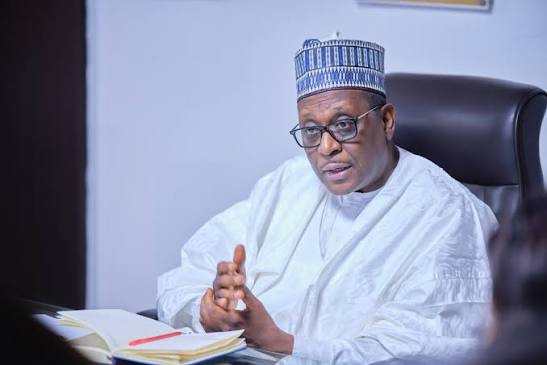
According to reports, the patient is a 42-year-old woman married to a diplomat. She is being treated in isolation at a hospital in Abuja. Coordinating Minister of Health and Social Welfare, Muhammad Ali Pate, announced on Tuesday, 20 October, that three separate laboratory tests had confirmed the infection. He later told the BBC that her condition was stable and getting better.
A delayed diagnosis
The timeline shows how easily Ebola can be mistaken for more familiar illnesses. According to Africa CDC Director General Dr Jean Kaseya, the woman landed in Abuja on 3 October and first felt unwell on 6 October. The World Health Organization (WHO) put the start of her symptoms a day later, on 7 October.
Kaseya said she first went to a private hospital believing she had malaria. She then went to a second private facility, which admitted her on 11 October. Malaria is widespread in Nigeria, and its early signs, including fever, headache, body pains, vomiting and diarrhoea, closely resemble those of Ebola.
Pate said public health authorities were not notified until Monday, 19 October, when her condition failed to improve. That means about eight days passed between her hospital admission and the alert to health officials. Her diagnosis was confirmed the following day.
Contacts isolated, flights restricted
Health authorities have identified 44 people who may have been exposed. Pate said not all of them had close contact with the patient, and the government had deliberately cast a wide net. He said none, including the person who travelled with her, had shown symptoms so far. He added that the patient had not left Abuja since arriving.
Separately, the Federal Ministry of Aviation and Aerospace Development has directed the Federal Airports Authority of Nigeria (FAAN) to keep 46 contacts off flights for at least 21 days. That period matches the maximum incubation period of the virus, which can range from two to 21 days. Officials have not publicly explained why this figure differs from the 44 contacts the health ministry cited.
Where was she infected?
The source of the infection remains the central unanswered question, and the accounts do not agree.
Uganda’s Ministry of Health issued a statement on 20 October, signed by Director General of Health Services Prof. Charles Olaro. It described the patient as a Nigerian woman who had gone to eastern Democratic Republic of Congo (DRC) on business and only passed through Uganda in early October, without symptoms. The ministry said passing through Uganda did not prove she was infected there. It also said Uganda had no confirmed active Ebola cases, and that Nigeria had not yet shared her full travel history and clinical details.
Nigerian and continental officials have since given a different picture. Kaseya told Channels Television on Thursday that the woman was born in Uganda, spent several days there, and was joined by her husband before the couple flew back to Abuja together on 3 October. Pate told the BBC she spent about two and a half weeks in Kampala on holiday and had a two-hour stopover in Addis Ababa, Ethiopia, on the way home. He also said she had not confirmed any trip to the DRC. In an earlier television interview he said officials presumed she was likely infected in Uganda. He did not present this as established fact.
Kaseya appealed to the patient to cooperate with investigators. He said she needs to clarify three things, including whether she travelled to the DRC, whether she left Kampala, and whether she met anyone who had come from the DRC. He said answering these questions would help avoid friction between African countries.
Both Pate and Kaseya have tried to calm diplomatic tensions. Pate said Nigeria was working with Uganda, Ethiopia and the Africa CDC to establish the facts, and he spoke of solidarity with Uganda. Kaseya also urged Western nations not to impose travel bans, calling instead for “collaboration and solidarity.”
A rare strain with no approved vaccine
The case is linked to the Bundibugyo species of Ebola. This uncommon strain has no approved vaccine or treatment, although trials are under way. Kaseya said the Africa CDC has started trials of candidate vaccines, including a Bundibugyo vaccine produced in Egypt. He argued that vaccines would already exist if the outbreak had hit Western countries.
The European Centre for Disease Prevention and Control reports that the outbreak in the DRC has killed at least 4,600 people from more than 9,500 recorded cases since May. Uganda recorded at least two deaths early in the outbreak and declared itself Ebola-free in August. Kenya has since reported at least nine infections, and on Monday the United States raised its travel advisory for Kenya, urging citizens to reconsider trips there.
Lawmakers demand action
On Wednesday, the Senate called for emergency funds to strengthen disease surveillance. It also asked for mandatory health screening at all international airports, seaports and designated land borders. The House of Representatives called for wider public awareness campaigns and early preparation of isolation centres.
Under Nigeria Centre for Disease Control (NCDC) guidance, travellers from countries with active Ebola transmission may have to complete a health declaration form. The agency has urged anyone who develops symptoms to seek medical care quickly.
Lessons from 2014
Nigeria contained an earlier Ebola outbreak in 2014, which caused 20 confirmed cases and eight deaths.
Pate said the country now has stronger surveillance, better laboratories and thousands of trained epidemiologists. He said Nigeria has “muscle memory that has been activated” but warned that this outbreak cannot be fought exactly like the last one.