

 By
Egyptian-American Democrat condemns use of US tax dollars to support Israeli ‘apartheid and genocidal war’ in historic victory speech
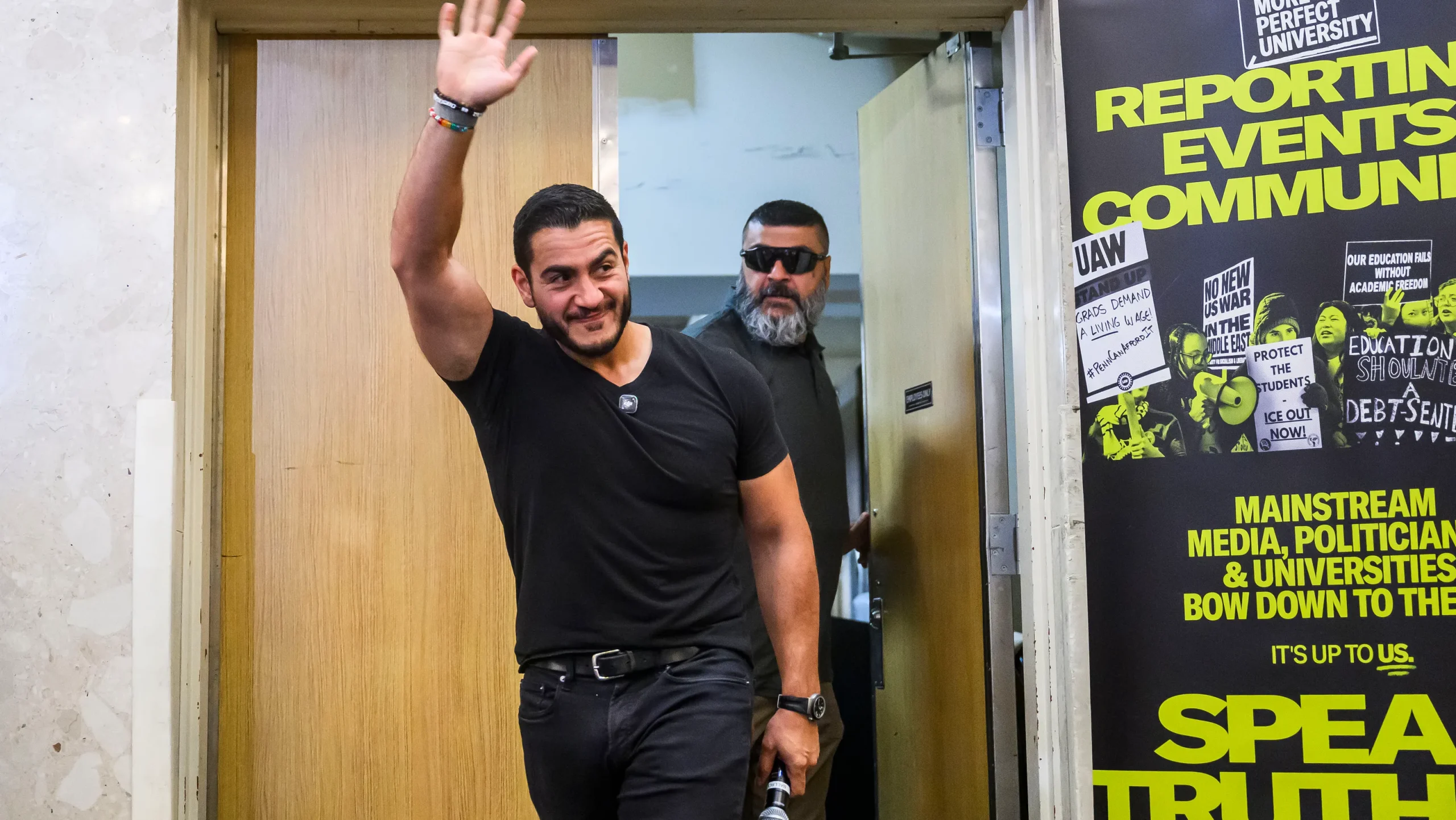
 Michigan Democratic Senate candidate Abdul El-Sayed speaks at an election night event, early Wednesday, Nov. 4, 2026, in Detroit, as his wife Sarah Jukaku watches.
Progressive Democrat Abdul El-Sayed won a highly coveted Michigan Senate seat on Wednesday and will become the first Muslim to serve in the upper chamber of Congress come January.
El-Sayed declared victory with 80 percent of votes counted, showing him in a comfortable 51.8 percent lead compared to his Republican opponent, Mike Rogers, at 46.2 percent.
The Associated Press declared El-Sayed the winner at 2:27 am EST (7:27 GMT).
As counting continued, El-Sayed’s lead grew. The Associated Press later reported him at 52.4 percent of the vote, compared with Rogers at 45.6 percent. The result makes El-Sayed the first Muslim elected to the US Senate.
“I am so proud and honored to stand here as your senator-elect,” El-Sayed said in an energized victory speech, where he said he was able to overcome Islamophobic slurs aimed at him by US President Donald Trump and Vice President JD Vance.
“To all the parents who struggled to explain [to their kids] why the president openly mocked someone for their name or how they pray, let them know tomorrow that the bad guys lost,” he said to cheers and applause.
“They want an America that is too small for some of us. We know that America is big enough for all of us,” he added.
El-Sayed, smiling and responding to lively applause, specifically called out Vance and Trump.
“JD, habibi, there is this delicious irony in the fact that you’re constitutionally obligated to swear me in in January,” he said.
To Trump he said: “Donald, I know you struggle with my name, so after JD swears me in in January, you can just go on and call me Senator.”
El-Sayed’s victory marks a watershed moment in US political history. A progressive who shocked the party establishment when he narrowly defeated Haley Stevens, who was backed by pro-Israel lobbying groups, in the August Democratic primary. El-Sayed was endorsed early by the Senate’s leading voice on progressive issues, Bernie Sanders of Vermont.
El-Sayed specifically challenged the American Israel Public Affairs Committee (AIPAC) and other pro-Israel lobbying groups that spent tens of millions of dollars against him.
“To AIPAC, who spent $42 million against us. Thank you for giving me the opportunity to beat you twice,” he said.
“They try to call you hateful if you believe that Palestinian kids should get to grow up in the land of their forefathers without being murdered by our tax dollars,” he said. “If you believe in equal rights for peace, dignity and self-determination, that’s not hate, it’s love,” he said.
“We want our taxes spent here…we don’t want our money sent to do apartheid or genocidal war,” he said.
That race proved so pivotal that half a million more Democratic voters showed up to the polls than in previous primary races, which typically see low turnouts, Michigan Democratic Party Chair Curtis Hertel said at the time.
In the later stages of his campaign, El-Sayed received the backing of former President Barack Obama, who remains one of the most popular figures among the party establishment.
 The US Senate race between Mike Rogers and Abdul El-Sayed is the most expensive contest in Michigan history.
Who is Abdul El-Sayed?
The 42-year-old’s full name is Abdulrahman Mohammed El-Sayed. He is married to an Indian-American doctor and has two daughters. When he graduated from the University of Michigan and gave the commencement address in 2007, the event’s keynote speaker, former President Bill Clinton, praised his oratory skills at the podium.
The Michigan native then earned a medical degree from Columbia University and led the public health departments in Detroit and Wayne County before launching what was seen as a long-shot bid for the US Senate in 2025.
But it wasn’t his first time. In 2018, El-Sayed unsuccessfully sought the governorship of Michigan, but he managed to lay the foundations for his vision for Medicare for All: the establishment of a national health insurance programme in the US.
As private insurance premiums have skyrocketed in the US since then, that policy proposal grew increasingly popular among those on the left and the right, as did El-Sayed’s criticism of the closeness of the US-Israel relationship — an approach that was very similar to that of the highly popular New York City mayor, Zohran Mamdani.
El-Sayed has repeatedly said that he has never met with corporate lobbyists, and in both his campaigns, he raised money only from individual donors rather than corporations.
‘He’s different’
Unlike Mamdani, however, El-Sayed was not endorsed by the Democratic Socialists of America, as he sought the support of his party’s centrists in a volatile swing state like Michigan.
He appeared on as many television networks, podcasts, and social media influencer accounts as he could, in a bid to reach as many segments of the American public as possible, regardless of political affiliation, El-Sayed often said.
But he was also met with such a disproportionate amount of media scrutiny that he inadvertently became better known — and perhaps more appealing — to voters than his opponent, former Republican Congressman Mike Rogers.
Rogers, who was not under the microscope in the same manner, was endorsed by President Donald Trump at a time when the president’s approval ratings were at an all-time low. Trump has repeatedly called El-Sayed “a Communist loser who hates Jews and Israel”, and insisted that he would only call him “Mohammed” because that’s what the majority of Muslims are called, Trump said.
Republicans also cast doubt on his allegiance to the US Constitution, claiming he had ties to the Muslim Brotherhood because of statements his half-sister once made.
There is no known evidence tying El-Sayed to the group, which has no central hub and was not designated as a terrorist organisation in the US until Trump sanctioned three of its political branches last year.
El-Sayed said in August that the focus on his name and identity is “the only play they got” against him.
“It’s like, wow, he’s different,” he said of Republican attacks.
“That’s the best you got? You can’t actually talk about what you want to do? My name is not raising your gas prices. My name is not taking us to war. My name is not the reason you can’t afford your groceries.”
 El-Sayed leads Stevens by 15 points as Israel and AIPAC dominate the final debate.