

 By
By “I was on my way to request money from a fellow trader when I saw the truck descending uncontrollably and hitting tricycles simultaneously. We ran inside for safety, and by the time we came out, what we saw were casualties.”
Mr Samad, an eyewitness, told AfrikTimes during a physical interview. Mr Samad is one of the traders along the steep Beere–Oje road who have carved out roadside outlets to sell cutlasses, knives, stoves, and other blacksmith products. Behind his outlet is a blacksmith workshop where a man could be seen hammering iron against a hot, fiery object.
On the afternoon of Tuesday, March 24, a petrol tanker belonging to Bovas Oil reportedly lost control due to a mechanical fault while descending from Oja-Oba through Beere toward Oje Market. The truck rammed into tricycles, roadside stalls, and pedestrians before finally coming to a halt near Oje Market after pinning a tricycle against the median strip.
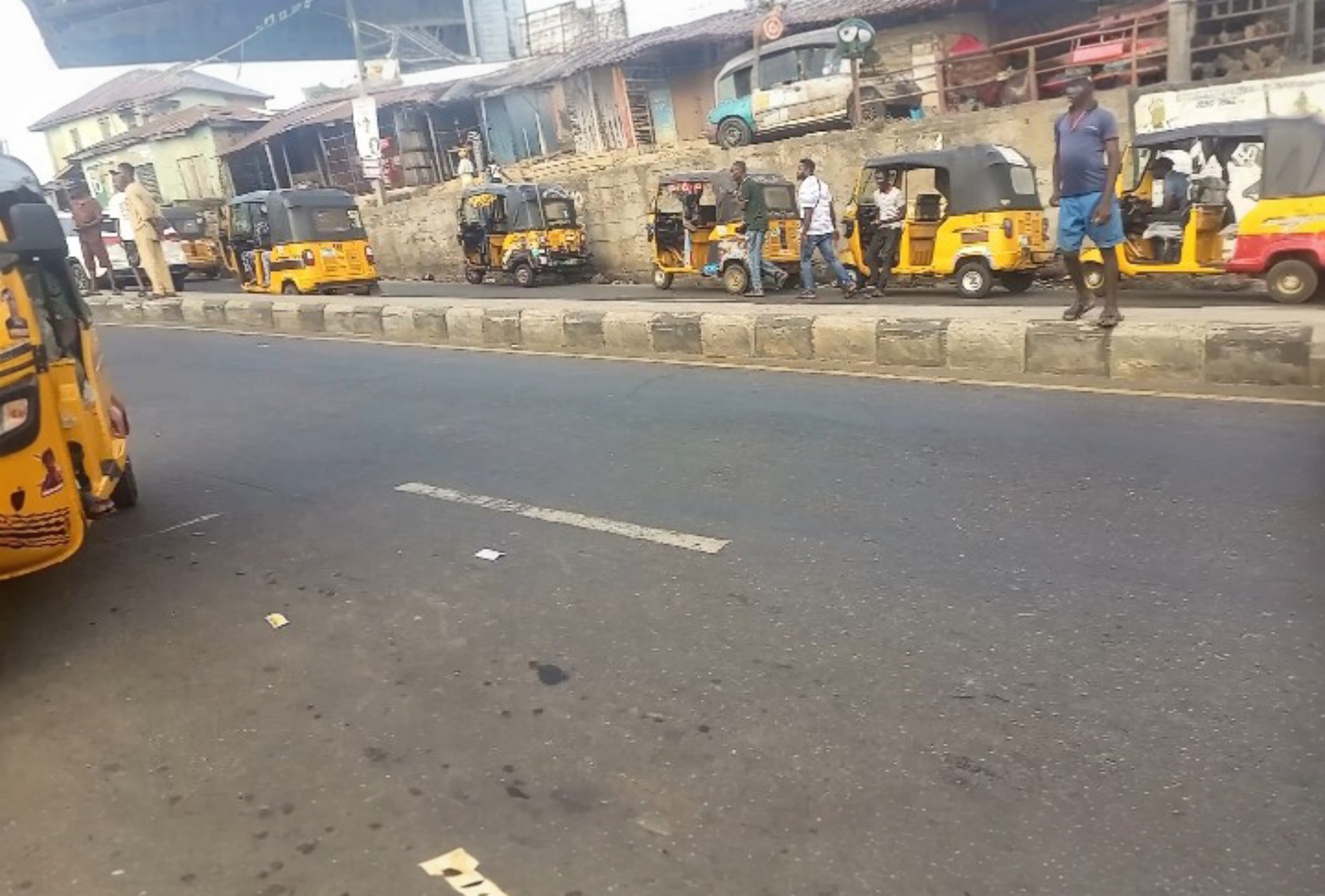
Recounting the moment, Samad said he had been alerted to the incoming danger and fled for safety. What he saw afterwards, however, left him shaken. AfrikTimes observed that there are still blood stains on the street and a maruwa’s windshield lying on the meridian strip.
“We saw a maruwa passenger who had suffered fatal injuries to the lower part of his body. He died shortly, while a few others lost their legs. I heard it killed someone at Oje too. People said the driver could not be apprehended. It took a while before the police arrived, but operatives of OYRTMA were already at the scene,” he said.
Emergency Response, Roadside Violations Highlighted
Speaking with AfrikTimes, Mr Tolani Ademola, Chairman of the North-East Branch 2 Bodija Unit of the Oyo State Park Management System, disclosed that tricycle operators had been warned multiple times to vacate roadside areas but failed to comply. He confirmed that police operatives from the Mapo Division responded to the incident but noted the absence of immediate medical intervention.
“God saved us. The truck was coming from Mapo through Oja-Oba, honking his horns impatiently. We have tried to send the maruwa drivers away from the roadside, but they won’t listen. The truck killed tricycles and killed someone inside before it moved on to kill another person at Oje. Police officers from the Mapo Division were here, but there was no ambulance. Victims were taken to the hospital in private vehicles,” he said.
To further investigate, AfrikTimes visited Oja-Oba to determine whether casualties were recorded at the point where the truck reportedly lost control. However, conversations with motorists and residents revealed no casualties at that location, suggesting that the tanker began ramming into vehicles and people upon reaching the Beere descent.
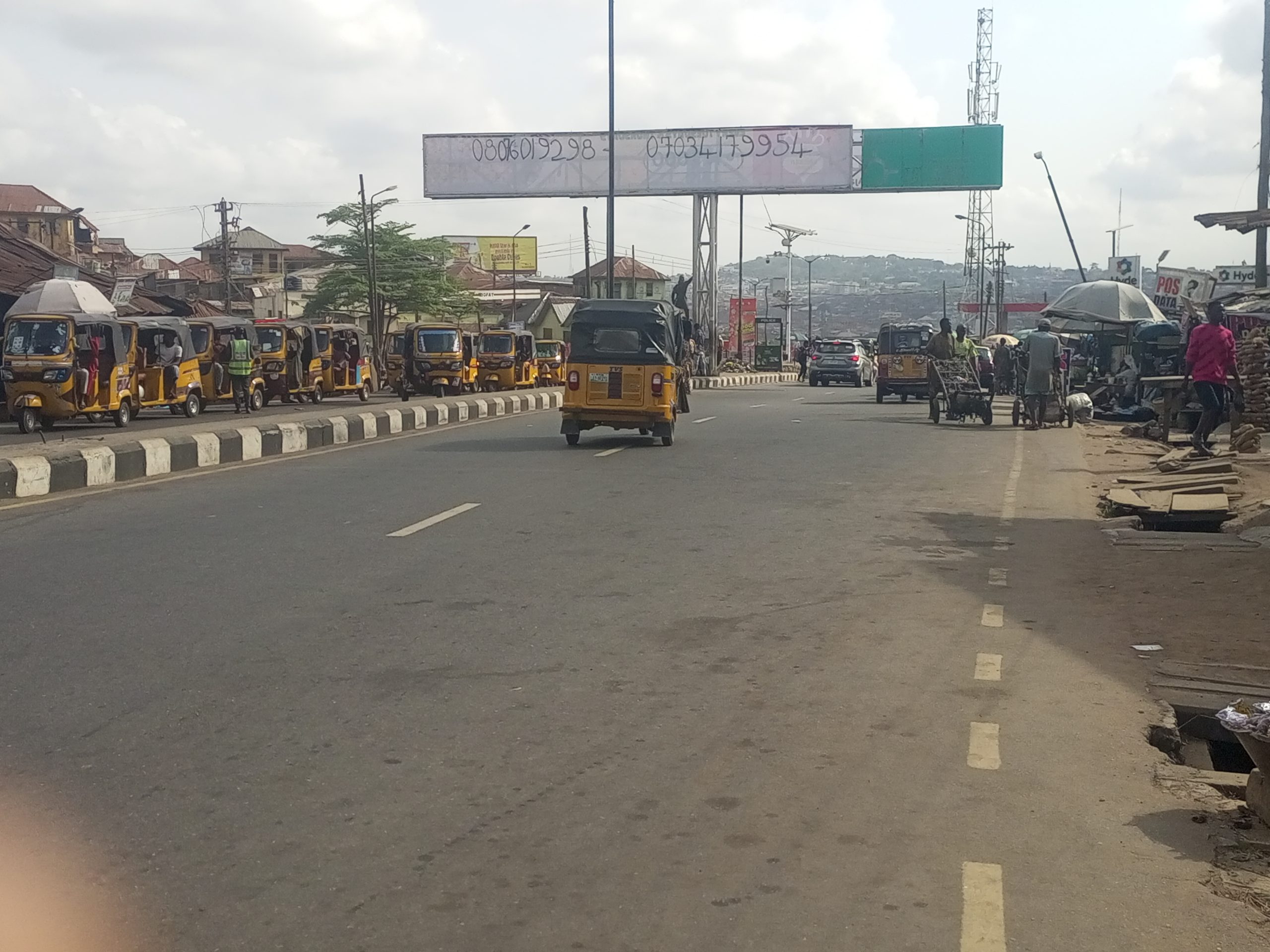
AfrikTimes observed that roads along the accident corridor are frequently congested, with tricycle operators occupying roadside spaces while calling for passengers. This practice restricts vehicular movement and contributes to traffic build-up. Such an environment makes drivers, passengers, and roadside traders highly vulnerable to accidents, especially in cases of mechanical failure.
Eyewitness Provide Additional Information At Oje Market
At Oje Market, AfrikTimes spoke with traders who witnessed the incident. Visible scratches on the concrete median strip indicated the force of the collision. Oje Market, a major hub for fruits and farm produce in Ibadan, is widely known for its supply of pineapples, watermelons, oranges, bananas, and vegetables.
Despite the tragedy, traders were seen conducting business in both small and large quantities, though the atmosphere remained tense. Mrs Azeez Abiola, popularly known as Iya Yobowo, recounted the incident.
“The truck failed from Oja-Oba before causing the accident here at Oje. It pinned a maruwa to the roadside. Inside the vehicle was a passenger who had already fainted with a broken ankle,” she said. She further described the devastating aftermath behind the truck.
“When we moved to the back of the trailer, it was a terrible sight. The truck crushed the victim so badly that you could not recognise the person. The face was completely battered. The body was severely damaged, with parts separated,” she added.
She noted that the driver fled the scene, likely to avoid being attacked by angry residents. According to her, the truck was later moved to a Bovas filling station before being taken to the police station.
“The Babaloja called the police for intervention. Some people wanted to burn the truck, but he stopped them. The truck was taken to a Bovas filling station at Ali-Iwo Road to offload the petrol before it was moved to the police station. If the truck had not encountered the hill, the casualties would have been higher. Firefighters later washed away the blood,” she said.
Bovas Station Activity Halted
At the Bovas filling station along Ali-Iwo Road, AfrikTimes observed that operations had been suspended, with no ongoing fuel sales. Individuals who identified themselves as staff, speaking under anonymity, confirmed that the tanker was offloaded at the station due to its proximity to the accident scene.
They added that the fuel was not originally meant for the station but had to be offloaded there because of the situation. They declined to provide information about the driver’s whereabouts.
Police Launch Investigation into Circumstances Surrounding the Accident
In a statement released on March 24, the Oyo State Police Command confirmed that two persons died, while two others sustained injuries. Several vehicles, including tricycles, were also damaged.
“The Oyo State Police Command wishes to inform the public of a fatal road traffic accident involving a truck and multiple tricycles within Ibadan,” the statement read.
“Preliminary findings show that a Mack truck belonging to Bovas Oil lost control from the Beere area and crashed along the Oje Market axis, resulting in the death of a man and a woman, injuring two persons, and damaging five tricycles and a Toyota Camry. The driver is currently at large.”
DSP Ayanlade Olayinka added that operatives from the Mapo Division promptly responded to the incident, evacuated victims, and secured affected properties. He confirmed that investigations are ongoing and that efforts are being made to apprehend the fleeing driver.
In a follow-up conversation with AfrikTimes on March 25, he stated that the truck is currently at the Mapo Division and that the police are actively tracking the driver.
“We have been doing that and will continue to engage the drivers’ union,” he said, in response to questions about sensitization efforts.
Attempts to establish communication with the General Manager of the Oyo State Road Traffic Management Authority were unsuccessful.
Road Accident Ordeals in Nigeria
Academic research from 2025 indicates that road traffic accidents (RTAs) represent a major public health crisis in Nigeria, resulting in an estimated 35,000 fatalities annually. According to reports from the World Health Organization, more than 1.3 million people die every year due to RTAs, with about 90% of these deaths occurring in low- and middle-income countries, including those in Africa. In 2016, the RTA death rate in Africa stood at 26.6 per 100,000 people. This is significantly higher than the global average of 18.2. Nigeria ranks among the African countries with the highest incidence of road crashes, further compounding the nation’s troubling statistics. Major causes of RTAs in Nigeria include excessive speeding, reckless driving, driving under the influence of drugs or alcohol, and poor vehicle maintenance.
Between January and June 2025, the Federal Road Safety Corps recorded 5,281 accidents involving 39,793 persons across Nigeria. These incidents resulted in 2,838 fatalities and 17,818 successful rescues.
Recent reports further highlight the persistent nature of road mishaps across the country. A report by The Guardian on Wednesday, March 24, noted that the Ogun Command of the Federal Road Safety Corps confirmed four fatalities in a crash involving two vehicles along the Ijebu-Imushin section of the Ijebu Ode–Ore Expressway. The accident reportedly occurred at about 11:16 p.m., when a Toyota Hiace bus collided with a MAN Diesel truck owned by Julius Berger, leaving all four occupants dead at the scene.
Similarly, Punch reported on Wednesday that a separate road accident led to the deaths of a tricycle rider and his female passenger. In that incident, a motorcycle operator was first struck by a tricycle before being run over by an oncoming truck, while the tricycle rider fled the scene.
In another case, Daily Trust reported that three persons lost their lives and 10 others sustained injuries in a lone accident at Bara, along the Bauchi–Gombe Federal Highway. The crash involved a Toyota Hiace bus conveying members of the Evangelical Church Winning All (ECWA), who were returning from an evangelism mission in Taraba State.
Ongoing Efforts to Reduce Road Traffic Risks in Oyo State
During visits to various incident locations, AfrikTimes observed that in several parts of Ibadan, tricycle (maruwa) operators have converted roadsides into informal motor parks. Similarly, traders continue to use road shoulders and walkways as points of sale, thereby narrowing already constrained road spaces.
In response, the Oyo State Rule of Law Enforcement Authority (OYRLEA), under the leadership of Hon. Justice Aderonke Aderemi (Rtd.), alongside security operatives and the Environmental Task Force, has intensified enforcement efforts aimed at dislodging traders operating illegally along roadsides.
Earlier on the day of the accident, enforcement teams were deployed to Oje Market to address the activities of what officials described as “recalcitrant traders” who continued to defy regulations. The operation was later extended to Mokola Roundabout as part of routine enforcement exercises.
In a related development on Tuesday, March 18, the Oyo State Rule of Law Enforcement Authority carried out a coordinated operation across major markets in Ibadan, during which six traders were arrested for violating roadside trading laws and allegedly assaulting enforcement officers. The exercise, supported by the Oyo State Environmental Task Force, the Nigeria Police Force, and Amotekun Corps, covered Challenge, Oja’ba, Oje Market, and Mokola, with officials clearing goods displayed on road corridors, setbacks, and walkways.
Loopholes in Road Traffic Management in Nigeria
As noted by the Oyo State Rule of Law Enforcement Authority, the encroachment of public spaces by traders, kiosks, and makeshift structures has effectively turned many roads into potential death traps. When walkways and road shoulders are obstructed, both pedestrians and motorists are left with little room to manoeuvre in emergencies. In situations involving brake failure or sudden loss of vehicle control, such as the Beere–Oje incident, the absence of escape routes significantly increases the likelihood of casualties.
While ongoing enforcement efforts have focused largely on roadside trading, the establishment of makeshift motor parks along major roads remains a critical but often overlooked issue. Tricycles and other commercial vehicles parked indiscriminately along roadsides reduce the effective width of the carriageway, thereby restricting the smooth flow of traffic. This artificial narrowing of roads not only creates congestion but also increases the risk of collisions, especially in high-density areas.
Furthermore, in the event of mechanical failure, such as brake loss, the chances of escape for passengers, drivers, and pedestrians become extremely limited in such congested corridors. The Beere–Oje crash underscores this reality, where the combination of roadside trading and informal parking created a high-risk environment with devastating consequences.
To address these challenges, there is an urgent need for a more comprehensive approach to traffic and urban management. Government authorities must establish dedicated mechanisms for the systematic evacuation of illegal roadside parks. This could include the development of designated loading zones, stricter penalties for violations, and sustained collaboration with transport unions.
In addition, commercial drivers must ensure that their trucks and other vehicles are regularly inspected and needed parts are changed on time to avoid unanticipated breakdown.
Urban planning strategies must prioritise the protection of road setbacks and pedestrian walkways. Without such measures, the cycle of congestion, risk exposure, and preventable accidents is likely to persist, with grave implications for public safety.