
 By
By Abuja, Nigeria
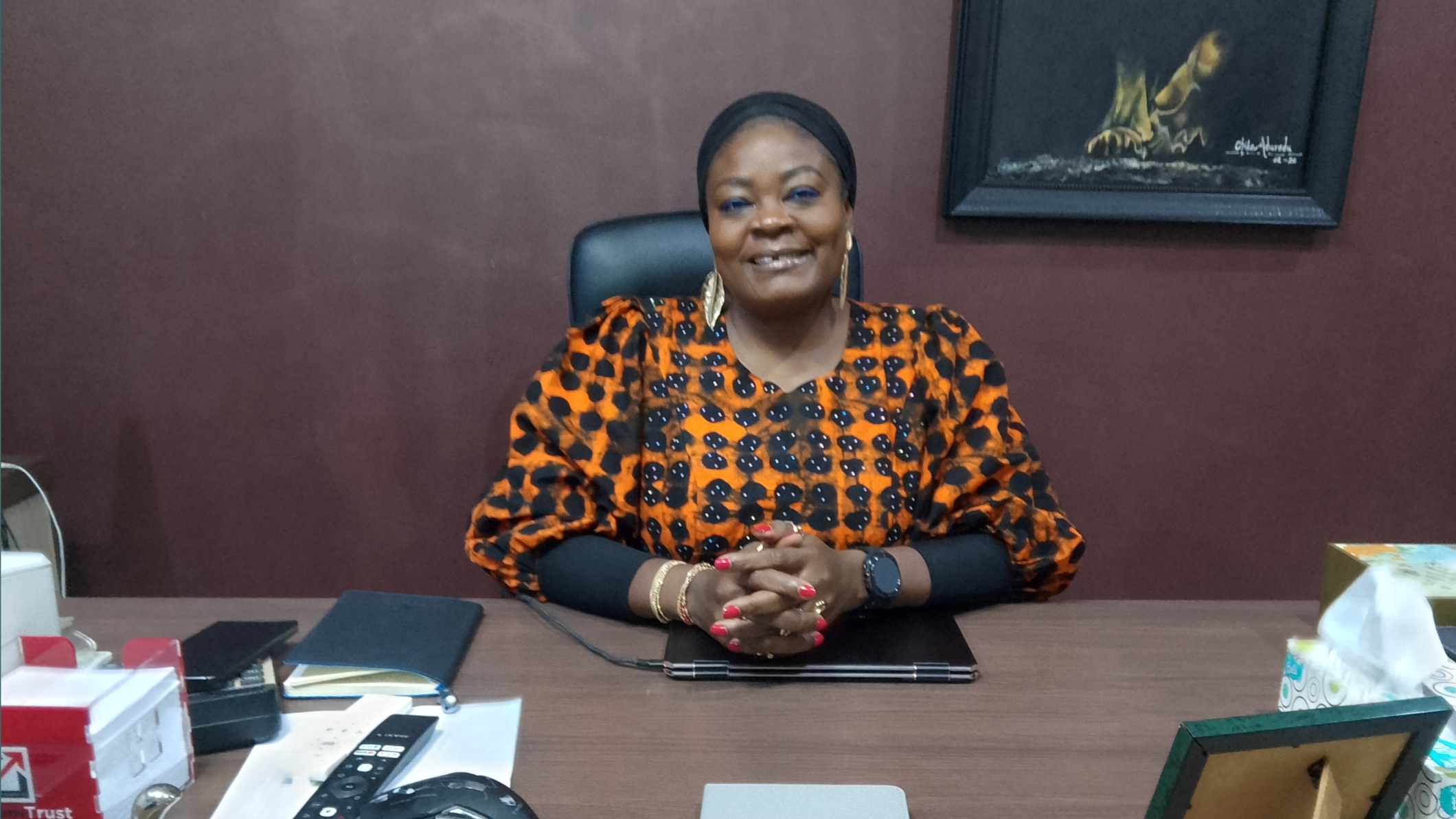
The scourge of cancer in recent times does not only affect adults but also children. AfrikTimes in this special report spoke with the Founder of Okapi Children Cancer Foundation, Kemi Adekanye, who gave a fruitful insight into children cancer and the way forward.
Here is an excerpt from the interview…
So can you just tell us maybe a bit about what the Okapi Foundation is all about?
Okay, so Okapi Children Cancer Foundation is a non-profit making and non-governmental organization that started in 2017 after the death of my brother who unfortunately died of lung cancer.
So he was diagnosed in 2016, around August 2016, and sadly passed on May 2017. So during the course of his treatment, he met a little child. I think he had been told there’s really nothing they can do for him, you know, say goodbyes and start preparing for afterlife, basically. And of course, he was devastated. He had young children. He was thinking, how will my children cope? How will my wife cope, you know?
And he now met this little boy that was like, you are so old, you are crying. Someone like me, what do I do? They already told me I also have three months to live. And he gave me that story and that just stuck with me. I didn’t know children had cancer as of 2016. I’m like, do children really have cancer? Because I was living in the UK. I said, maybe it’s oyibo children. I’ve not seen any Nigerian child with cancer. So we were talking about it a lot. And he encouraged me to go and check if Nigerian children have cancer.
So i went to national hospital with my friend that day in september 2016. And the ward was full, all sorts of different cancers. So i went back to him crying and he gave me N100, 000 to share for the children at least no matter how small to do something for their medical bills. When I went back like a week or two weeks later, the children we met that first time, half of them had died.
It was just very devastating for me. And that’s basically how it started. I remember this particular child that needed to do a leg amputation. You know, I can’t remember how much he needed then. Anyway, so I just went around asking people for money donations. We supported the child. And that’s how it basically started. So it was just my friends and I, I just told them my story. And everybody was very concerned. Childhood cancer was not common at all. You know, even in the hospital, apparently at that time, they said we were the first set of friends or people that will come around and support children with cancer because people didn’t really know so they didn’t even know how to support so that’s how we started and um it’s 10 years now well we’re going to be 10 years in september and we have continued to support children we support children in federal medical center and national hospital obviously we don’t have so much money so we had to like select which hospitals that we work with so currently those are the three hospitals that we work with
So let’s now say for people that are maybe hearing the word cancer for the first time, what can you tell them cancer is?
There’s no minsing words about cancer. Cancer is not a good thing. That cancer will test you spiritually, it will test you financially, it will test you morally.
Honestly, cancer, I don’t know how to describe it, but apart from being a disease, cancer is a destabilizer. It will destabilize any family. I’ve seen families that have broken up because their child has cancer. I’ve seen mothers leave their child. It’s usually fathers that were hear. I’ve seen women actually abandon children because of cancer. I’ve seen, of course, fathers also abandon children. But at the same time, I would also say there’s hope.
We have seen children survive cancer. There’s a child, Shitu, he was the first child we supported. As at that time, the mother told us she was going to commit suicide. You know, her husband had left her. He had told her, leave this child, let’s run away and start our life. But somehow she just felt like, okay, I think it was that day we met her and we gave her N50,000. And to her, she felt like for God to send these random people with N50,000, there’s hope.
And today the guy is a survivor. He’s doing well, he’s back in school, he’s on our scholarship scheme as well because we also offer scholarship to survivors. So as bad as cancer may be, there’s hope and what we usually say is early detection. Children that have survived cancer are children whom their cancer was detected early. So, early detection from treatment is possible to survive it but it is very challenging for anybody, no matter how rich you are honestly cancer will challenge you
Like every disease, cancer not excluded from it has causes. So what can we say are the root causes of cancer?
For adult cancers of course, behavioral lifestyles or genetics or you know maybe exposure to certain toxic chemicals things like that have been known to cause breast cancer or lung cancer
But for children, there’s no known cause. That’s the sad part. You see children born today, tomorrow they say they have cancer. So as of now, scientists are still trying to find out what is causing this cancer in children. Is it from their mothers? Is it from some fourth generation? But we don’t know what causes it in children. So that’s still a mystery that scientists are trying to solve as of today.
That means for children there’s no known cause.
There’s no known cause. And another sad thing about it, it cannot be screened. You cannot screen. Every year they will tell women to go for breast cancer screening, cervical cancer screening. Even for men, they do their PSA test and things like that. But for children, you can’t screen. So you can’t say, okay, this child is likely to have cancer in the next two years or three years. There’s nothing like that.
Once the cancer is there, it’s there. But the only thing is that you have to keep monitoring your child. You need to check for that because the sad thing with childhood cancer is that it presents like malaria. Most childhood cancers is usually fever, tiredness, sweating, things like that so it will look like a normal malaria and typhoid but you have to be extra observant as a parent as a caregiver and even also as doctors because doctors tend to miss out on some of these things. You know it might get to an advancement before they actually think to test and do other investigations to rule out cancer.
You know issues like this as Africans, whatever we are going through you cannot just take the fact that we always attribute our problems our challenges to maybe something from the village or religion something like that so does cancer has anything to do with village people?
Scientifically, no. Obviously, we’re Nigerians. We tend to have a lot of spiritual connotations. But honestly, it’s not been proven that it can be… In fact, it’s not contagious. You cannot catch cancer by shaking or kissing. Or even sleeping with somebody. Talk less for children. So it’s not contagious. So how can someone then transfer it to you? Do you understand?
Today, there’s no scientific explanation for somebody, our beliefs of maybe cancer being infected on somebody through spiritual causes or anything like that. It’s merely a sickness that happens. It’s just like malaria. I’m sure if we did not know about… Before, malaria used to kill people. Even till now, sometimes, we don’t treat you. Exactly. If you don’t know what it is, you tend to attribute it to spiritual causes.
Can we say that this whole new generation of diseases we are having like cancer are attributed to advancement in the world, maybe what we eat and different kind of happenings right now that are not in existence in the olden times?
It’s because there’s no awareness in those days. People just die, but now there’s a lot of awareness about different diseases. Lack of awareness is the major issue because they were not aware there was no name for it so they were attributed to the easiest thing they can which is spiritual.
Cancer amongst children is not as pronounced as that of adults. You can even see that most government programs by the Ministry of Health is always focused on breast cancer, cervical cancer, prostate cancer and the rest of it. So why do you choose a different path by focusing on children?
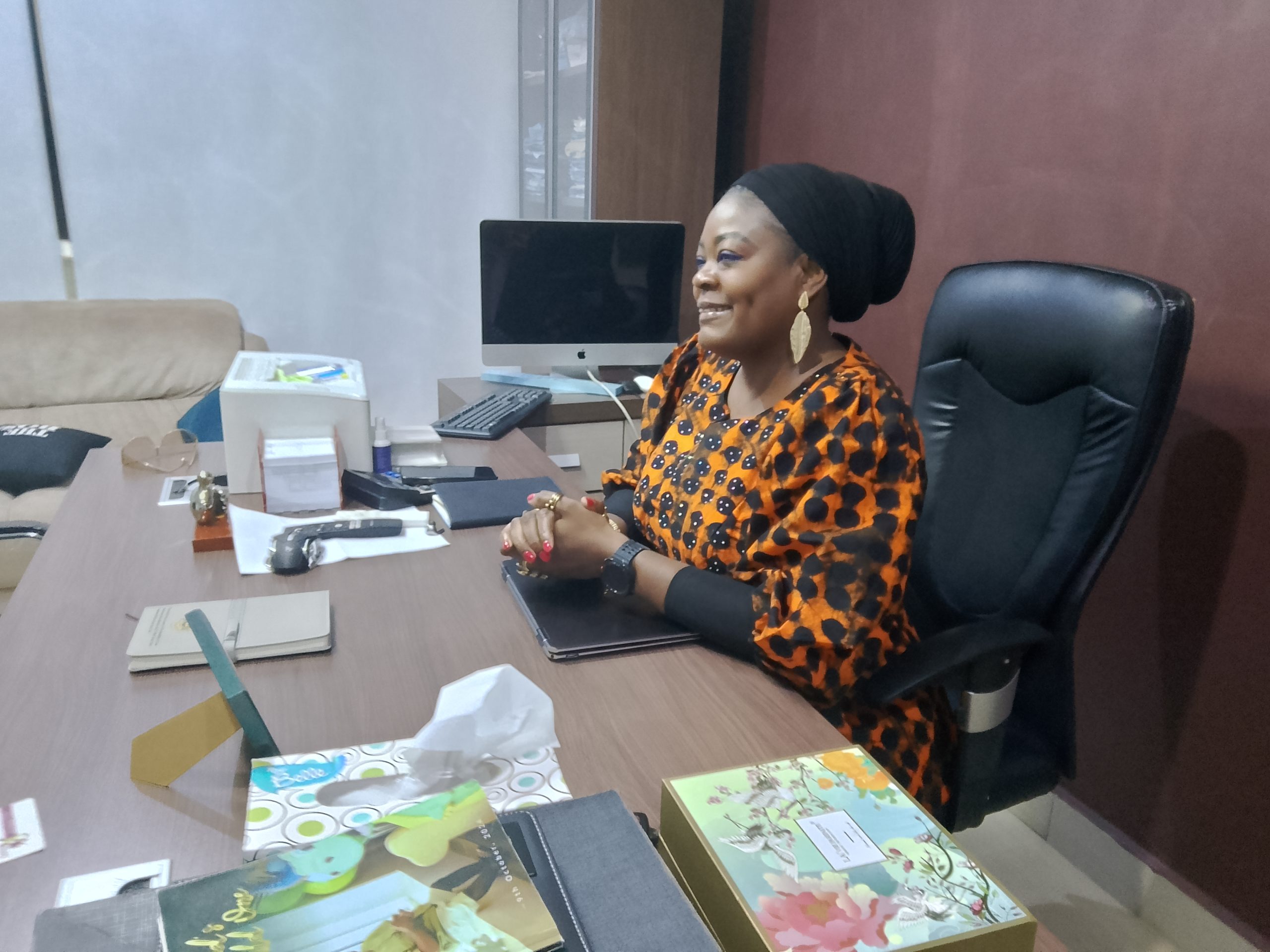
That’s the exact reason. Because there’s no support for these children and somebody needs to stand in the gap for them. There’s really no support. There’s no awareness. It’s just now that we’re beginning to see more childhood cancer organizations. The government is willing to pay a little attention to children with cancer. Before now, there was a cancer health fund which supported breast cancer, cervical cancer, and prostate cancer. There was nothing for children. But because of our advocacy and other organizations like ours, they’ve now decided that this year they would include children in the cancer health fund. What that means is that children can then access a certain percentage of funding from the government. It wasn’t there before. So we’re seeing some improvement. And I chose to toll that line because of that child my brother met. And of course, after I went to the hospital and I saw those children, I honestly couldn’t look back. I love children. I have two biological children and five adopted children. So I love children a lot. I cannot see a child suffering and look back, honestly. So that’s why I decided to start an NGO. I didn’t plan to start a foundation. It just keep drawing me and you know, I just kept going back to the hospital and you know, to support these children.
Before we round off quickly, you know, this is a problem and we must accept that it is a problem. Just like it is already said that when there’s a problem and you acknowledge that there’s a problem, then you work towards resolving or solving such a problem. So as it stands right now, I want us to look at it from three perspectives. Let’s say from the family, then from maybe organizations like yours, the media, and then finally to the government. What do you think we can do from the family level to get rid of this problem? From the family level, what can parents do? Then from organizations like yours and the media, what can they do? Then finally to the government, what can we all do together to ensure that we are able to nip this problem of cancer in the mud?
As a family, as a society, we need to stop stigmatization. I have a very close friend of mine even though she’s supported the okapi foundation, unfortunately her child was recently diagnosed with cancer and she cannot even say the word, “my child has cancer” because she’s afraid of what people will say. So as a society, we need to be able to talk about cancer freely.
Non-governmental organizations, we’re trying the best we can in terms of advocacy, in terms of awareness. We’ll like to see more collaborations in terms of adult cancer, children cancer, everybody coming together to raise awareness like the event we had on saturday.
And as for the government, we’d like to see more support in terms of funding. Like I said, if a breast cancer patient today can go into the hospital, access cancer health fund, a child does not have that. The parents will basically have to do out-of-pocket, except when organizations like ours come in. But 100% they’ll have to pay out-of-pocket and it is not cheap. So we’d like to see the type of support being offered to adults being offered to children, would like to see government agencies creating more awareness about childhood cancer.