

 By
By Two Iranian drones struck the United States Embassy in Riyadh on Tuesday, as Tehran continued attacks on American bases and diplomatic missions across the region in retaliation for the war launched against it.
Saudi Arabia’s defence ministry said the strike caused a fire and material damage at the embassy compound. Sources who spoke to Reuters reported hearing a loud explosion and seeing flames at the site. There were no immediate reports of injuries, particularly as the building was reportedly empty at the time of the attack.
Hours after Saudi authorities confirmed the strike in the capital, two additional explosions were heard in Riyadh’s diplomatic quarter, according to the agency. Black smoke was seen rising over the area, which houses several foreign missions.
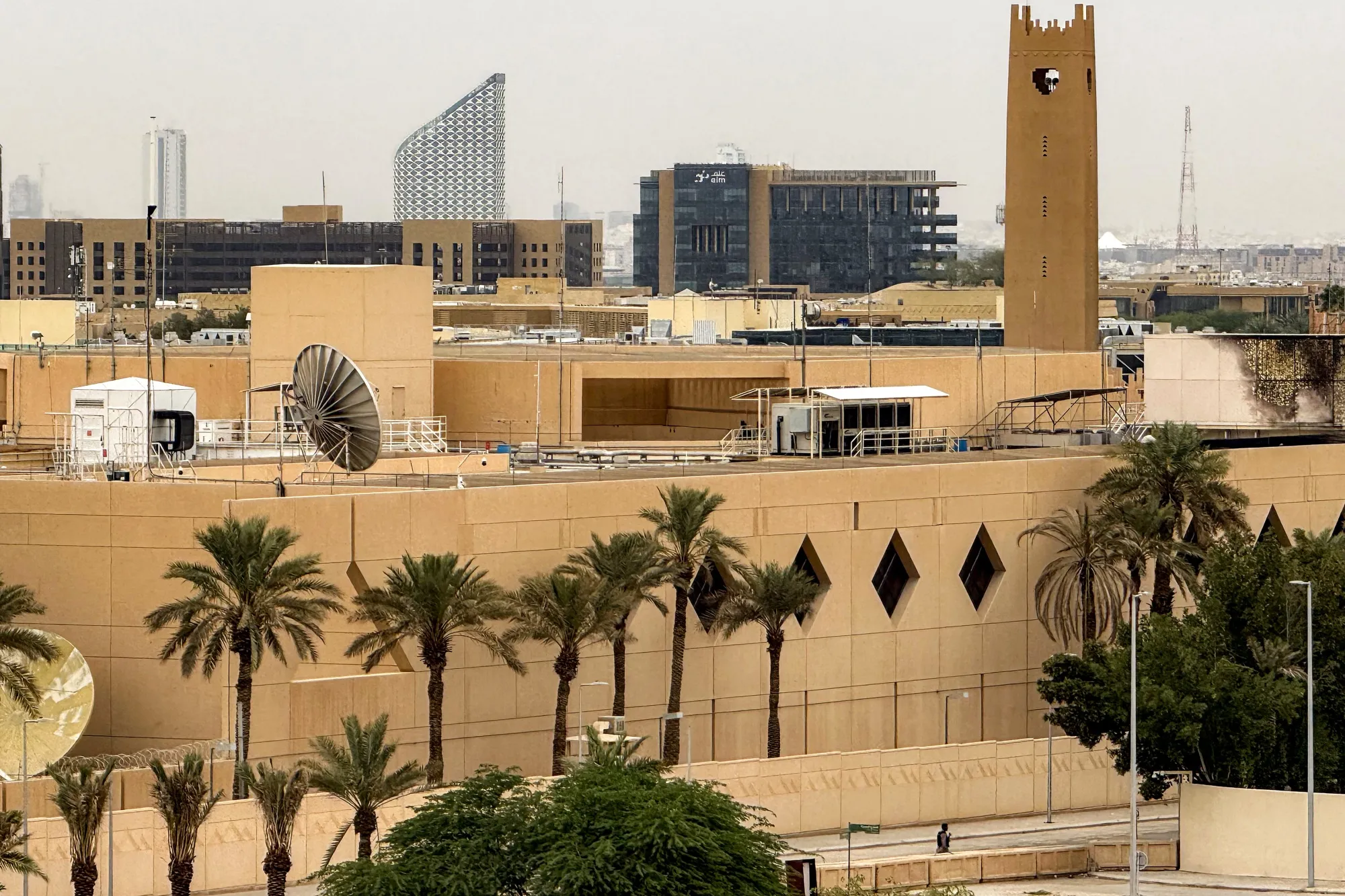 The US embassy headquarters in Riyadh is pictured on March 3, 2026, after it was hit by drone strikes earlier. Iran hit back at industrial and diplomatic targets across the Middle East on March 3, with Washington warning its citizens to evacuate the entire region. (Photo by AFP via Getty Images) Photographer: AFP/Getty
Responding to the Iranian strikes and reports that six U.S. soldiers had been killed since the war began, U.S. President Donald Trump told NewsNation in an interview: “You’ll find out soon” how the United States would retaliate, without providing further details. He added that he did not think “boots on the ground [in Iran] will be necessary.”
The United States Embassy in Kuwait was also targeted and later announced it would close “until further notice,” cancelling all regular and emergency consular appointments.
Americans Told to Evacuate Region
The Iranian attacks follow a joint U.S.–Israeli unprovoked offensive launched on Saturday, in which Iran’s Supreme Leader Ali Khamenei, several senior officials, and hundreds of civilians were reported killed.
Around 150 girls were killed in an initial strike on a school in southern Iran. According to the Red Crescent Society, at least 787 people have been killed so far in U.S. and Israeli attacks. At least 11 people have been killed in Iranian strikes on Israel and five in attacks across Gulf states.
Iran has retaliated by targeting American bases in the region and disrupting key oil trade routes. Saudi Arabia, Kuwait, the United Arab Emirates, Qatar, Bahrain, and Jordan have all reportedly been targeted with Iranian ballistic missiles and drones.
The Islamic Revolutionary Guard Corps (IRGC) said it has targeted more than 500 U.S. and Israeli sites, deploying 700 drones and hundreds of missiles.
Amid escalating tensions, the United States issued evacuation warnings on Monday, urging Americans to leave several countries in the region, including Iraq, Lebanon, Syria, the Palestinian territories, Jordan, Egypt, Yemen, and Gulf states.
Meanwhile, the United States Embassy in Israel said it was “not in a position at this time to evacuate or directly assist Americans in departing Israel.”
The United States Ambassador to Israel, Mike Huckabee, said Americans in Israel face “very limited options” to leave the country as regional tensions continue to intensify.
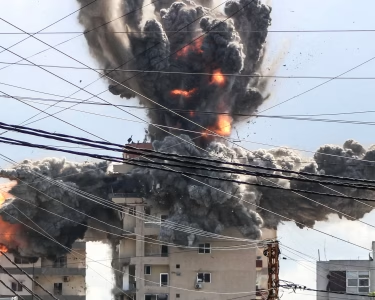
 Smoke rises from Israeli airstrikes in Dahiyeh, a southern suburb of Beirut, Lebanon, Tuesday, March 3, 2026. (Hussein Malla, Associated Press)
Israel and US Target Nuclear Facilities in Iran
Explosions echoed across Iran’s capital, Tehran, through the night into Tuesday, with aircraft reportedly flying overhead. Strikes caused two explosions at a broadcasting facility in the city, according to Iranian state television, which said no casualties were recorded.
The United Nations nuclear watchdog, the International Atomic Energy Agency (IAEA), confirmed that Iran’s Natanz nuclear enrichment facility had sustained “some recent damage,” though it added that “no radiological consequence is expected.”
The United States previously struck Natanz during the 12-day war in June, when coordinated Israeli and American attacks significantly weakened Iran’s nuclear programme.
Israeli Prime Minister Benjamin Netanyahu maintained that Iran was rebuilding underground facilities to produce atomic weapons, claiming Tehran was constructing “new sites, new places.” He did not provide evidence to support the assertion.
“We had to take the action now and we did,” Netanyahu told Fox News Channel during an interview on Hannity.
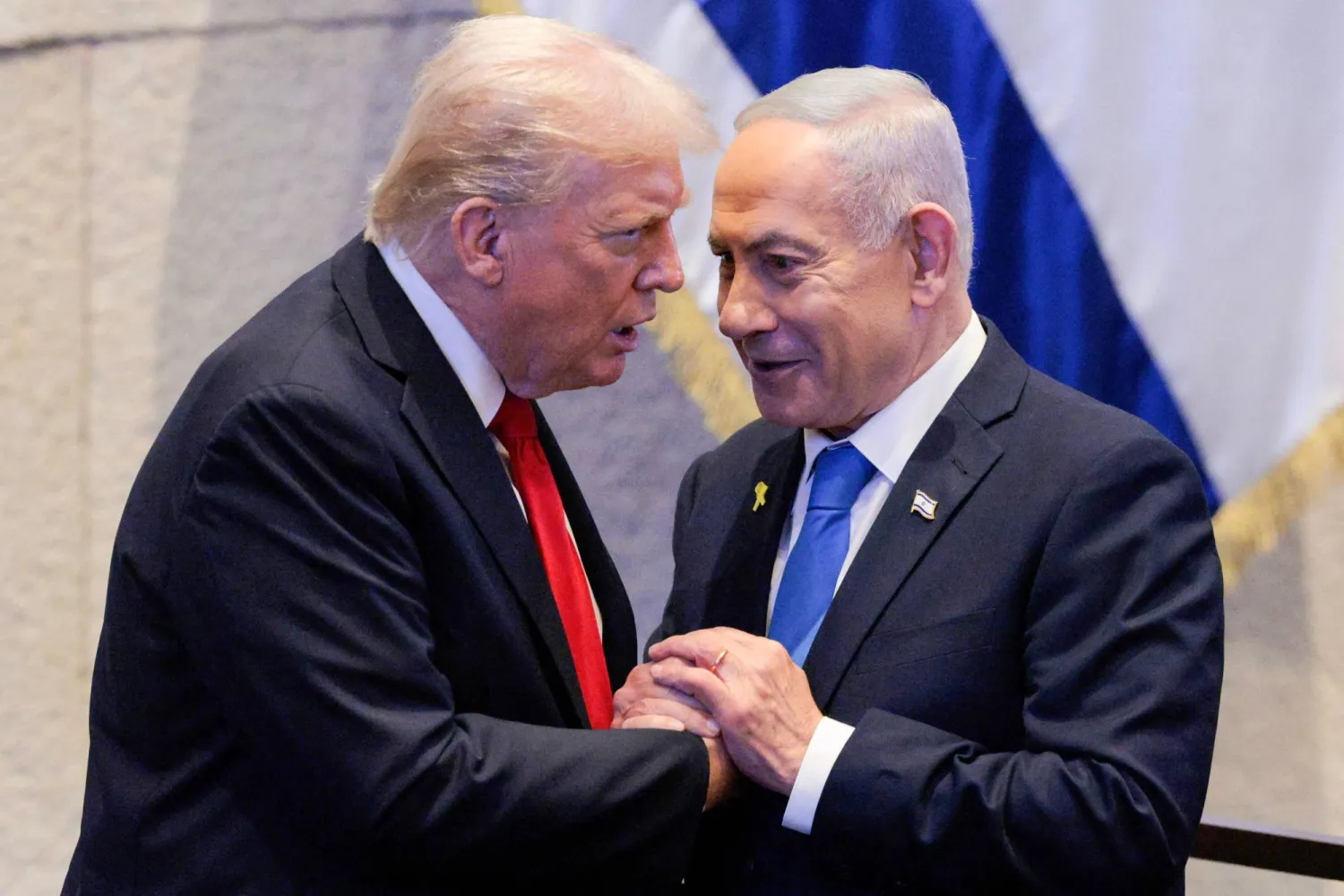 US President Donald Trump (L) holds hands and speaks with Israeli Prime Minister Benjamin Netanyahu at the Israeli parliament, the Knesset, in Jerusalem on October 13, 2025. (Photo by Chip Somodevilla / POOL / AFP)
Iran has stated that it has not enriched uranium since June. While insisting on its right to enrichment, Tehran maintains that its nuclear programme is for peaceful purposes.
Satellite imagery analysed by The Associated Press showed limited activity at two Iranian nuclear sites prior to the latest escalation. Analysts said Iranian authorities were likely assessing damage from the 2025 strikes and attempting to salvage remaining infrastructure.
Uncertainty Over Duration of War
The widening scope of Iranian retaliation across the Gulf, the scale of Israeli and American attacks, the reported killing of Iran’s Supreme Leader Ali Khamenei, and the absence of a clear exit strategy have raised concerns that the conflict could become prolonged.
U.S. President Donald Trump said on Monday that operations could last four to five weeks but indicated he was prepared to extend them if necessary.
He later stated that the United States possessed a “virtually unlimited supply” of munitions.
“Wars can be fought ‘forever,’ and very successfully, using just these supplies,” Trump wrote on social media.
 A group of men inspects the ruins of a police station struck Monday amid the U.S.–Israeli military campaign in Tehran, Iran, Tuesday, March 3, 2026. (Associated Press)
Conflict Disrupts Regional Business and Energy Markets
Iran has expanded its retaliatory strikes to countries previously considered relatively secure in the Middle East. Targets reportedly included two Amazon data centres in the United Arab Emirates and one in Bahrain. The facilities in the UAE were struck, while a drone hit near the Bahrain site, causing damage, according to the company.
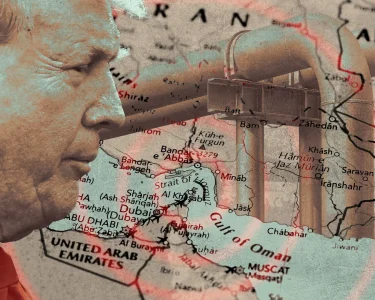
Tehran has also targeted energy infrastructure in Qatar and Saudi Arabia and attacked several vessels in the Strait of Hormuz, the narrow maritime corridor through which roughly one-fifth of globally traded oil passes. The attacks have triggered sharp increases in global oil and natural gas prices.
“The Strait of Hormuz is closed,” declared Iranian Brigadier General Ebrahim Jabbari, an adviser to the Islamic Revolutionary Guard Corps, warning that any vessel attempting to pass through would be set ablaze.
Qatar’s Foreign Ministry spokesperson, Majed Al Ansari, vowed that Iranian attacks on the gas-rich nation “will not go unanswered.”
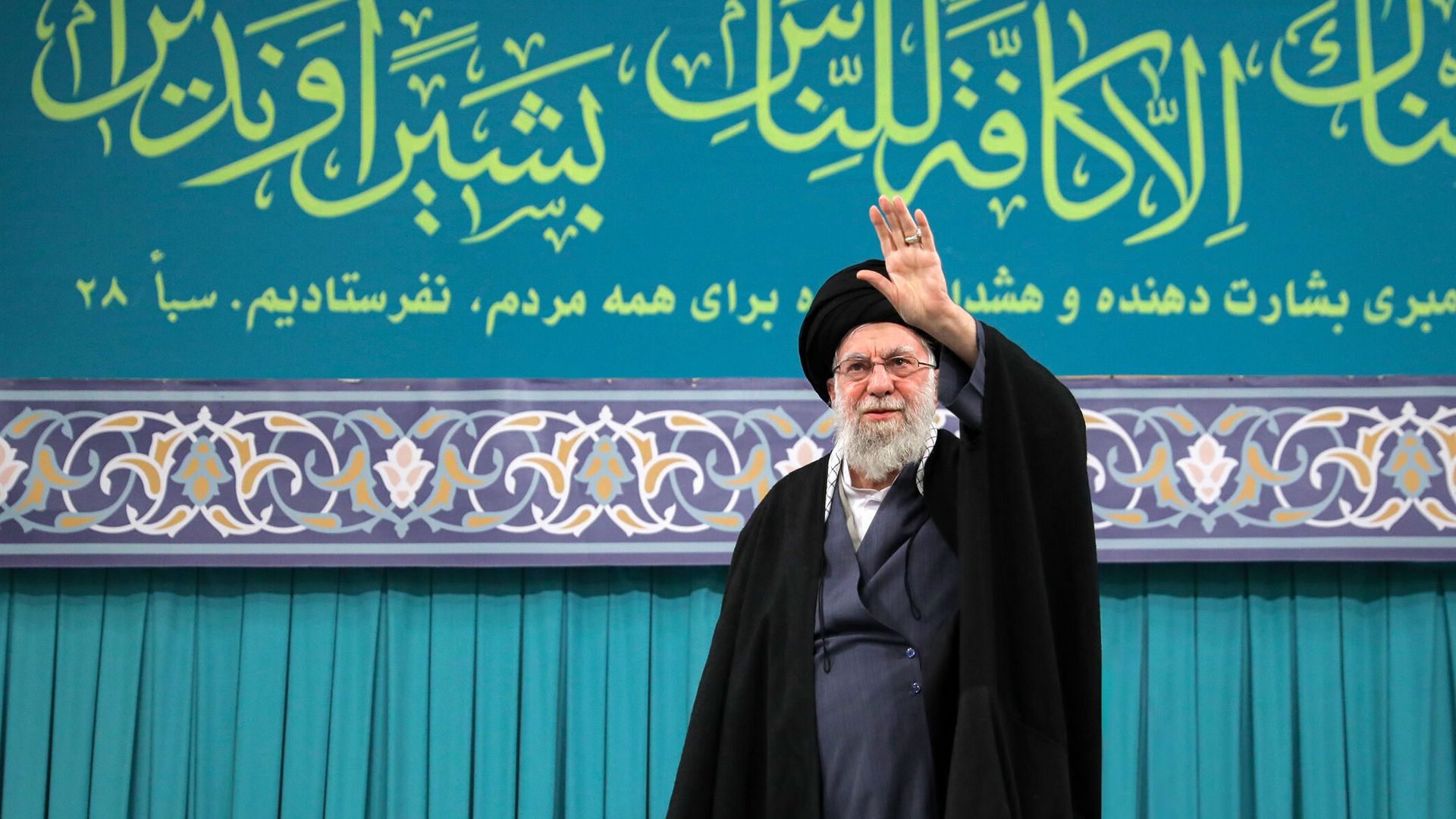 Iran’s Supreme Leader Ali Khamenei greets the crowd as he attends a program held in the capital Tehran, Iran on Jan. 17. Photo: Iranian Leader Press Office.
Israel Expands Military Operations into Lebanon
The conflict has also spread to Lebanon. The resistance group Hezbollah launched missiles toward Israel on Monday, prompting Israeli retaliation.
On Tuesday, the Israeli military announced that it had deployed additional troops into southern Lebanon and taken control of strategic positions near the border.
Israel also carried out fresh airstrikes in Beirut, stating that it was targeting Hezbollah command centres and weapons storage facilities. Explosions were heard and smoke was seen rising from a southern suburb of the Lebanese capital.
Lebanon’s state-run National News Agency reported that the Lebanese army was evacuating certain border positions. A senior Hezbollah official, Mohamoud Komati, said the group had no option but to continue fighting Israel as tensions escalate across the region.
 A person holds placards and chants slogans as they rally during a protest against unprovoked US military action in Iran (AFP)