


 By
By Stakeholders in the health sector and development partners have called for stronger and more coordinated action to tackle challenges affecting women and girls, particularly in the area of sexual and reproductive health (SRH), as Adamawa State marked the 2026 International Women’s Day.
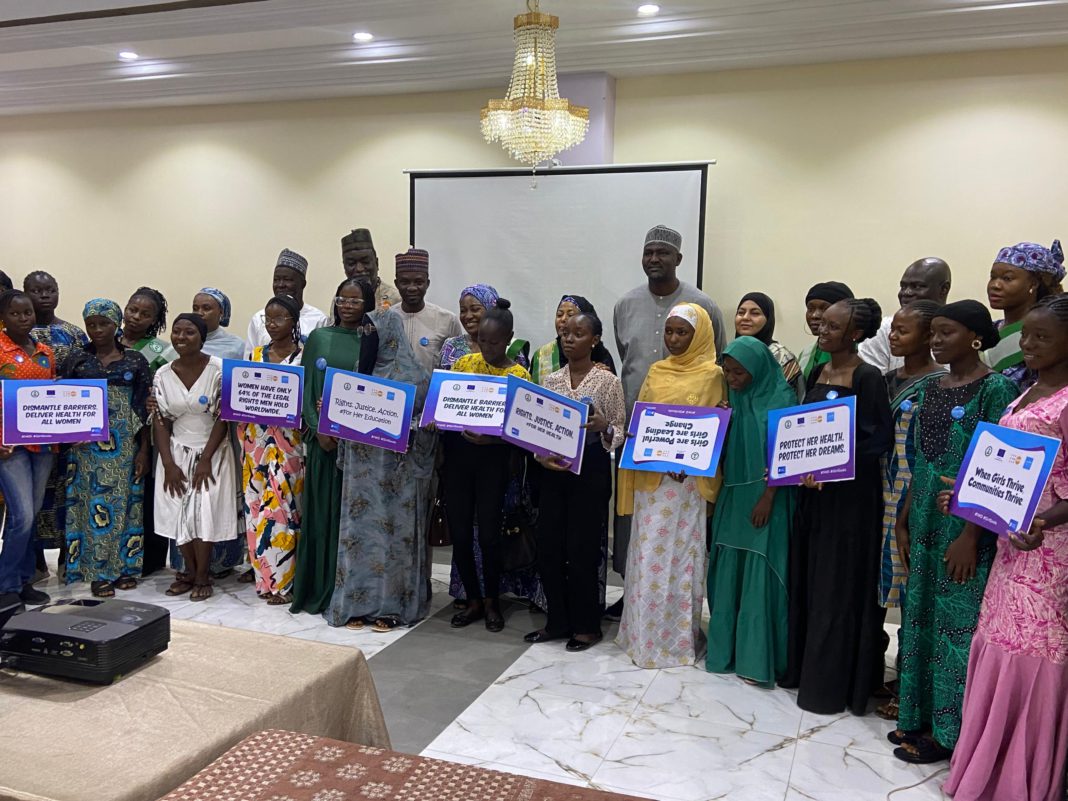
The event, organised by the Adamawa State Government with support from UNICEF, brought together policymakers, health professionals and adolescent groups to deliberate on issues affecting women and girls. The celebration was held under the theme, “Rights, Justice and Action for All Women and Girls.”
Speakers at the gathering emphasised that achieving gender equality requires deliberate policies and sustained commitment to protecting the health, dignity and rights of women.
In his welcome address, the Executive Chairman of the Adamawa State Primary Healthcare Development Agency (ADPHCDA), Dr. Sulaiman Saidu Bashir, described the theme as timely, noting that it highlights the urgent need to address structural barriers affecting women.
He said the state has adopted a unique approach by engaging adolescents and young people in discussions on women’s health and rights.
According to him, empowering young people with knowledge on reproductive health and gender equality can help prevent many of the challenges women face later in life.
Dr. Bashir noted that prevention remains a key principle of primary healthcare and stressed the importance of early education on health issues affecting women.
He urged participants to use the forum not only to identify challenges but also to develop practical solutions that could be implemented at the community level.
“We must critically examine the disproportionate burden women carry in areas such as healthcare, education, economic opportunities and even the effects of climate change. This gathering should lead to concrete actions that will improve the lives of women and girls,” he said.
He also called on the media and community leaders to amplify advocacy messages on women’s rights and reproductive health in order to create wider awareness.
Speaking at the event, the Chief of UNICEF Bauchi Field Office, Dr. Nuzhat Rafique, emphasised that advancing the rights of women and girls requires collaboration between both men and women.
She commended the Adamawa State Government for its efforts to improve healthcare services and for initiatives supporting women and children, particularly through primary healthcare programmes and maternal health interventions.
Dr. Rafique stressed that access to essential services such as healthcare, education, nutrition, clean water and protection from violence is critical for women’s empowerment.
She noted that women in remote communities often face significant barriers in accessing these services, calling for deliberate policies to ensure equitable access regardless of location.
“Every woman and girl must be able to access her rights without discrimination, whether she lives in an urban centre or in a remote rural community,” she said.
Dr. Rafique further highlighted the importance of adolescent reproductive health programmes, noting that investing in young people will help safeguard the health and wellbeing of future generations.
In a presentation on the challenges women face in accessing SRH services, Dr. Maisaratu Bakari of the Modibbo Adama University Teaching Hospital (MAUTH) raised concern over Nigeria’s high maternal mortality rate.
She stated that Nigeria remains among the countries with the highest maternal mortality rates globally, with about 993 deaths recorded per 100,000 live births.
According to her, thousands of Nigerian women die annually from pregnancy-related complications, many of which are preventable.
Dr. Bakari identified several factors contributing to maternal deaths, including limited access to skilled healthcare workers, long distances to health facilities, financial constraints and poor awareness of danger signs during pregnancy.
She explained that many complications arise from delays in seeking care, reaching health facilities or receiving adequate treatment upon arrival at hospitals — a situation commonly described as the “Three Delays Model.”
She also warned that harmful practices such as child marriage, female genital mutilation and gender-based violence continue to pose serious threats to the health and wellbeing of women and girls.