

 By
By BEIRUT/JERUSALEM, March 3 (AfrikTimes) – Lebanon was pulled deeper into the widening Middle East war on Tuesday as the Iran-backed Lebanese group Hezbollah launched missiles at Israel for a second consecutive day, prompting Israel to send troops into southern Lebanon and carry out waves of airstrikes.
Long a theatre of conflict between Israel and Hezbollah, Lebanon was drawn further into the spillover from the war between the United States, Israel and Iran on Monday, when Hezbollah opened fire with drones and missiles. With dozens killed in retaliatory Israeli strikes, the group’s decision to enter the conflict has intensified longstanding divisions within Lebanon over its status as an armed faction – the only Lebanese group to retain its weapons after the 1975–1990 civil war.
THOUSANDS FLEE FROM BORDER AREA
The Lebanese government on Monday took the unprecedented step of outlawing Hezbollah’s military activities. The pro-Hezbollah newspaper al-Akhbar condemned the move as a “capitulation to dictates, which could even lead to the outbreak of civil war”.
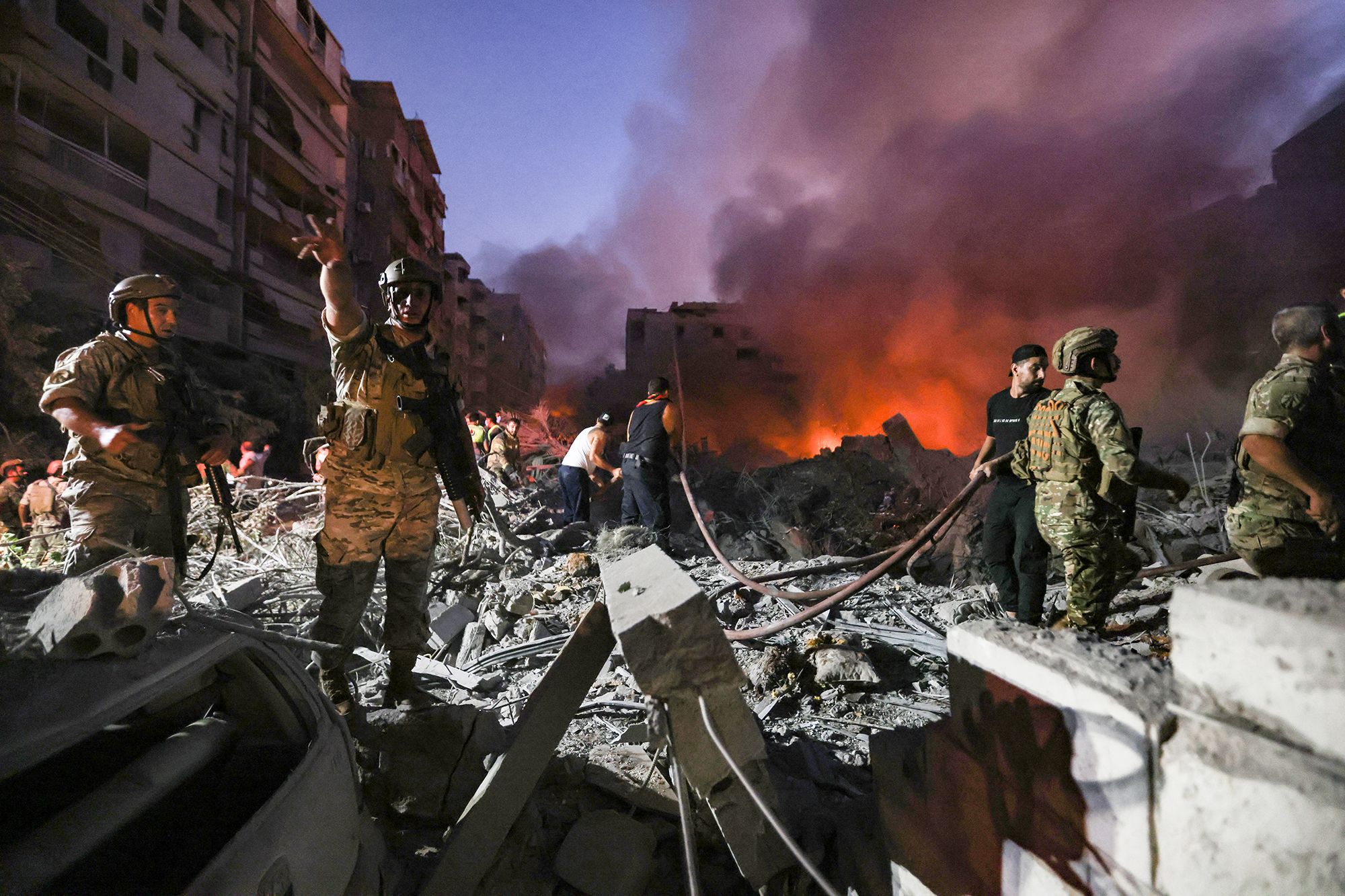
Israeli strikes sent thick plumes of smoke billowing over Beirut’s Hezbollah-controlled southern suburbs and across hilltops in southern Lebanon. In Israel, missiles fired from Lebanon set off air raid sirens as deep into the country as its main commercial hub Tel Aviv. An Israeli military source said they were fired by Hezbollah. There was no immediate claim by the group.
Israeli Defence Minister Israel Katz said he had authorised the military to advance and take control of additional positions in Lebanon, where Israeli troops have held several hilltops since the 2024 war with Hezbollah. Israeli military chief Eyal Zamir said assaults will continue until Hezbollah disarms.
Many thousands of Lebanese have fled homes in areas that bore the brunt of that conflict. The Israeli military has ordered residents of dozens of villages in southern Lebanon to evacuate.
“This displacement is harder than the last one,” said Nuzha Salame, sheltering in the city of Sidon after fleeing her village. “Now we’re in hardship and deprivation, and we’re still out in the streets.”
The United Nations said that, by Monday, at least 30,000 people, including 9,000 children, had sought protection in shelters, while many more are expected to join them.
Israeli Prime Minister Benjamin Netanyahu said Israel would intensify its strikes in Lebanon in response to Hezbollah’s attacks, accusing the group of dragging the Lebanese people “into a war that is not theirs.” The U.S. embassy in Beirut announced it would shut until further notice due to rising regional tensions.
 Smoke rises after an Israeli strike on Beirut’s southern suburbs, following an escalation between Hezbollah and Israel amid the U.S.-Israeli conflict with Iran, Lebanon. REUTERS/Mohamed Azakir.
ISRAELI INCURSIONS
The Lebanese health ministry said Israeli strikes had killed at least 40 people and wounded 246 since the start of the escalation. It said an incorrect death toll of 52 was issued on Monday. There have been no reported deaths in Israel as a result of Hezbollah’s attacks.
The Israeli military said it had deployed additional forces to southern Lebanon overnight, saying this was to take up defensive positions to guard against any potential Hezbollah attack. UNIFIL, the U.N. peacekeeping force in southern Lebanon, said Israeli soldiers crossed the border in four areas before returning south of the frontier, and that dozens of rockets and missiles had been fired into Israel over the past two days.
Witnesses said the Lebanese army had pulled out of at least seven forward-operating positions along the border.
Israel has been carrying out near daily strikes targeting Hezbollah since the ceasefire in 2024. Hezbollah’s attack on Monday was its first since that conflict.
On Tuesday, Hezbollah announced at least four separate attacks using drones and missiles targeting military facilities in northern Israel. The group also claimed it had shot down an Israeli drone in southern Lebanon.
Southern Lebanon, predominantly Shi’ite Muslim, has long been a key Hezbollah stronghold, where it has drawn political support and deployed weaponry ahead of the 2024 conflict. The Lebanese army has moved into the area and seized its weapons caches since that conflict, from which Hezbollah emerged greatly weakened.
 Smoke rises after an Israeli strike on Beirut’s southern suburbs, following an escalation between Hezbollah and Israel amid the U.S.-Israeli conflict with Iran, Lebanon. REUTERS/Khalil Ashawi.
ROCKET HITS HOUSE IN ISRAEL
A missile fired from Lebanon struck a house in northern Israel, Israeli media reported. Israel’s ambulance service said a man was treated for injuries caused by flying glass.
Overnight, an Israeli airstrike hit the headquarters of Hezbollah’s al-Manar TV in Beirut. Footage captured by a Reuters camera overlooking Beirut’s southern suburbs showed explosions and outgoing projectiles.
The Israeli military said further strikes in Beirut on Tuesday targeted “command centres, weapons storage facilities, and satellite communication components belonging to Hezbollah’s intelligence headquarters.” It added that these facilities were operating under civilian cover and that steps had been taken to mitigate civilian harm, including advance warnings.
Hezbollah said its initial attack on Monday was in retaliation for the killing of Iran’s supreme leader and in defence of Lebanon. On Tuesday, the group cited continuous Israeli attacks since 2024, describing its actions as “a reaction to aggression, for national reasons first and foremost.”
Hezbollah leader Naim Qassem has not issued any statements or public remarks during the latest escalation.
 Debris at the site of an Israeli strike on a building that houses Al-Manar TV offices in Beirut’s southern suburbs, following an escalation between Hezbollah and Israel amid the U.S.-Israeli conflict with Iran, Lebanon, March 3, 2026. Picture taken with a mobile phone. REUTERS/Stringer.