

 By
By The Nigeria Customs Service (NCS) has announced plans to become fully paperless by the second quarter of 2026 as part of efforts to speed up cargo clearance, reduce delays and enhance trade facilitation at the nation’s borders.
The disclosure was made on Friday during the formal launch of the One-Stop-Shop (OSS) platform in Lagos, with the theme “Enhancing Trade Facilitation through Integrated Risk Intervention, Faster Clearance Process and Efficient Dispute Resolution.”
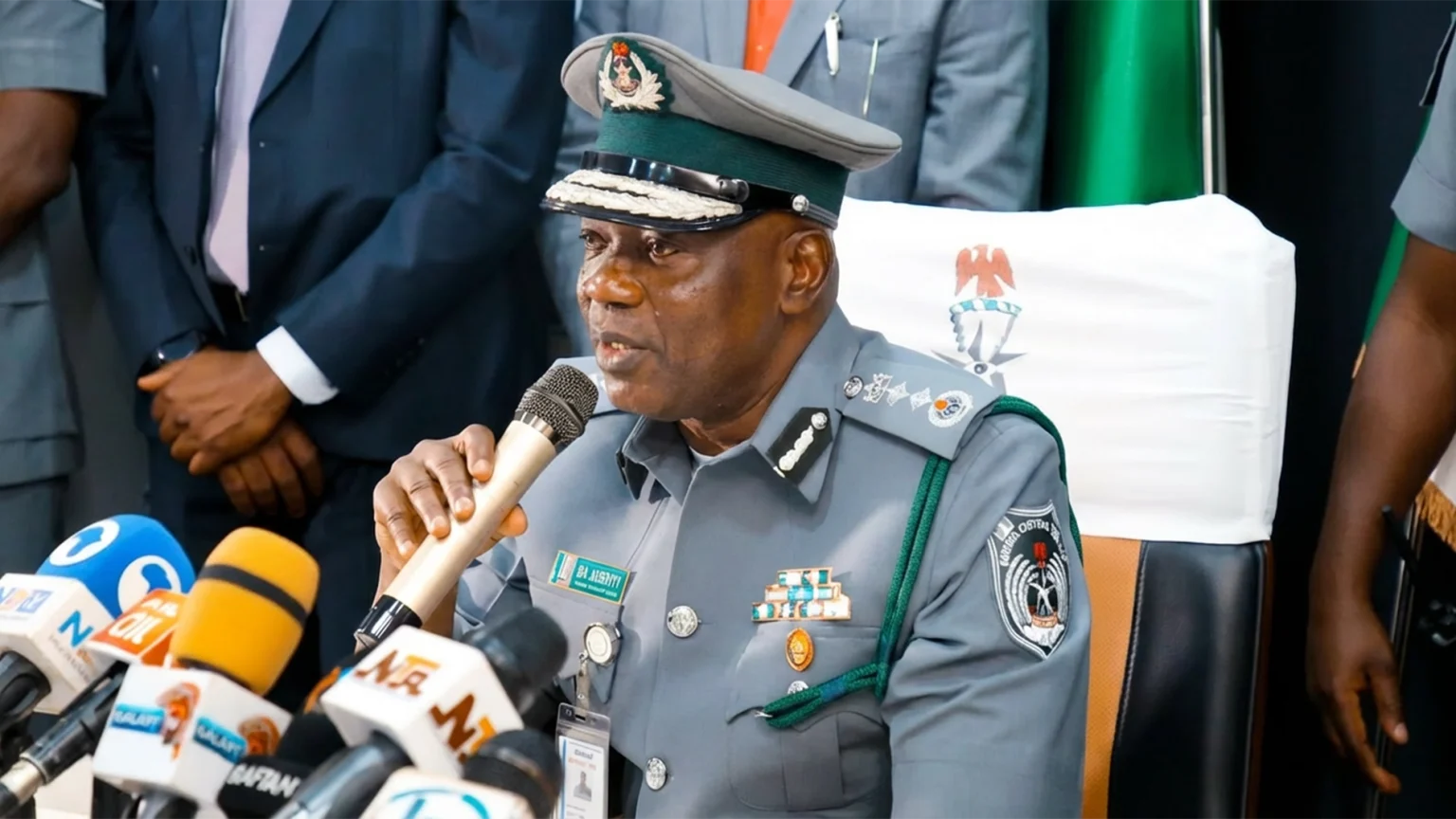
The Comptroller-General of Customs, Dr Bashir Adeniyi, represented by the Deputy Comptroller-General in charge of Enforcement, Timi Bomodi, described the OSS initiative as part of the Service’s ongoing digital transformation and a continuation of its trust-based engagement with the trading community.
Adeniyi recalled that the Service had earlier launched the Authorised Economic Operator (AEO) programme last year, noting that the OSS further demonstrates Customs’ commitment under the leadership of President Bola Ahmed Tinubu to ensuring predictable, transparent and accountable border procedures that encourage investment and improve competitiveness.
He explained that delays experienced at the ports are often caused not by the time required for cargo inspections but by fragmented procedures, overlapping checks and prolonged waiting periods.
According to him, national assessments such as Nigeria’s Trade Policy Review at the World Trade Organisation and the Service’s Time Release Study identified these bottlenecks as factors increasing trade costs and weakening investor confidence.
To address these challenges, Adeniyi said the OSS platform integrates valuation, processing centres, intelligence, enforcement, compliance monitoring and gate operations into a unified workflow.
He added that digital tracking, automated alerts, joint inspections and shared dashboards would replace multiple fragmented interventions, making every process traceable, accountable and better coordinated.
“Multiple checkpoints are collapsed into one decision space, with interventions that are collective, fully auditable and aligned with institutional responsibility,” he said.
He further noted that the platform aims to achieve a 48-hour cargo clearance window, reduce compliance costs, strengthen revenue assurance and improve transparency.
The Comptroller-General added that the paperless initiative—covering core clearance processes, documentation and approvals—is expected to be rolled out before the end of the second quarter of 2026.
Adeniyi described the OSS as a shift from fragmented interventions to coordinated governance, from discretion to data-driven operations, and from isolated actions to collective responsibility.
He urged stakeholders to engage constructively with the system and hold the Service accountable to its commitments.
“When border processes function efficiently, industries become more competitive, jobs expand and national productivity rises, because progress at the border remains progress for the nation,” he said.
Also speaking, the Deputy Comptroller-General in charge of Tariff and Trade, Caroline Niagwan, said the OSS initiative was first introduced in 2018 but faced several challenges, largely due to communication gaps.
She explained that the upgraded digital platform now consolidates all risk interventions into a single interface, thereby eliminating procedural complications and improving clearance efficiency.
Niagwan urged Customs officers at ports and border stations to take ownership of the process to ensure its success.
“Your involvement is crucial to achieving the objectives of the One-Stop-Shop. Active participation from all teams will ensure the platform’s success,” she said.
In a goodwill message, the Director-General of the Manufacturers Association of Nigeria (MAN), represented by Segun Oshidipe, commended Customs for its efforts to improve the ease of doing business in the country.
Oshidipe described the OSS as a deliberate step towards streamlining procedures, reducing bottlenecks, strengthening inter-agency coordination and improving operations at the nation’s ports and borders.
He also praised the creation of an open forum that allows stakeholders to express concerns and suggest practical solutions, noting that collaboration and transparency are essential for building trust, driving reforms and enhancing Nigeria’s global competitiveness.
He reaffirmed MAN’s readiness to collaborate with the Service to ensure the successful implementation of the platform and expressed optimism that the initiative would boost operational efficiency, strengthen trade facilitation and contribute to national economic development.
However, he emphasised that the ultimate success of the initiative would depend on seamless and timely trade facilitation at reasonable costs, achievable through stronger partnerships, better understanding and deeper engagement among stakeholders.