

 By
By TEGUCIGALPA, Dec. 25 (AfrikTimes) — Nasry Asfura, the conservative candidate backed by U.S. President Donald Trump, has been declared the winner of Honduras’ presidential election, more than three weeks after the November 30 vote that was marred by delays, technical failures, and allegations of fraud.
Honduras’ electoral authority, the National Electoral Council (CNE), announced on Wednesday that Asfura secured 40.3 percent of the vote, narrowly defeating centre-right Liberal Party candidate Salvador Nasralla, who garnered 39.5 percent. The candidate of the ruling LIBRE party, Rixi Moncada, finished a distant third.
Asfura campaigned on a pro-business platform, arguing that increased private investment is key to Honduras’ economic recovery. His agenda focused on job creation, education, and security. He has also signalled a possible shift in Honduras’ diplomatic recognition away from Taiwan and toward Beijing.
The margin of victory was razor-thin, and problems with the ballot processing system forced election officials to manually count roughly 15 percent of tally sheets, representing hundreds of thousands of votes, in order to determine the final outcome.
In the weeks following the election, the ruling LIBRE party repeatedly called for protests, denouncing what it described as an “electoral coup.” The demonstrations disrupted the manual count and temporarily prevented officials from accessing facilities where ballot materials were stored.
Despite the controversy, the results were approved by two members of the electoral council and one deputy. The third council member, Marlon Ochoa, was absent from the video announcement declaring Asfura the winner.
“Honduras: I am ready to govern. I will not let you down,” Asfura said in a post on X following confirmation of the results.
He is scheduled to be sworn in on January 27 for the 2026–2030 presidential term.
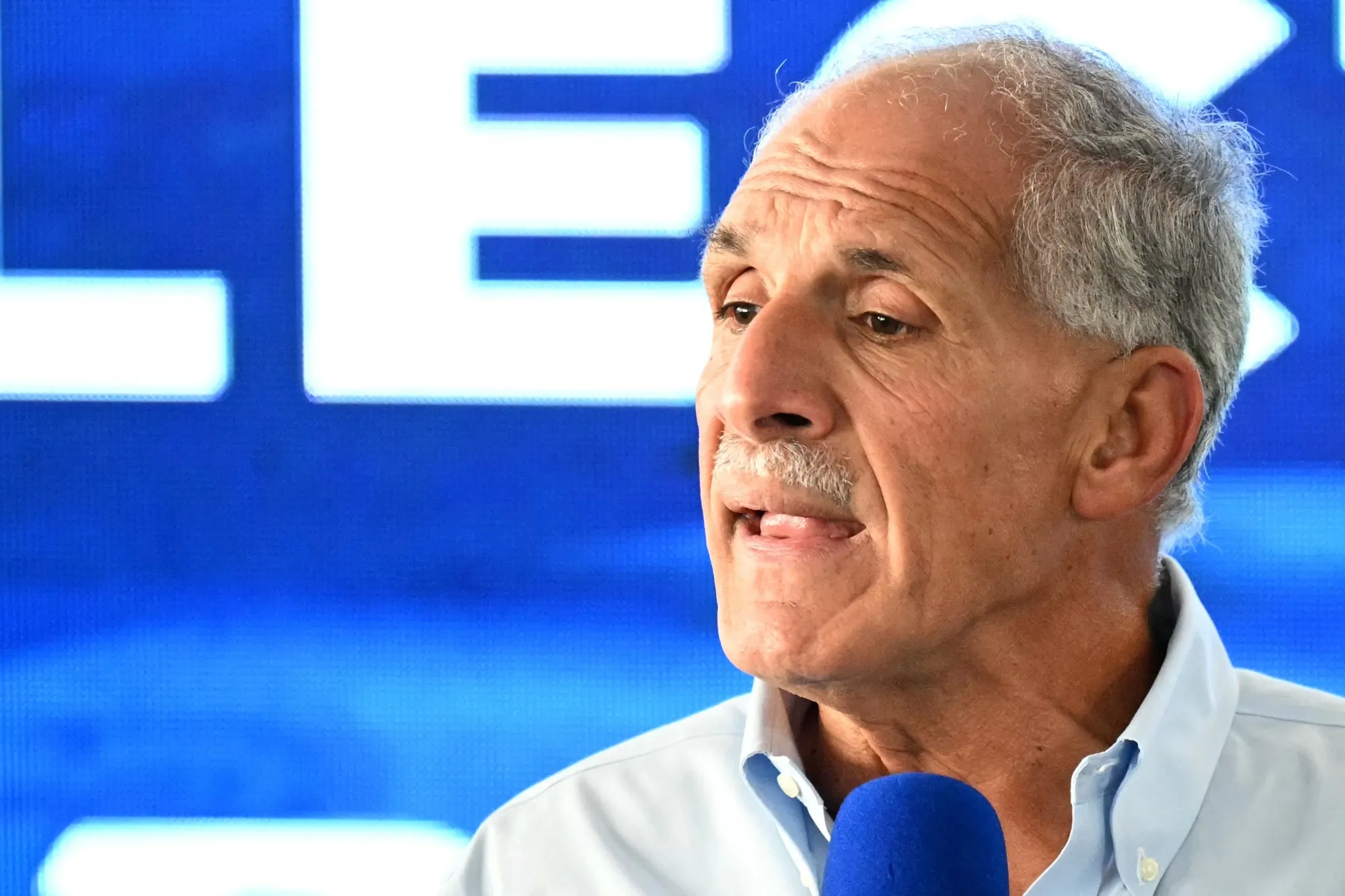
 Honduran presidential candidate and businessman Nasry Asfura, of the National Party, speaks during his campaign closing rally in Tegucigalpa on November 22. EMILIO FLORES/AFP/AFP via Getty Images
Nasralla rejected the CNE’s declaration, arguing that ballots that should have been counted were excluded from the final tally. However, he urged his supporters to remain calm and avoid violence or disruption.
“I will not accept a result based on omissions. Democracy does not shut down because of exhaustion, nor because today is the 24th — this is the saddest Christmas for the Honduran people,” Nasralla said at a press conference in Tegucigalpa on Tuesday. This marks his third unsuccessful bid for the presidency.
The results were also rejected by the President of the Honduran Congress, Luis Redondo, a member of the ruling LIBRE party.
“This is completely outside the law. It has no value,” Redondo wrote on X.
TRUMP BACKS ASFURA
President Trump had openly endorsed Asfura ahead of the election, describing the 67-year-old former mayor of Tegucigalpa as the “only real friend of freedom in Honduras” in a post on Truth Social, and urging voters to support him.
Trump also threatened to cut U.S. financial assistance to Honduras if Asfura did not win. In addition, he pardoned former Honduran President Juan Orlando Hernández, a member of Asfura’s National Party, who had been serving a 45-year prison sentence in the United States on drug trafficking and weapons charges.
Amid delays in the vote count, U.S. President Donald Trump again weighed into the election, alleging fraud without providing evidence and warning there would be “hell to pay” if Honduran authorities altered preliminary results that had shown Nasry Asfura in the lead.
Political analysts say Trump’s backing of Asfura forms part of a broader effort to cultivate a conservative political bloc across Latin America, extending from Nayib Bukele in El Salvador to Javier Milei in Argentina.
Both Salvador Nasralla and the ruling LIBRE party denounced Trump’s remarks as foreign interference in Honduras’ electoral process. Nasralla told Reuters in early December that the last-minute intervention by Trump had undermined his chances of victory.
Following the declaration of results, U.S. Secretary of State Marco Rubio congratulated Asfura, saying Washington looked forward to working with his administration.
“The United States congratulates President-elect Asfura and looks forward to working with his administration to advance prosperity and security in our hemisphere,” Rubio wrote on X, urging all parties to accept the outcome in order to ensure a peaceful transition.
The Secretary General of the Organization of American States (OAS), Albert Ramdin, said the organization “takes note” of the election results and would issue a report containing findings and recommendations in the coming days.
“The General Secretariat is aware of the difficulties experienced during the electoral process, recognizes the work carried out by Honduran institutions, and regrets that the full recount of the votes cast by citizens has not yet been completed,” Ramdin said in a post on X.
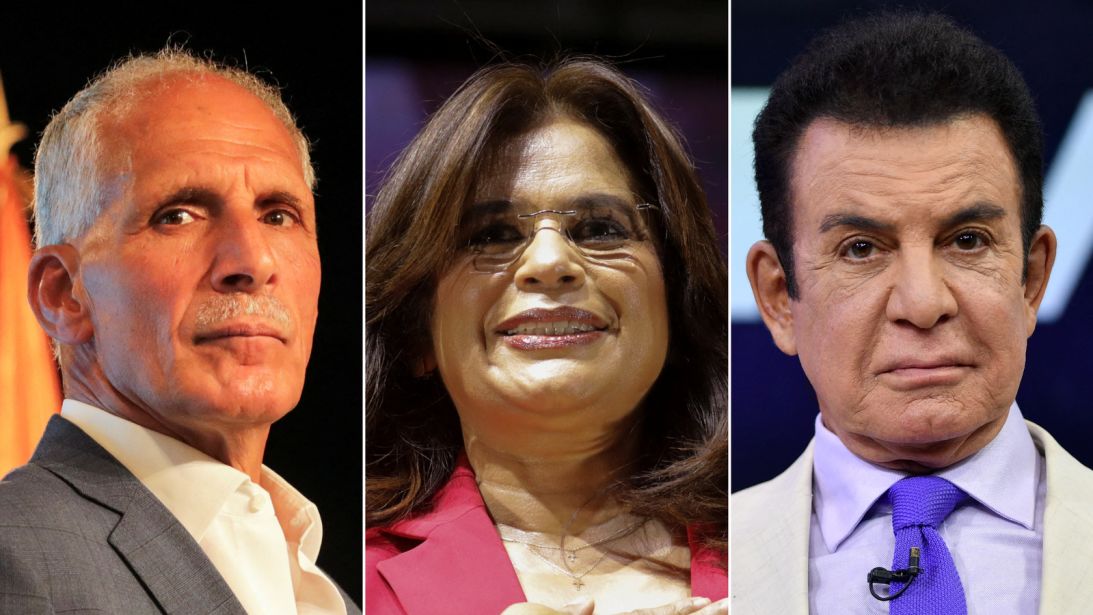 Nasry Asfura, Rixi Moncada and Salvador Nasralla. Reuters/Getty Images.
“PAPI, AT YOUR SERVICE”
Asfura was born in Tegucigalpa on June 8, 1958, into a family of Palestinian descent. He studied civil engineering but did not complete his degree. During the 1990s, he worked in various municipal administrations, earning a reputation as an efficient but low-profile official. He later served as a congressman and minister for social investment.
In 2013, Asfura became mayor of Tegucigalpa and its surrounding district, gaining popularity for delivering infrastructure projects. His hands-on approach earned him the nickname “Papi, at your service,” a slogan his campaign continued to use during the presidential race.
Projecting an image of modesty and diligence—often appearing in jeans with rolled-up sleeves—Asfura has sought to position himself as a pragmatic leader. However, he remains under investigation, alongside other former officials from his tenure as mayor, over allegations of embezzlement and money laundering. Authorities allege he was part of a scheme to divert public funds, claims Asfura has dismissed as politically motivated. He has denied any wrongdoing.
“Extremes don’t work,” Asfura said during the campaign when asked whether he represents the far right. “We must seek balance. People don’t care whether you’re ugly or beautiful, left or right, green, red or blue; what they want are solutions.”
 Supporters of the National Party celebrate as the National Electoral Council decelerate presidential candidate Nasry Asfura the winner of Honduras’ presidential election in Tegucigalpa, Honduras, Wednesday, Dec. 24, 2025. Fernando Destephen/AP