

 By
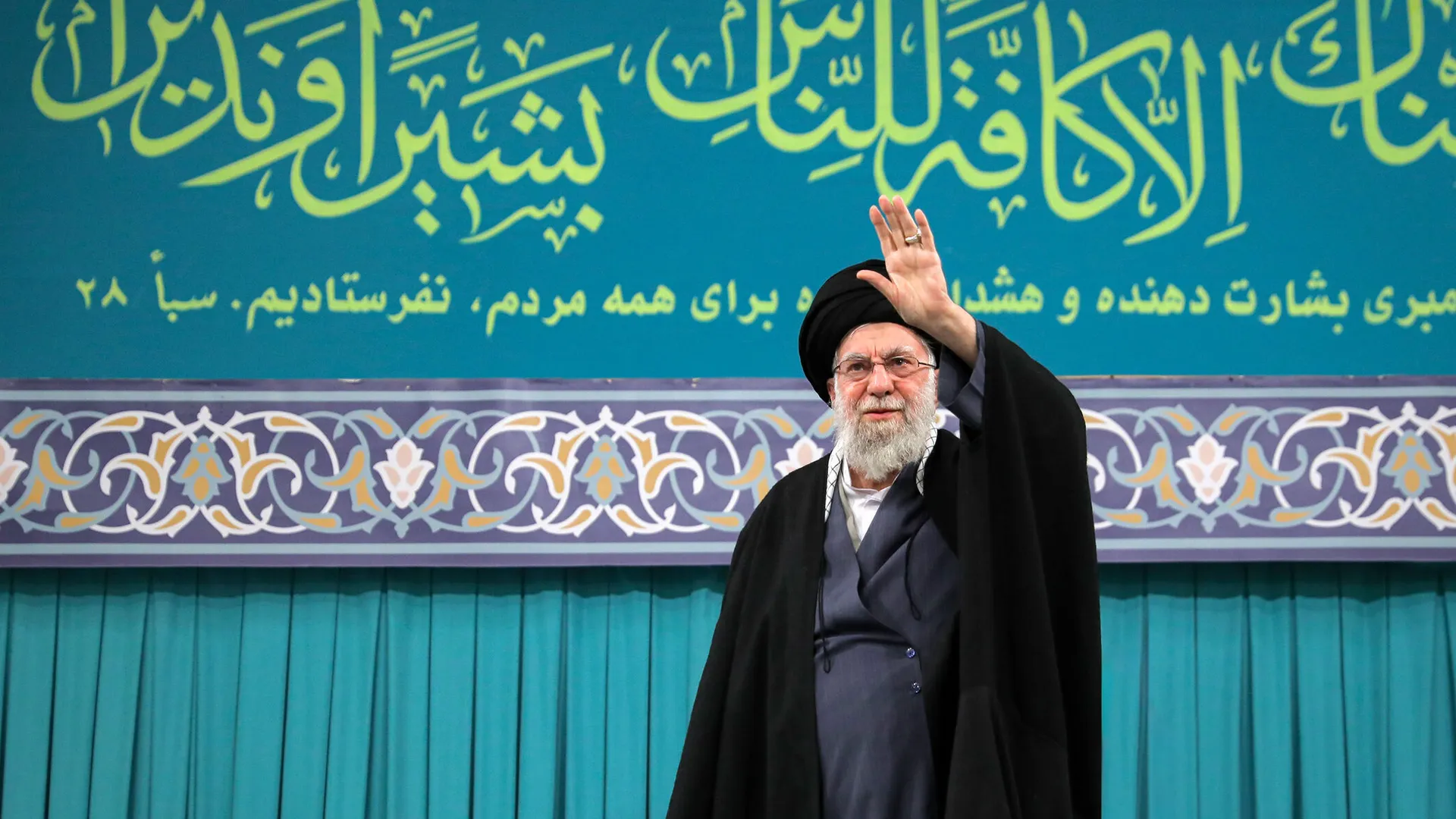
By Iran’s clerical regime now faces the prospect of appointing a successor to Supreme Leader Ayatollah Ali Khamenei following his killing in joint U.S.-Israeli strikes.
The veteran leader, who ruled with an iron fist for nearly four decades, did not have an officially declared heir. Instead, an elected body of 88 senior clerics, known as the Assembly of Experts, is tasked with selecting the next supreme leader.
Under the constitution, if the supreme leader leaves office, his powers are temporarily transferred to a council comprising the president, the head of the judiciary, and a senior cleric from the Guardian Council until the Assembly of Experts selects a new leader. On Sunday, Iran formed a provisional leadership council, naming Ayatollah Alireza Arafi, 67; President Masoud Pezeshkian; and Gholam-Hossein Mohseni-Eje’i, the head of the judiciary, as members.
Selecting a new leader is a task that has only been carried out by the Assembly of Experts once since the Islamic Republic was established in 1979, when Khamenei was hastily chosen following the death of Ayatollah Ruhollah Khomeini more than three decades ago.
The ruling establishment will want to move quickly to show stability in the republic, with members of the assembly expected to convene soon to deliberate over possible candidates before naming Khamenei’s replacement.
However, it remains unclear whether such a gathering can safely take place, given that U.S. President Donald Trump has vowed that the joint U.S.-Israeli bombing campaign targeting the regime will continue in the days ahead. The jurists must choose a successor who meets the constitutional qualifications. The new leader must be male, a cleric with political competence, moral authority, and loyalty to the Islamic Republic. The assembly may interpret these rules in a way that excludes reformist clerics who favor greater social freedoms and engagement with the outside world.
Below is a look at some of the contenders for the position, according to experts and analysts.
Mojtaba Khamenei, 56
 The son of Iran’s Supreme Leader Ayatollah Ali Khamenei, Mojtaba Khamenei, attends a demonstration in Tehran on May 31, 2019. (Morteza Nikoubazl/NurPhoto/Getty Images/File.)
The second son of Khamenei, Mojtaba is known to wield significant influence behind the scenes and maintains strong links with the Islamic Revolutionary Guard Corps (IRGC), the country’s most powerful military body, as well as its Basij volunteer paramilitary force.
However, father-to-son succession is frowned upon in the Shiite clerical establishment, particularly in a revolutionary Iran born out of the overthrow of a widely reviled monarchy. An additional obstacle is that Mojtaba is not a high-ranking cleric and holds no official role in the regime. He was sanctioned by the United States in 2019.
Alireza Arafi, 67
 Pope Francis is shown a gift as he receives Ayatollah Alireza Arafi, president of Islamic Seminaries of Iran, and entourage in a private audience at the Vatican May 30, 2022. (Vatican Media/Handout/Reuters)
A lesser-known figure, Arafi is an established cleric with a record of service in government institutions and was considered a confidant of Khamenei.
He currently serves as deputy chairman of the Assembly of Experts and has been a member of the powerful Guardian Council, which vets election candidates and legislation passed by parliament. He also heads Iran’s seminary system. According to Alex Vatanka of the Middle East Institute, Khamenei’s decision to appoint Arafi to senior and strategically sensitive positions indicated that he had “a great deal of confidence in his bureaucratic abilities.”
Still, Arafi is not widely regarded as a political heavyweight and is not known to have close ties to the security establishment. He is described as tech-savvy, fluent in Arabic and English, and has published 24 books and articles.
Mohammad Mehdi Mirbagheri, early 60s
Mirbagheri is a hardline cleric and a member of the Assembly of Experts who represents the most conservative wing of the clerical establishment. He was recently reported to have justified the high death toll in Israel’s war in Gaza by saying that the death of even half the world’s population is “worth it” if it brings people closer to God.
According to IranWire, an activist outlet, he is strongly opposed to the West and believes that a conflict between believers and non-believers is inevitable. He currently heads the Islamic Sciences Academy in the northern holy city of Qom.
Hassan Khomeini, early 50s
 Ayatollah Ruhollah Khomeini’s grandson, Hassan Khomeini, at Khomeini’s shrine in southern Tehran, Iran June 4, 2025. (Office of the Iranian Supreme Leaders/Wana News Agency/Reuters)
Hassan Khomeini is the grandson of the founder of the Islamic Republic, Ayatollah Ruhollah Khomeini, giving him both religious and revolutionary legitimacy.
He serves as the custodian of the Khomeini mausoleum but has not held public office and appears to have limited influence within the country’s security apparatus or ruling elite. He is regarded as less hardline than many of his peers and was barred from running for the Assembly of Experts in 2016.
Hashem Hosseini Bushehri, late 60s
Bushehri is a senior cleric closely associated with the institutions that manage succession, particularly the Assembly of Experts, where he serves as first deputy chairman.
He is said to have been close to Khamenei but maintains a low domestic profile and is not known to have strong ties to the IRGC.