

 By
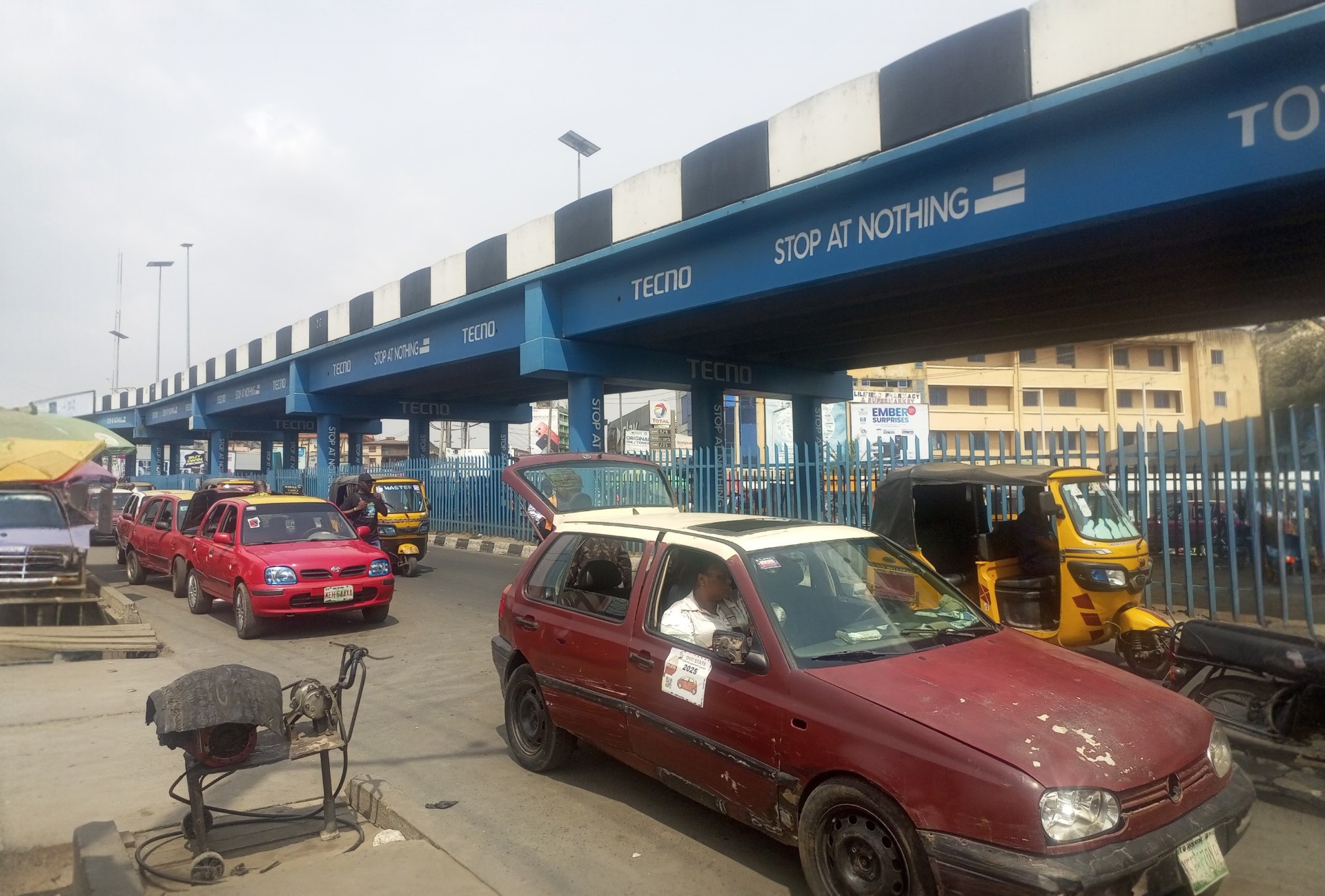
By On the busy streets of Ibadan, Mr Dodo Aliyu, a 60-year-old Micra taxi driver with one wife and four children, sits by the trunk of his taxi at Mokola Roundabout, calling out to passengers heading to Challenge.
On a usual day, when petrol sold for about ₦835 per litre, he would have completed his sixth trip by this time.
But at 2:45 p.m., Mr Aliyu is only on his fourth trip, with just one passenger occupying the back seat. Earlier in the day, he bought petrol at ₦1,063 per litre at an MRS filling station and is still waiting for four more passengers to complete the trip. This is a process that could take another 30 minutes.
“The hike in price has affected us,” he said.
“Firstly, people are not boarding taxis like before. Now we are buying petrol for ₦1,063 per litre. We used to charge ₦300, but if we tell them ₦400 now, they refuse to enter the cab. We’ve been here for a while. We just finished our third trip when we should have been on the sixth by now.”
Mr Aliyu represents a fraction of residents in Ibadan, and Nigeria at large, struggling with the recent hike in the price of Premium Motor Spirit (PMS), known as petrol.
On Monday, March 2, Dangote Petroleum Refinery announced an adjustment in its price from ₦774 to ₦874 per litre, citing increasing pressure in the fuel market due to the ongoing Middle East crisis involving Iran, Israel and USA. By Friday, March 6, loading was halted at the refinery following another price adjustment of about ₦121, pushing the PMS price to ₦995 per litre. Earlier, on February 10, 2026, Dangote Refinery had increased its price from ₦774 to ₦799 per litre.
AfrikTimes observed that filling stations in Ibadan quickly adjusted their pump prices from about ₦935 to between ₦1,050 and above.
Media reports gathered that several filling stations temporarily closed on Friday after indications of another price adjustment, leading to fuel hoarding and a brief scarcity.
A survey conducted by AfrikTimes on Saturday showed that petrol was selling between ₦1,050 and ₦1,080 per litre across the city. At Ajibode Junction, Bovas filling station sold petrol for ₦1,080 per litre. Similarly, Energy Switch at Ojoo sold at ₦1,080 per litre. Mobil, opposite UI Microfinance, sold at ₦1,050. At Mokola Roundabout, Sulmit Nig. Enterprises Ltd. sold petrol for ₦1,075, Poplat sold at ₦1,050, while MRS sold for ₦1,063 per litre. Meanwhile, TotalEnergies halted petrol sales at the time of visit.
Similarly, media reports from Lagos indicate that filling stations are selling petrol between ₦1,005 and ₦1,064 per litre.
A source at TotalEnergies told journalists that the station was awaiting an official price directive before resuming sales.
“We are waiting for a price directive from the head office before we start selling. We cannot sell without receiving an official price notice,” the source said.
The Reality of the Hiked Price
Mr Aliyu’s struggle to fill his taxi reflects the growing frustration among both drivers and commuters. While drivers struggle to get passengers at increased fares, commuters are forced to choose between paying the higher cost, stretching the little cash they have, or postponing their trips altogether.
The ripple effect is significant. People will struggle to attend meetings, events, or even basic errands such as going to the market. Transportation costs also contribute to rising food prices and other goods that depend on mobility.
Like Mr Aliyu, another driver, Mr Adejoke, is also feeling the pressure. He spoke with journalists while loading passengers. He believes the government holds the key to solving the problem.
“It is the government that can do something about it, and we are appealing to them to provide a solution,” he said.
The Price Dilemma
AfrikTimes also observed that since the recent fuel increase, there has been a proportional rise in transport fares among drivers across Ibadan.
In many cases, fares have increased by at least ₦100 between stops. However, the situation is slightly different for drivers operating within the University of Ibadan. Unlike drivers outside the campus who can collectively adjust fares, those within the university must seek approval from the school Senate before implementing any increase.
“The Senate has to sit before we can get approval for an upward review of transport fares. An order must come from above. We have always been the ones taking the hit whenever fuel prices increase. We also have children here as well. There is nothing we can do other than endure,” said Mr Adekola, a campus commercial driver.
According to him, the current petrol crisis in Nigeria resembles someone who fails to utilise what he already has. He believes that since Nigeria is a petroleum producing country, scarcity should not be an occurrence.
“The situation is like someone who has meat in his soup but still chooses to eat fish. If he does not use the meat properly, he will eventually resort to the fish.”
While many campus drivers are waiting for an official review due to the regulations governing transport fares, some have already begun adjusting their prices to cope with the new reality.
Mr Olayinka, another campus commercial driver who operates the Ajibode route, lamented the frequent price increases and their impact on profits.
“I bought petrol at ₦1,080 this morning. We cannot continue with the old fares. Although we already have an approved price list, we will need to meet with the authorities to review it again. Last week, Ajibode was ₦300. Now we’re charging ₦400. Just one month ago, we were buying petrol for around ₦830 per litre,” he said.
The Growing Economic Pressure
From these observations, it can be inferred that the latest fuel increase is dealing a heavy blow to residents of Ibadan. There are concerns that food prices and other agricultural products may soon increase as transportation costs continue to rise. With petrol currently selling for as high as ₦1,080 per litre, many residents are left adjusting their finances to cope with the harsh economic reality.