

 By
By It has been widely reported that US bombers have been using a base in Gloucestershire in southwest England, RAF Fairford, to launch bombing missions over Iran.
But a new incident has put a spotlight on another, less well-known, base in England that the US military is also believed to be using to attack Iran: RAF Lakenheath in Suffolk, eastern England.
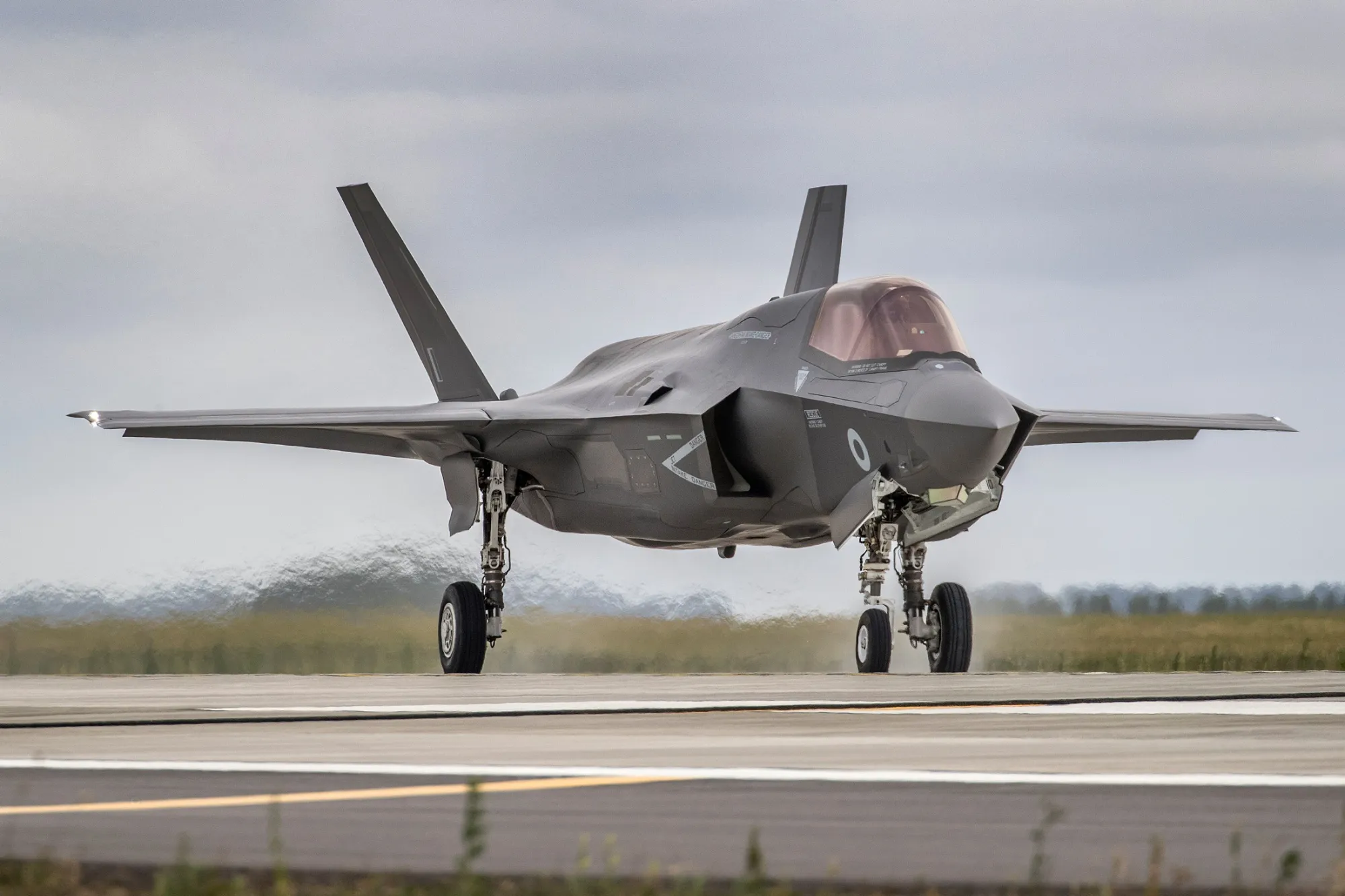
The Islamic Revolutionary Guard Corps (IRGC) said on Friday that its air defences shot down a US F-35 fighter jet over central Iran that came from a squadron based at RAF Lakenheath.
Britain’s Ministry of Defence (MoD) declined to comment when approached. The Pentagon has not yet responded to Iran’s claim.
The F-35, manufactured by Lockheed Martin, is one of the US’s primary fighter jets and has been widely used in the US-Israeli war on Iran. In late March, the US denied a claim by Iran that the IRGC had shot down an F-35.
Iranian news agency Tasnim has published photos that purportedly show wreckage of the newly downed aircraft on Friday.
According to the IRGC, an “LN” tail code could be seen on the wreckage, which identified the jet as belonging to the 48th Fighter Wing in the 493rd Fighter Squadron at Lakenheath.
But what is Lakenheath’s involvement in the war?
The base, owned by the UK’s MoD, is leased to the US Air Force and is the largest US fighter operation in Europe, hosting the 48th Fighter Wing.
On 24 March, five F-35C fighter jets were seen landing at Lakenheath.
Then on Monday evening, a fleet of 12 A-10C Thunderbolt IIs – known as the Warthog – were seen landing at the base. The Warthog is widely described as a “tank buster” designed to support ground forces.
Iran ‘Considering’ Whether to Strike British Bases
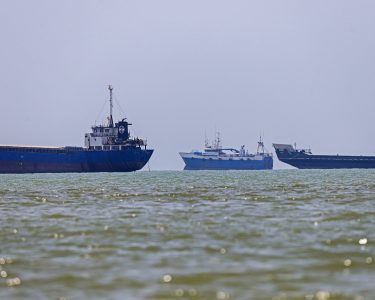
Warthogs have reportedly been used to strike Iranian fast attack boats and mine layers near the Iranian coast. The US military refused to comment on its mission.
On Thursday morning, local anti-war activists said they saw more than 20 planes taking off from the base on the morning of 2 April.
Meanwhile another base in Suffolk, RAF Mildenhall, has also seen significant activity in the past week.
RAF Mildenhall is used to support US Air Force operations. On 31 March, two US EA-37B Compass Call electronic warfare aircraft were photographed landing at the base.
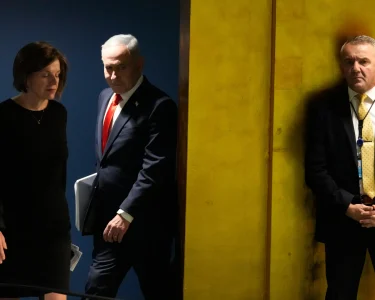
The Iranian ambassador in London, Seyed Ali Mousavi, said on Times Radio on Wednesday that Tehran was “considering” whether to strike British bases in retaliation.
When the US-Israeli war on Iran began, Britain initially refused to allow the Americans to use the joint UK-US base on Diego Garcia in the Indian Ocean to launch strikes. But within two days, Britain changed its position. Prime Minister Keir Starmer announced the US could use British military bases for bombers targeting Iranian missile sites, insisting this was a purely defensive measure.
Two weeks later, Starmer did another U-turn, announcing Britain would allow the US to use British bases to launch strikes on Iranian sites to help protect ships in the Strait of Hormuz.
Despite these moves, which support the US war effort, President Donald Trump has repeatedly attacked Starmer, even suggesting that the so-called “special relationship” between the two countries was on the rocks.
On Thursday, British Foreign Secretary Yvette Cooper chaired a meeting of more than 40 countries to formulate a plan to exert pressure on Iran to open the Strait of Hormuz, a critical maritime corridor through which around 20 percent of the world’s oil passed until the IRGC effectively closed it in early March.
After the meeting, Cooper said Britain would “comprehensively reject” any attempt by Iran to charge ships fees to sail through the waterway.
The foreign secretary added that Iran must “not be allowed” to “hold the global economy hostage” and said the nations discussed potential sanctions “to bear down on Iran”.
On Thursday afternoon, Iran’s foreign ministry said it was working with Oman on a proposal to issue permits to ships passing through the Strait of Hormuz after the war ends.