

 By
By Since the Super Eagles of Nigeria failed to qualify for the 2026 FIFA World Cup jointly hosted by the United States, Canada and Mexico, many Nigerian football fans have shifted their attention to supporting the amazing ten representatives from Africa and other continents at the tournament.
Africa secured a record ten slots at the expanded 48-team World Cup, with Senegal, Egypt, Cabo Verde, Morocco, South Africa, Tunisia, Ghana, Algeria, Côte d’Ivoire and DR Congo earning qualification after a fiercely contested campaign. The opening round of matches provided an early test of the progress of football in Africa against some of the world’s most established football nations.
Collectively, the African teams recorded two victories, four draws and four defeats, scoring eight goals and conceding thirteen. While the figures may appear modest to some fans, several performances suggested that African football is growing competitive on the global stage.
Highlights From the Ten Encounters
South Africa’s campaign began with a difficult assignment against hosts Mexico at the Estadio Azteca. Despite entering the tournament with high expectations, Bafana Bafana were defeated 2-0 after defensive lapses and two red cards hampered their chances of staging a comeback.
Morocco, however, delivered one of the most impressive performances for Africa in the opening round. The Atlas Lions held Brazil to a 1-1 draw in a thrilling Group C encounter. Ismael Saibari’s opener showcased the attacking quality of Morocco before Vinícius Júnior restored parity for the South Americans. The result showed Morocco’s status as one of the leading football powers in Africa. Notably, their exploits from historic world cup matches in recent years had been encouraging.
Côte d’Ivoire became the first African side to record a victory at the tournament after edging Ecuador 1-0 in Philadelphia. Substitute Amad Diallo emerged as the hero, scoring a dramatic stoppage-time winner to hand the Elephants all three points and give Africa its first triumph of the competition.
Tunisia endured one of the toughest outings among the African representatives, suffering a heavy 5-1 defeat against Sweden. Despite pulling a goal back through Omar Rekik, the North Africans struggled to contain Sweden’s attacking firepower as Yasin Ayari, Alexander Isak, and Viktor Gyökeres inspired a dominant European display.
One of Africa’s most celebrated results came courtesy of Cabo Verde, who frustrated Spain in a goalless draw. This was not because Cabo Verde secured a victory. However, facing one of the highest-ranked teams in world football, Cabo Verde displayed tremendous organisation and resilience. Veteran goalkeeper Vozinha produced a series of outstanding saves to deny the Spaniards and secure a valuable point for his side.
Egypt also impressed by holding Belgium to a 1-1 draw. Emam Ashour gave the Pharaohs the lead after connecting with a pass from Mohamed Salah before Belgium found an equaliser through an unfortunate own goal. Nevertheless, the disciplined performance from Egypt showed us that they still have the ability to compete against elite opposition.
The encounter between Senegal against France produced another spirited African display despite ending in defeat. The Teranga Lions battled bravely but were ultimately beaten 3-1 by the 2018 world champions. Kylian Mbappé proved decisive for France with two goals. Although Ibrahim Mbaye pulled one back for Senegal, it was not enough to secure an equalizer or a victory.
Algeria faced arguably the toughest challenge of the opening round against defending champions Argentina. The Desert Foxes struggled to contain Lionel Messi, who produced a hat-trick as Argentina secured a convincing 3-0 victory. The goals handed Messi his first world cup hat trick after many appearances and also brought him to a tie with Miroslav Klose with an all-time tournament record of 16 goals
DR Congo also delivered one of the most resilient performances by an African team after fighting back to draw 1-1 with Portugal. After conceding early from a brilliant header from Joao Neves, the Central African nation responded through Yoane Wissa’s equaliser in similar style and held firm against sustained Portuguese pressure to earn a valuable point.
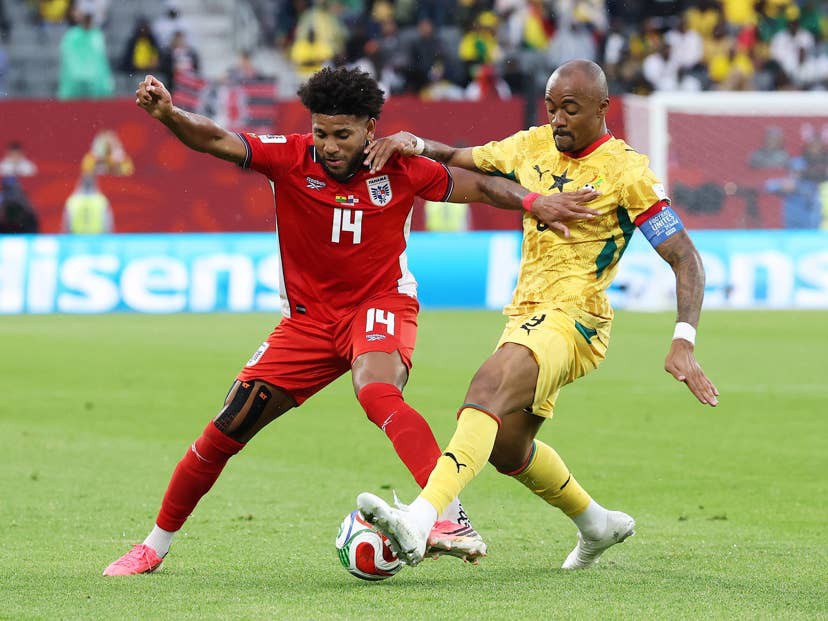
Ghana completed Africa’s positive showing in the opening round with a hard-fought 1-0 victory over Panama. After a tense and goalless encounter, 20-year-old Caleb Yirenkyi emerged as the match winner deep into extra time, securing three points for the Black Stars and ensuring Africa finished the round with a second victory.
Beyond the Few Wins and Many Defeats
If we look beyond the results, the opening round highlighted the growing strength of African football. Several of the representatives from Africa were drawn against traditional football powerhouses in the FIFA men category including Brazil, Spain, France, Portugal, Belgium and Argentina. All these aforementioned teams are currently listed among the top ten best football men’s teams in the world.Yet Morocco, Egypt, Cabo Verde and DR Congo all emerged with positive results against these highly-rated opponents.
The performances suggest that African teams are no longer content with merely participating on football’s biggest stage. They are increasingly capable of challenging, frustrating and competing with the best. With two group matches still to play, the African teams must remain firmly in the race for places in the knockout rounds.
If the opening round is any indication, the 2026 FIFA World Cup could mark another important chapter in the continued rise of African football.
Image: Kevin C. Cox/Getty Images