

 By
By Turkey’s government has instituted a sweeping crackdown and protest ban as Trump attends key alliance meeting
As US President Donald Trump flew into Ankara for the 2026 Nato summit, Turkey’s membership of the military alliance continues to provoke anger domestically.
Opposition to Nato membership is nothing new among leftists in the country, but the ongoing genocide in Gaza and a sweeping crackdown and protest ban that have accompanied the summit have heightened anger over Ankara’s hosting of the meeting.
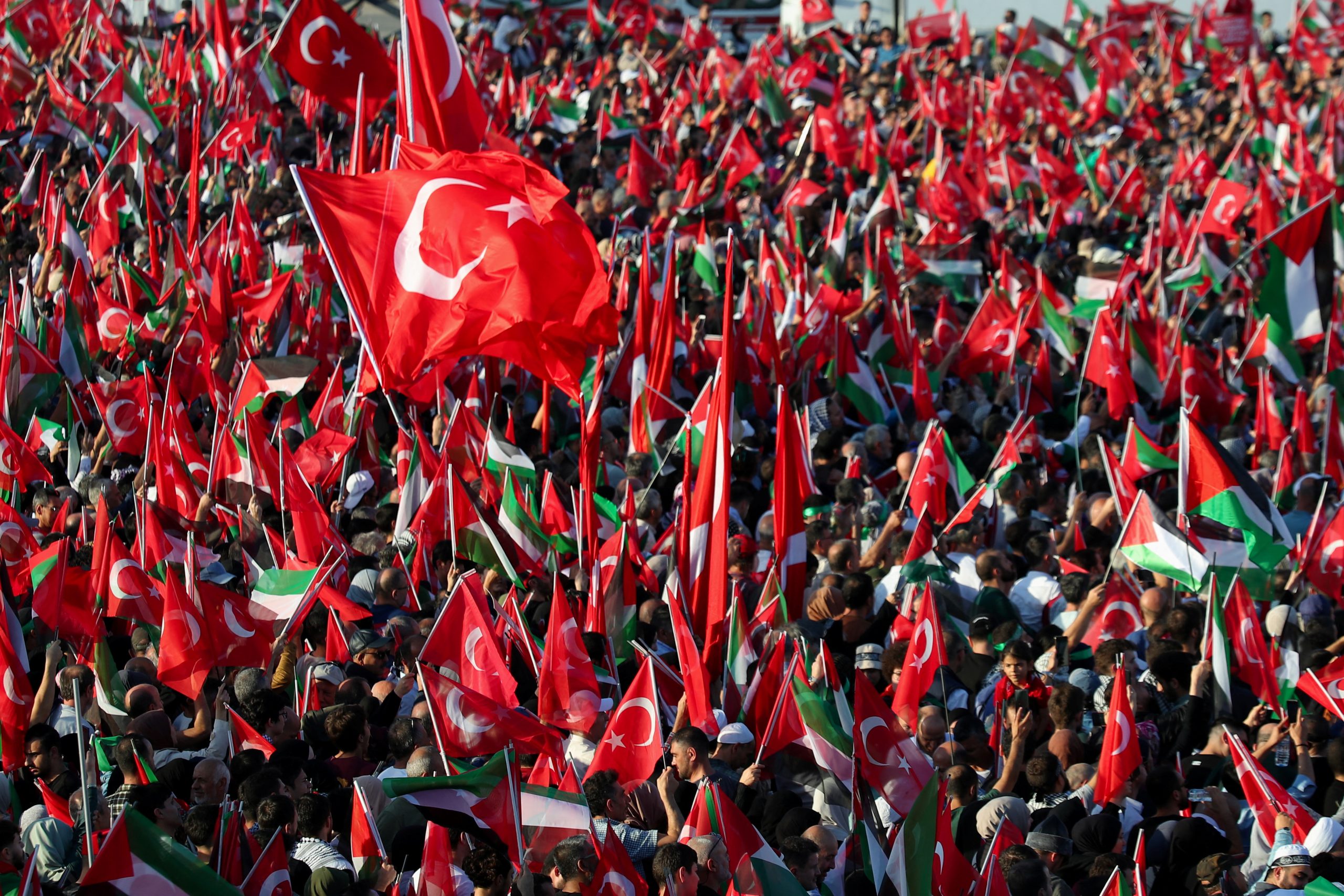
A number of international figures, primarily socialists and anti-war activists, gathered in Istanbul on Saturday for a counter-summit opposing Nato. There have been regular demonstrations on the streets of the country, even as the Ankara Governorate imposed a ban on Sunday, set to last throughout the duration of the conference.
The Workers Party of Turkey (TIP), a left-wing group with three MPs in the Turkish parliament, organised the Istanbul Anti-Imperialist Peace Summit to present an alternative perspective to the commonly held view in Europe that Nato is the first line of defence for the continent.
“The 2026 Ankara Summit marks the threshold of a period in which the working people of Nato member states are left more vulnerable to exploitation and war, despite the forced increase in defence spending,” reads the conference’s pamphlet, “No to Nato”, referring to a new commitment by all alliance members to increase defence spending to five percent of GDP annually by 2035.
“It represents the channelling of workers’ wealth into the wars instigated by the US and Israel across the globe, and into the arms industry monopolies that arm them.”
A spokesperson for TIP told Middle East Eye that a number of those who had planned to attend the conference were denied entry to the country.
 Protesters hold placards depicting U.S. President Donald Trump and Israeli Prime Minister Benjamin Netanyahu during an anti-NATO demonstration in Istanbul ahead of the NATO summit in Ankara on June 27, 2026.
Arrests
Upon their arrival in Istanbul, delegates from the International Peace Bureau, and the youth wings of Germany’s Die Linke party, among others, were detained in the airport, their phones confiscated and held overnight before being deported.
“These are activists and political representatives who came to attend a public, legal political meeting,” said the spokesperson, who did not want to be identified.
“Their treatment shows exactly what we have been arguing: the security architecture built around Nato summits is directed not against any external threat, but against people who oppose war.”
At least 225 people were arrested ahead of the Nato summit, including alleged supporters of the armed leftist Revolutionary People’s Liberation Party/Front (DHKP/C) and the Islamic State group.
Other detainees included academic Emel Memis, LGBTQ rights activist and journalist Yildiz Tar, environmental NGO Tema Foundation representative Nevzat Ozer, independent labour union Umut-Sen spokesperson Burcu Arikan, and Progressive Lawyers Association lawyers Semra Demir and Kursat Bafra.
The TIP spokesperson added that a further 17 members of the party were detained during the summit.
‘Economic extraction’
Turkey’s relationship with Nato has been complicated. Originally joining in 1952 – effectively in exchange for sending soldiers to fight in the Korean War – the country’s proximity to the Soviet Union made it strategically crucial for the US-led western alliance.
The 1962 Cuban Missile Crisis, which almost saw open nuclear conflict, was in part driven by the presence of nuclear weapons in Turkey, aimed at the Soviet Union. Their removal was part of a secret agreement that narrowly averted a potentially world-threatening war.
The Incirlik and Konya air bases have played central roles in a number of conflicts, particularly in the Middle East, while Turkey maintains the second-largest army in the alliance after the US. For Turkey’s governments, NATO was a guarantor of protection against threats from the Soviet Union, armed separatist groups and hostile Middle Eastern governments.
For leftists and pro-democracy campaigners, Nato’s role extended to the training of far-right death squads, the establishment of clandestine Counter-Guerilla groups and support for a military establishment that always made sure to put hard limits on democratic activity.
Khem Rogaly, a senior research fellow at Common Wealth think tank, said that for all its boasting of defending Europe from attack, Nato ultimately operated as a form of “economic extraction” that directed money from European governments to the US military industrial complex.
“Political targets for military spending are a means of reshaping economies around military industries,” he told reporters. “This can leave profound economic damage as military spending leads to less growth and supports fewer jobs than other forms of public investment.”
“By forcing Nato members to increase military spending at a massive scale, the new target means that other public priorities, which have much wider economic benefits, are defunded.”
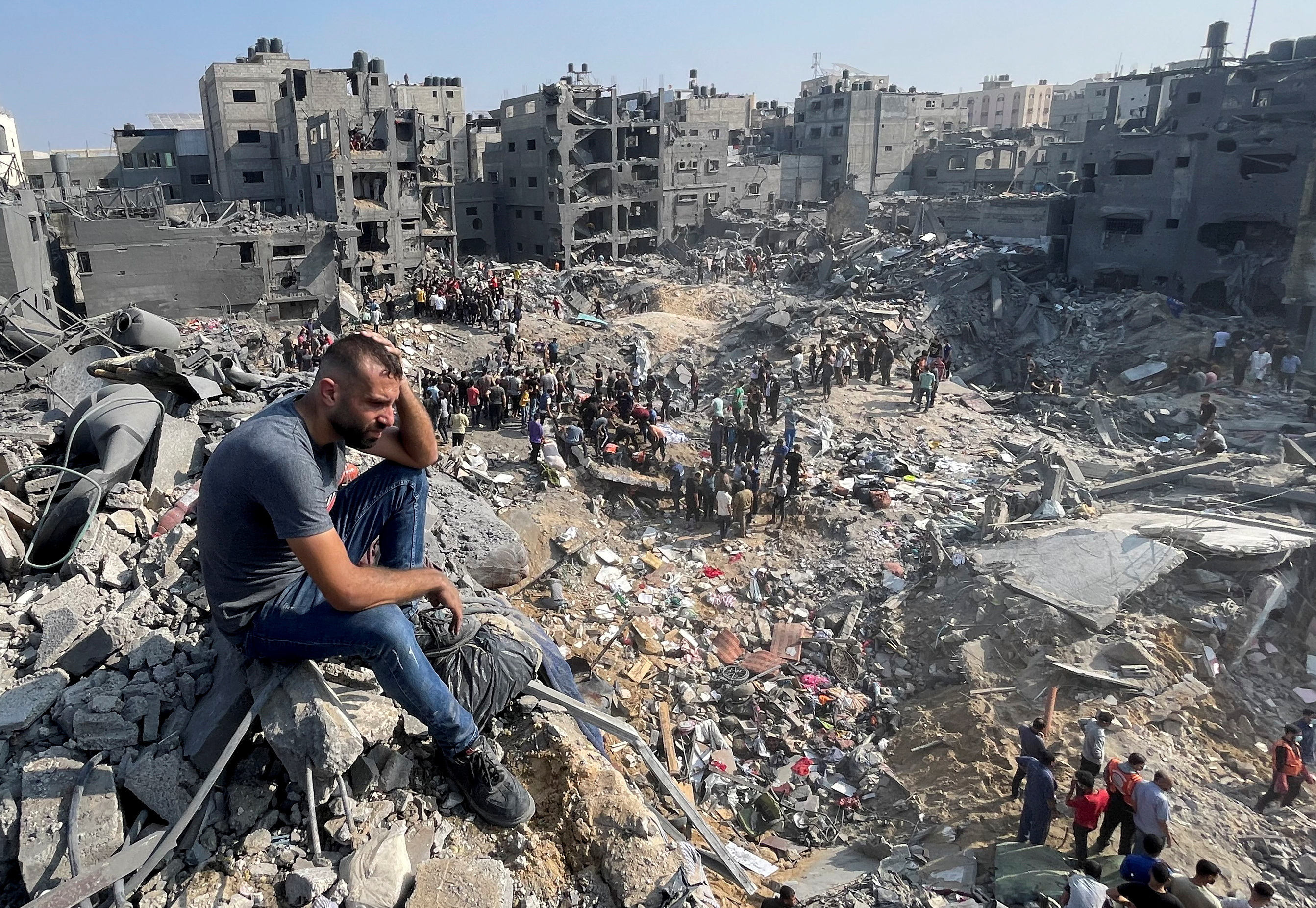 A man gestures as Palestinians search for casualties a day after Israeli strikes on houses in Jabalia refugee camp in the northern Gaza Strip, November 1, 2023.
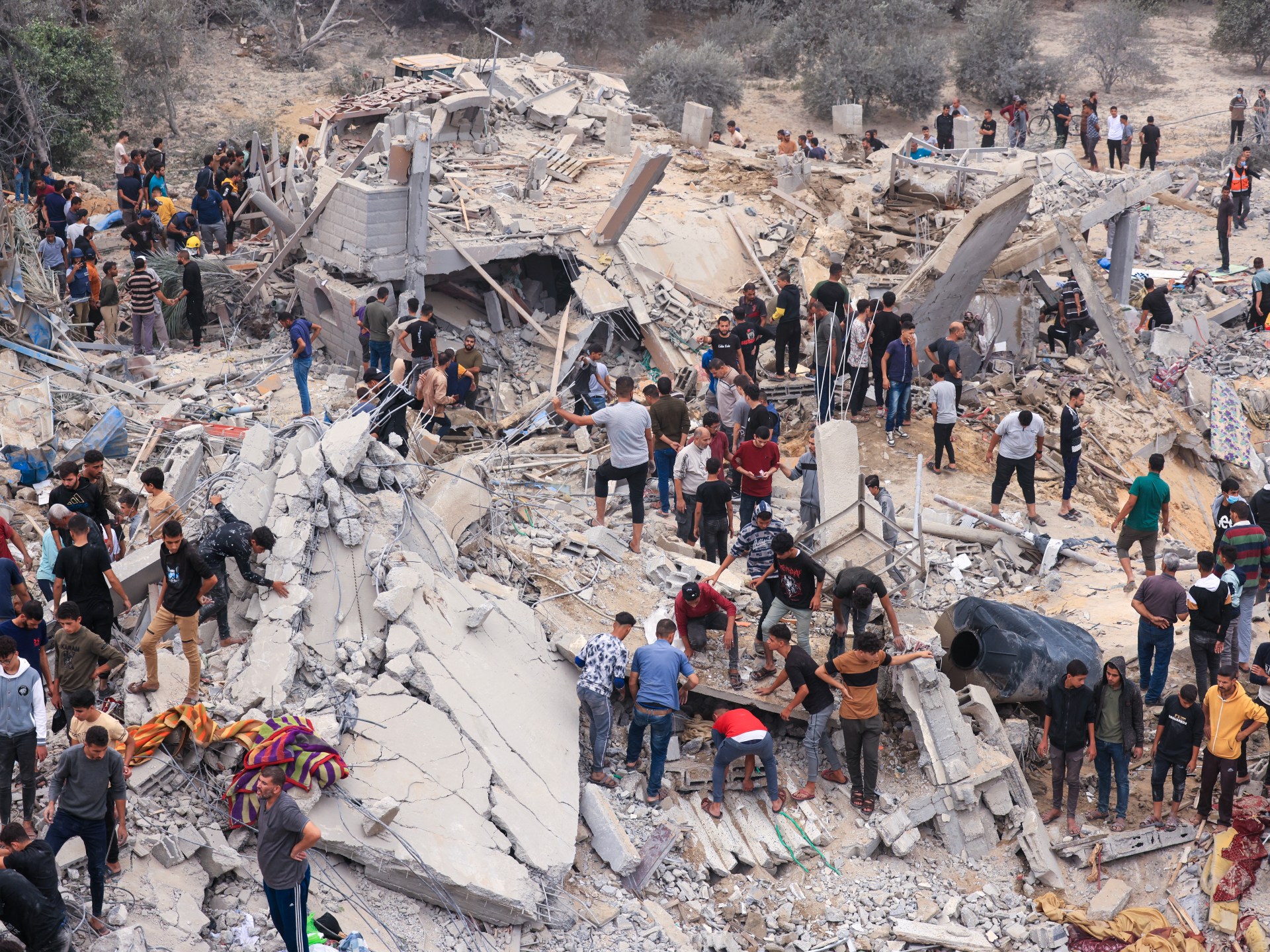 Civilians and rescuers look for survivors amid the rubble of a destroyed building following an Israeli bombardment in Khan Younis in the southern Gaza Strip.