

 By
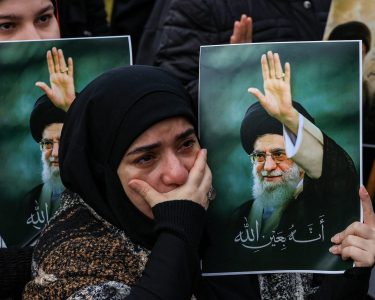
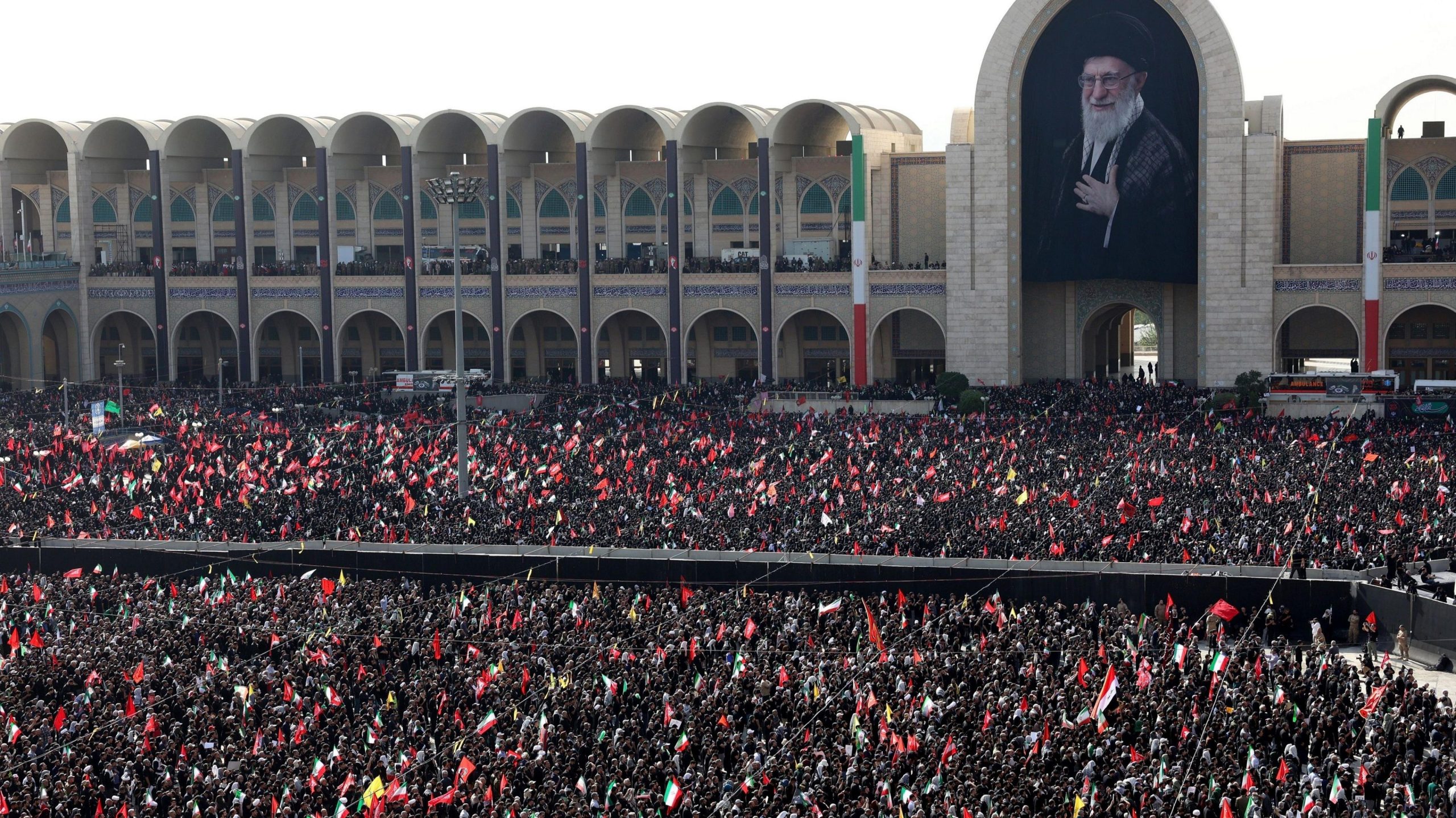
By  The coffins of Iran’s late Supreme Leader Ayatollah Ali Khamenei and his family members in the colours of Iranian flags on the stage, as people gather for a public farewell ceremony to pay their respects to late Supreme Leader Ayatollah Ali Khamenei, who was murdered on February 28 in Israeli and U.S. airstrikes, at the Imam Khomeini Grand Mosalla, in Tehran, Iran July 4, 2026.
The Quran recitations at Ali Khamenei’s funeral revealed Tehran speaking as a victor, not a mourner
When the Saudi delegation stepped forward to pay respects at the coffin of the late Supreme Leader Ali Khamenei in Tehran’s Grand Mosalla, the Quran recitation that followed did not go unnoticed.
The verse was Al Imran 3:13, the passage describing the Battle of Badr, where a vastly outnumbered and poorly equipped Muslim force routed a much larger army “by the will of God”. It was a clear reference to what many are increasingly calling Iran’s victory over the US and Israel in their war on the country.
Badr was fought in what is today Saudi Arabia in 624 CE. The question is whether the recitation was a compliment, a taunt, or both – but it was unlikely to have been random.
Read generously, the verse gestures at one of Islam’s first victories and a shared civilisational memory between Tehran and Riyadh.
But Iran has not only survived the war but arguably, it may have emerged from it stronger, with control of the Strait of Hormuz now tantalisingly close to becoming a fait accompli.
Saudi Arabia, however, remained quietly aligned with the US during the war and, according to some reports, even covertly attacked Iran.
Read against that context, the verse takes on a sharper tone. Riyadh stayed on the sidelines or, according to those reports, acted against Iran, while Israel sought to “plunge the region into ruin”.
Iran, meanwhile, fought and held firm against Tehran’s enemies and, by extension, anyone standing too close to them.
Saudi Arabia was not the only country in attendance, but one of more than 30 delegations that came to pay respects to the country’s late leader.
The list of dignitaries offered Iran its own show of strength, signalling that the country remains far from as isolated as the US or Israel would like it to be.
Khamenei, 86, was assassinated on 28 February in Israeli-US strikes on his residence in central Tehran. The attack also killed his 14-month-old granddaughter, son-in-law and daughter-in-law.
His body lay in state for three days at Tehran’s Grand Mosalla, the country’s largest prayer complex and the venue for major state occasions.
The funeral was religious, but it was also theatre of state. Iran used it to tell its own public that the state could still rally the country in victory and grief; to reassure allies that Tehran had not buckled; to show major powers that it had not been broken; and to remind rivals that it was keeping score.
The verse selection also appeared to reach out to visiting delegations symbolically, underscoring what Iran believed it had been fighting for while making clear where each government stood in Tehran’s eyes.
Look closely at the verses and a hierarchy appears.
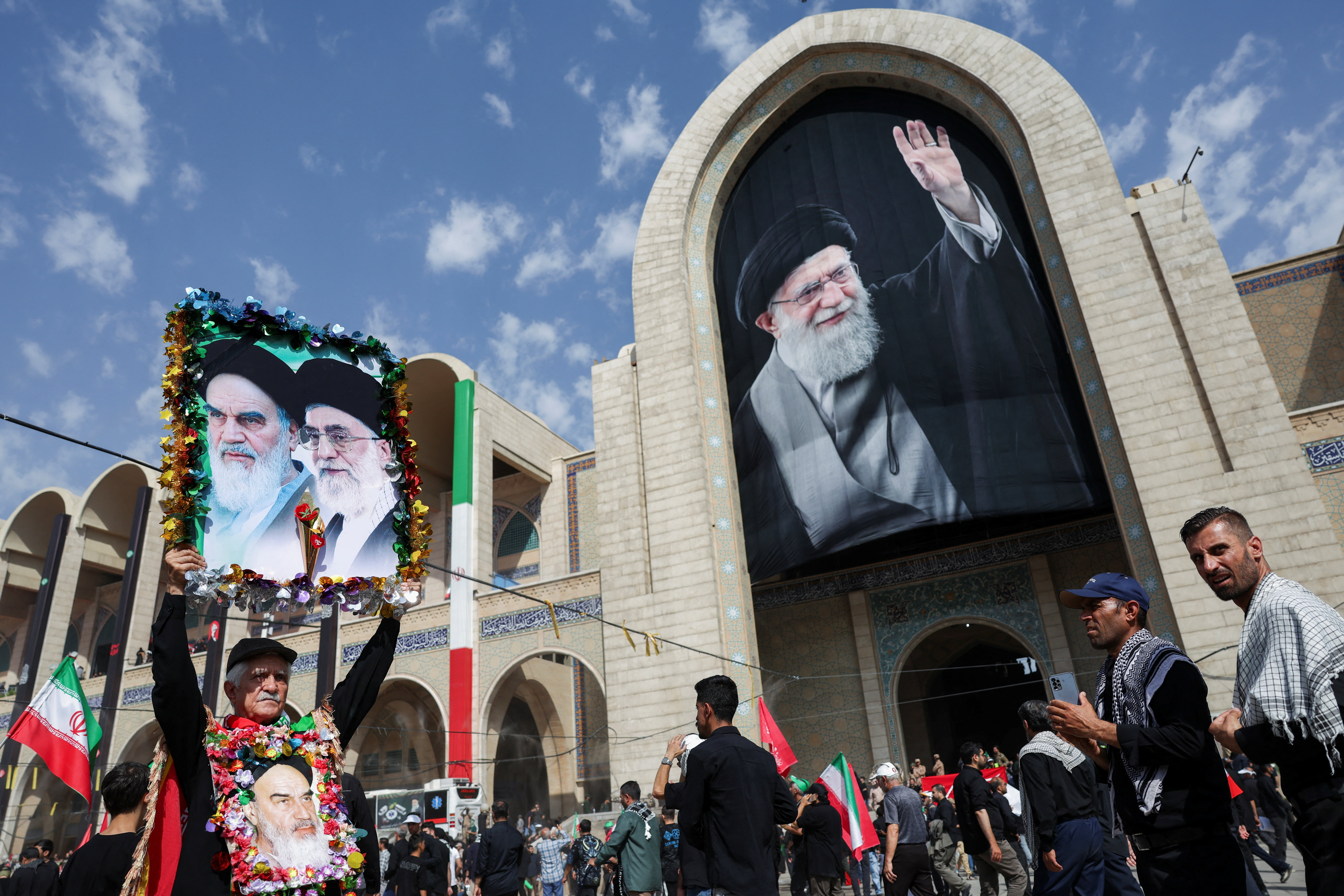 People attend a public farewell ceremony to pay their respects to late Supreme Leader Ayatollah Ali Khamenei, who was murdered on February 28 in Israeli and U.S. airstrikes, at the Imam Khomeini Grand Mosalla, in Tehran, Iran July 4, 2026.
Axis of Resistance Recast as Victory
For Hamas, Palestinian Islamic Jihad, Hezbollah, Houthis, Iraq’s Hashd al-Shaabi and the Taliban in Afghanistan, the verses selected shared a common theme: martyrdom, unbroken pledges to God and victory.
Hamas was greeted with a verse describing a people “who have proven true to what they pledged to God” – some who “fulfilled their pledge,” others “waiting their turn,” none of whom “changed their commitment in the least.”
Hezbollah’s verse promised the “upper hand” to “true believers,” framing military setbacks as part of a divine cycle in which God “chooses martyrs” and reveals who remains faithful.
For Yemen’s Houthis, the verse selected was Surah Al-Fath verse 29, a passages on loyalty, discipline and growth in the face of pressure.
The verse describes those with the Prophet Muhammad as “firm with the disbelievers” and “compassionate with one another”, a formulation that frames the movement as hard against its enemies but bound by internal solidarity.
Iraq’s Hashd al-Shaabi, along with a broader recitation for Iraq itself, received the well-known line insisting that those “martyred in the cause of God” are not dead but alive, simply beyond ordinary perception.
Palestinian Islamic Jihad and the Taliban were both read the opening of Surah Al-Fath – “a clear triumph” granted so that past and future shortcomings are forgiven and God’s favour is completed.
That the same passage was used for two very different movements – one Palestinian, one Afghan – suggests a shared place in Tehran’s hierarchy of ideological kinship, or a message that the Taliban’s victory, and now Iran’s, over the Americans could be replicated by Palestinians against the Israeli occupation.
 Mourners pray during a public farewell ceremony to pay their respects to late Supreme Leader Ayatollah Ali Khamenei, who was murdered on February 28 in Israeli and U.S. airstrikes, at the Imam Khomeini Grand Mosalla, in Tehran, Iran July 4, 2026.
State Allies
Russia, China, India and Egypt’s second recitation sat in a noticeably calmer register. These were verses about righteousness, reassurance and reward rather than battle.
Russia’s verse spoke of the “eternal Home in the Hereafter,” reserved for “those who seek neither tyranny nor corruption on the earth,” concluding that “the ultimate outcome belongs to the righteous.”
China’s was gentler still: “God ordained this only as good news for you and reassurance for your hearts. And victory comes only from God.”
India received the same “do not falter or grieve” verse used for Hezbollah, though without the surrounding lines about martyrs and wrongdoers – a softer excerpt of the same passage.
Egypt, in one of its two recitations, was told that “those who believe and do good” are “the best of all beings,” destined for gardens where God is pleased with them.
These were the states that showed up, gave Tehran legitimacy, but were not folded into its resistance story. The verses read like thanks extended to partners Iran wants to keep close, not recruits it wants to enlist into its war.
 Local and foreign officials walk past the coffins of Iran’s slain supreme leader Ali Khamenei and his family members after paying their respects at the Grand Mosalla in Tehran on July 3, 2026.
Regional Partners
Qatar, Turkey, Pakistan and Egypt’s first recitation sat somewhere in between – praised, welcomed, but not embraced as part of the resistance camp.
Qatar, which has been an important mediator, received the same “clear triumph” verse given to Palestinian Islamic Jihad and the Taliban, but in a diplomatic context, softening its meaning considerably – praise for support rather than a call to arms.
Turkey’s verse elevated “those who strive with their wealth and their lives” above “those who stay behind,” a verse about sacrifice and effort.
Ankara stayed out of the war, making clear from the start that it would not take part. Turkey’s president, Recep Tayyip Erdogan, also warned regional countries that Israel is “war addicted” and seeking regional domination.
Pakistan’s was a personal prayer: “Grant me an honourable entrance and an honourable exit”.
From early in the war, Islamabad, along with Doha, led the diplomatic track, using its personal relationship with U.S. President Donald Trump to bridge the divide between Iran and the U.S., much to Israel’s annoyance.
Egypt’s first verse promised “Gardens of Eternity” to the pious, a reward-focused passage with no battlefield imagery at all.
These are the governments straddling two worlds: tied to Iran through trade, mediation or regional politics, but unwilling to be cast as ideological partners in an armed resistance movement.
There was also a not-so-veiled reprimand, as was the case for Saudi Arabia, for the Lebanese government, especially when set against the praise reserved for Hezbollah.
For the Lebanese state, Iran used chapter An-Nisa verse 66: “If We had commanded them to sacrifice themselves or abandon their homes, none would have obeyed except for a few. Had they done what they were advised to do, it would have certainly been far better for them and more reassuring.”
Read in context, the verse lands like a rebuke. Critics have accused the Lebanese government of failing to do enough to resist Israel’s occupation of the country, while attacking Hezbollah’s retaliatory strikes against Israeli forces.
Iran appeared to address Lebanon’s official government through a passage about reluctance, obedience and the failure of people to make hard sacrifices when called upon.
 Mourners gathering around the coffin of late Supreme Leader Ayatollah Ali Khamenei during a ceremony ahead of his funeral at the Imam Khomeini Husseiniyeh in Tehran on July 3, 2026.