

 By
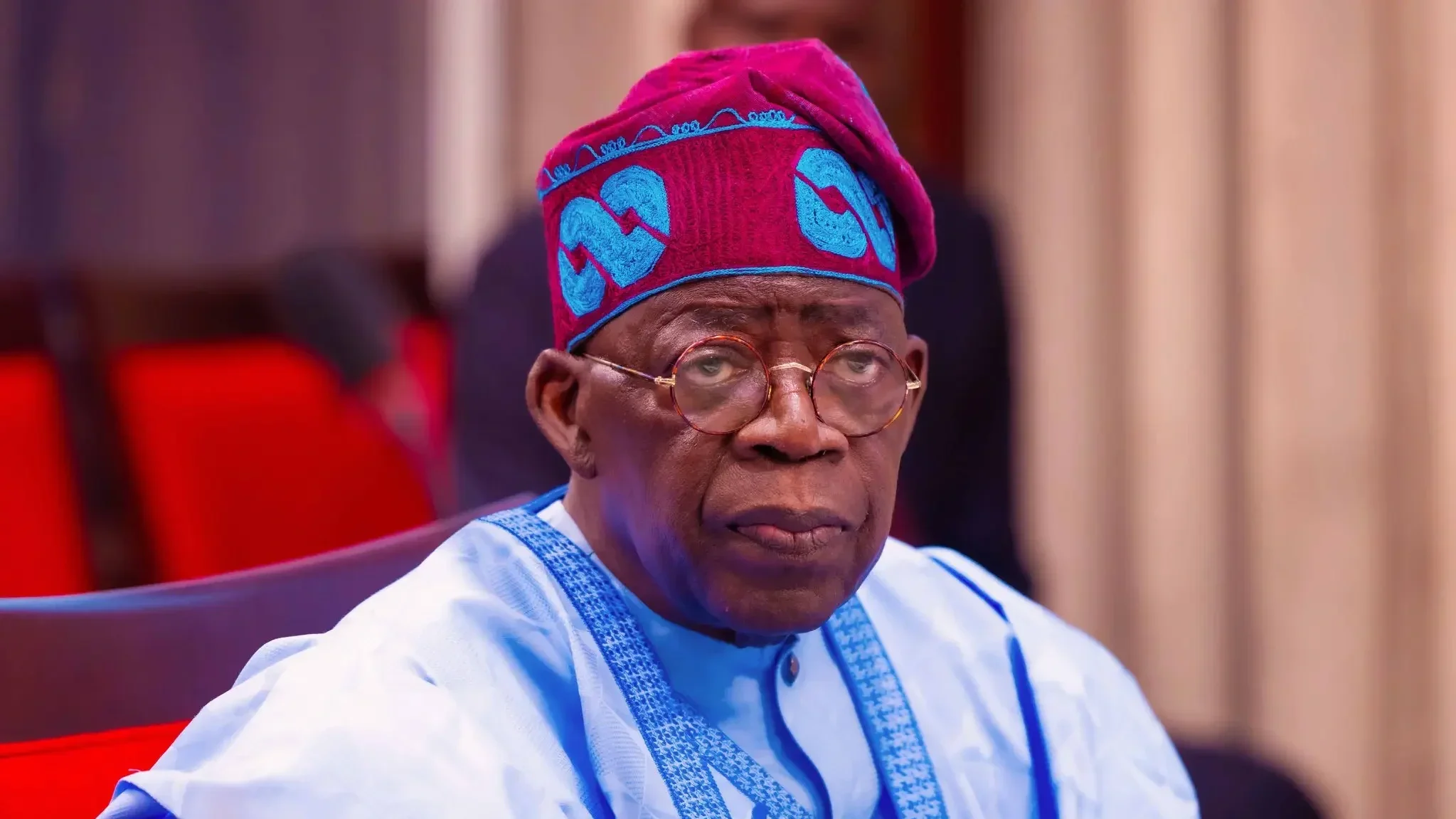
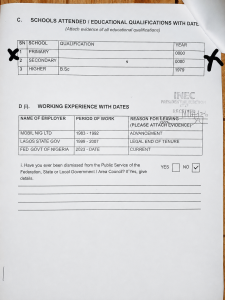
By Fresh controversy has erupted over President Bola Tinubu’s educational history after the Independent National Electoral Commission published his personal particulars and academic credentials for the 2027 presidential election, with the sections designated for primary and secondary education left blank.
The documents, published on INEC’s candidates’ portal in line with the Electoral Act, list only a Bachelor of Science degree obtained from Chicago State University in 1979 under the “Higher” education category, with no entries made in the spaces provided for primary and secondary schools.
The development has reignited public debate over the President’s educational background, with opposition figures and many Nigerians on social media questioning the omission and demanding clarification from the Presidency and the electoral commission.
The controversy follows legal battles nearly four years ago, when former Vice-President Atiku Abubakar approached a United States court to obtain records from Chicago State University in an attempt to establish alleged discrepancies in academic documents Tinubu submitted to INEC after the 2023 election. The President has consistently maintained that his academic credentials are authentic. The African Democratic Congress has separately insisted that candidates for Nigeria’s highest office should subject their credentials to public scrutiny.
As screenshots of the INEC documents circulated online, human rights activist and African Action Congress presidential candidate Omoyele Sowore alleged that Tinubu’s background lacked verifiable records, claiming the President has no classmates, no real names, and no credible education history that can be confirmed.
Several social media users raised pointed questions about the omission, with one asking whether INEC would have accepted similar documentation from another candidate, and another arguing that citizens should be able to compel INEC to disqualify any candidate whose information cannot be verified. Others online urged caution, saying the publication of a nomination form should not automatically be read as evidence of wrongdoing, and that the President should be given the opportunity to respond to the concerns raised.
Legal practitioners who spoke to the outlet said that any legal implications would depend on the entirety of the documents submitted to INEC and the relevant constitutional and Electoral Act provisions, noting that social media allegations do not by themselves establish legal liability.
The spokesperson for the Centre for Social Justice and Public Protection, Akin Akanji, said the issue goes beyond Tinubu personally and touches on the integrity of Nigeria’s electoral process and the public’s right to verify candidates’ credentials. He said where official documents appear incomplete, the appropriate response is transparency and clarification rather than silence, adding that his organization was not asking Nigerians to reach conclusions but calling on relevant authorities to explain any gaps or ambiguities. He said that if the records are complete and there is a lawful explanation for the entries on the form, making that explanation public would strengthen rather than diminish public trust.
As of the time of the report, neither the Presidency, the All Progressives Congress, nor INEC had issued a statement addressing the concerns raised over the blank sections on the nomination form.
Political observers say the controversy is likely to remain a live issue in the build-up to the 2027 presidential election, as opposition parties continue to scrutinise the credentials of candidates seeking the presidency.