

 By
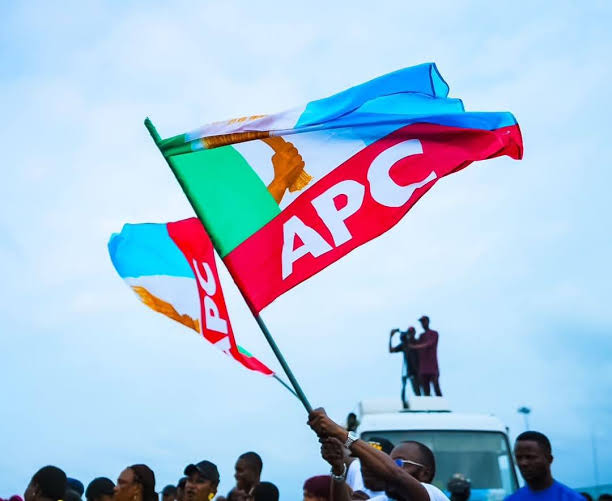
By The release of INEC’s official list of governorship candidates and running mates on Saturday was meant to close the book on months of primary-season uncertainty. Instead, for the ruling All Progressives Congress, it has reopened a string of unresolved fights left over from May’s primaries, fights the party’s national leadership is now scrambling to contain state by state ahead of the 2027 general elections.
A National Reconciliation Push
INEC’s publication, filed on Form EC9 and displayed at commission offices nationwide, settled the question of which candidates will represent the major parties. But for APC, the aftermath of its own primaries has proven harder to settle. Aggrieved aspirants across several states have pursued legal challenges or simply walked away from the party altogether, prompting the national leadership to stand up reconciliation structures at multiple levels.
APC Director of Publicity Bala Ibrahim told reporters the National Working Committee had met repeatedly on grievances stemming from the primaries, stressing that the party needs to resolve its internal differences before heading into the general election. According to him, reconciliation committees are already active and the party is extending what he called an olive branch to those who came up short in the primaries, framing the setback as temporary rather than final.
The scale of the unrest varies sharply by state. Gombe and Bayelsa have moved quickly to install reconciliation mechanisms or lean on existing political arrangements to head off bigger blowups, while Yobe, Kwara, Nasarawa, Benue, Ebonyi, Kebbi, Sokoto, Edo, Imo and Adamawa are each dealing with some combination of litigation, defections, factional splits or opposition parties looking to capitalise.
Gombe Moves Early
In Gombe, Governor Muhammadu Yahaya inaugurated a 25-member reconciliation committee, chaired by Deputy Governor Manassah Jatau, tasked with engaging aggrieved members and rebuilding party unity following recent congresses, primaries and local government polls. Yahaya appealed directly to disgruntled members to embrace dialogue, telling them the party’s strength lies in its unity. He set an ambitious target for the state, aiming to retain every elective position while delivering at least a million votes for President Tinubu in 2027, even as he acknowledged that some unsuccessful aspirants remain unhappy with how the process played out. The committee has been directed to document grievances, mediate between rival camps and recommend how sidelined members can be brought back into the fold.
Yobe: A Primary Under Legal Fire
Yobe’s governorship race opened contentiously, with aspirant Mustapha Maihaja challenging the May 21 primary that handed the ticket to Alhaji Baba Wali, who polled 236,711 votes to succeed outgoing Governor Mai Mala Buni. Maihaja’s case, before the Federal High Court in Damaturu, alleges the primary violated the party’s own guidelines. His counsel, Mustapha Ibrahim, told the court that nine witnesses had testified in support of that claim, with more expected, while counsel for the respondents, Baba Dala, noted that only nine of the 62 witnesses listed by the petitioner had appeared so far. The court has adjourned proceedings to September 7 through 9. Maihaja has stopped short of defecting or setting up a rival platform, and Wali has appealed to other primary contestants to unite behind his candidacy. Meanwhile, the opposition ADC has signalled it intends to contest the state seriously, with state chairman Umar Kalli Alhaji declaring confidence in an eventual win. Political analyst Abdulwahab Garba was less convinced the opposition is strong enough yet, arguing the ruling party remains the favourite to hold the seat.
Nasarawa Loses a Former Police Chief
Nasarawa APC’s troubles deepened with the defection of former Inspector-General of Police Mohammed Adamu to the Social Democratic Party after he contested and lost the state’s primary. Adamu cited breaches of internal democracy and transparency as his reason for leaving, saying the outcome had cost him confidence in the party’s leadership. Separately, Professor Mohammed Haruna, a former Executive Vice-Chairman of the National Agency for Science and Engineering Infrastructure, rejected the primary outright, alleging it had been tilted toward eventual candidate Ahmed Aliyu Wadada through partisan electoral officials, missing materials in several wards, and intimidation, claims he says are backed by documents, video and witness testimony. State APC Chairman Aliyu Bello downplayed the fallout, insisting Adamu’s exit would not hurt the party’s 2027 chances and urging remaining supporters to accept the outcome, framing the party’s real strength as resting on its record rather than any one individual.
Benue’s Substitution Fight
Benue’s crisis centres on the APC’s National Working Committee swapping out several primary winners loyal to Governor Hyacinth Alia in favour of candidates aligned with Secretary to the Government of the Federation George Akume, following allegations of irregularities raised by Akume’s camp after Alia loyalists won a string of National Assembly primaries. Former governor Gabriel Suswam was replaced by sitting Senator Emmanuel Udende, while Aber Terseer, wife of the state’s Secretary to the Government, was swapped for Senator Titus Zam, alongside six other House of Representatives substitutions. House of Assembly aspirant Sesugh Kaaba has taken the matter to the Federal High Court in Abuja, filing Suit No. FHC/ABJ/CS/1429/2026 before Justice Inyang Ekwo, seeking to bar INEC and the APC from recognising candidates who did not actually win their primaries and to compel the party to forward the names of the original winners, including Alia, Suswam, Benjamin Aber and Francis Ottah Agbo. Judgment has been adjourned to October 12. The dispute has already claimed one defection, with former Benue House of Assembly Majority Leader Terseer Sater moving to the Accord Party. None of the affected candidates could be reached for comment.
Adamawa’s Imposition Allegations
In Adamawa, APC faces accusations that several candidates were simply adopted without any primary at all, including Laori Kwamoti, James Barka and Zakaria Nyampa across three federal constituencies. Party chieftain Abubakar Gambo said members were presented with candidates whose emergence nobody could explain. The fallout has already pushed former senatorial candidate Peter Fwa and another figure, Vrati Zonzo, to the Labour Party over what they called political injustice, while PDP’s governorship candidate, Maurice Vunobolki, said his own decision to leave APC for PDP was driven by fear of facing imposition again after experiencing it before, adding that Adamawa voters do not typically defer to political godfathers at the ballot box. APC Publicity Secretary Dogo Victor said the party was in active talks with aggrieved members and seeing encouraging signs, though analyst Gambo Mohammed described the party as being in disarray and doubted its ability to beat the PDP in 2027 given the imposition allegations.
Kebbi and Sokoto See Fresh Defections
Kebbi’s APC took a hit when Senator Garba Maidoki, representing Kebbi South, left for the ADC after being screened out of the senatorial primary, a move that followed Senator Bala Ibn Na’Allah’s earlier withdrawal from the same race over claims the outcome was predetermined. In neighbouring Sokoto, Governor Ahmed Aliyu emerged as governorship candidate through a consensus process the party describes as peaceful, though the state has still seen movement toward the opposition, including Illela/Gwadabawa lawmaker Isah Ambarura’s defection to the ADC and reports of hundreds of APC members in Goronyo doing the same, even if Ambarura’s own move wasn’t explicitly tied to the primary dispute.
Kwara Insists It’s Still in Charge
Kwara APC’s Deputy Chairman, Abdullahi Samari, acknowledged the party is going through a rough patch but expressed confidence it would still win in 2027. The trouble traces back to the May 22 governorship primary that produced Assembly Speaker Yakubu Danladi-Salihu as candidate, an outcome a bloc of aggrieved aspirants known as the G15 rejected as manipulated. The party’s bigger setback came when Senator Saliu Mustapha resigned to join the PDP, where he picked up the Kwara Central senatorial ticket, setting up a direct future contest with Governor AbdulRahman AbdulRazaq, who is expected to run for the same seat once his tenure ends in 2027. The PDP has enlisted former Senate President Bukola Saraki to court the G15 and other disaffected groups, though not all G15 members have jumped ship yet. Analyst Abdulrasaq Olanrewaju warned that continued defections to PDP could tilt the state’s electoral math against APC.
Imo’s Senatorial Court Battles
Down south, Imo APC is fighting two separate court challenges. Senator Ifeanyi Araraume is contesting the Imo North senatorial ticket awarded to incumbent Patrick Ndubueze, while former Governor Rochas Okorocha is challenging the Imo West ticket held by sitting Governor Hope Uzodimma. Both cases proceed even as the state’s actual governorship election isn’t due until 2028 under its off-cycle calendar, with political attention already turning to whether the Owerri or Okigwe zone should produce Uzodimma’s eventual successor. State APC spokesman Jones Onwuasoanya dismissed both suits as frivolous attempts at personal settlements rather than genuine grievances, insisting the primary process was transparent and noting that more than 98 percent of the party’s over 200 aspirants had accepted the results and joined reconciliation efforts, framing the party as fundamentally intact despite the litigation.
Ebonyi’s Governor-Minister Rift
Ebonyi’s APC is split over the Afikpo/Edda federal constituency seat, where a court case challenges the candidacy of Joseph Ekumankama, whose name replaced twelve-year incumbent Idu Igariwey on the party’s final list. Igariwey alleges Ekumankama never even participated in the primary, with a court ruling expected September 9. The dispute has exposed a deeper rift between Governor Francis Nwifuru and Minister of Works David Umahi, whose rival camps reportedly ran separate, conflicting primaries in the same constituency. An anonymous APC chieftain warned that the standoff between the governor and the minister, which he said dates back to disagreements over which candidates to back during the consensus process, threatens to complicate the party’s path in 2027.
Bayelsa and Edo Stay Comparatively Calm
Bayelsa’s APC reports relative peace, having run direct primaries under the Option A4 system alongside zoning arrangements that helped settle candidate emergence without major court fights or defections. State chairman Warman Ogoriba confirmed the campaign council has yet to be formed but declined to reveal how the party plans to handle any future post-primary issues. Analyst Clifford Doubara credited zoning for much of the calm, while cautioning that it should not come at the expense of members’ right to actually contest primaries.
Edo’s APC likewise brushed aside concerns despite tension in the Edo South senatorial race, where former lawmaker Omoregie Ogbeide-Ihama defeated incumbent Senator Neda Imasuen and Pastor Osagie Ize-Iyamu, leaving some supporters unhappy. State Publicity Secretary Peter Uwadiae-Igbinigie said the defeated candidates have accepted the result and remain committed to the party, crediting Governor Monday Okpebholo’s reconciliation work and pointing to the party’s internal conflict-resolution mechanisms as already preparing the ground for the campaign ahead. ADC spokesperson Chris Ojeikere, however, claimed several unhappy APC members are quietly in talks to defect, holding back publicly out of fear of political retaliation. Analyst Christian Osato cautioned against reading too much into defection numbers alone, arguing that voter mobilisation, campaign strategy, ground organisation and financial muscle will ultimately decide the 2027 outcome regardless of which party members switch camps.
The Bigger Picture
Taken together, the disputes stretching from Yobe to Edo paint a picture of a ruling party trying to manage an unusually wide spread of post-primary fallout at once, through litigation timelines that stretch well into September and October, defections that keep chipping away at its structures in specific states, and reconciliation committees whose success will likely only be measurable once campaign season for 2027 is fully underway.
PUNCH.