

 By
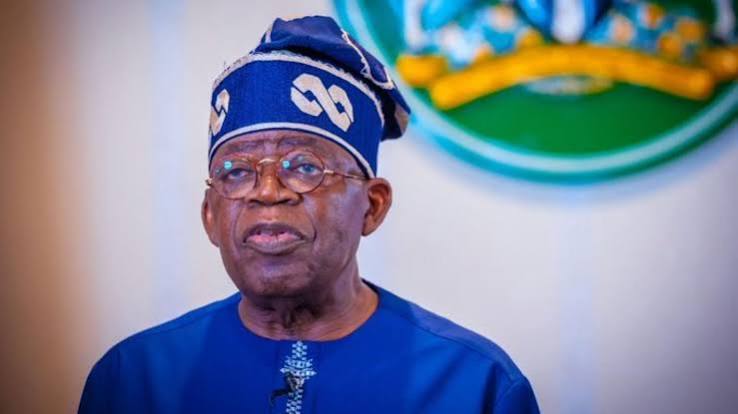
By President Bola Tinubu has formally asked a US federal court to keep his unredacted FBI and Drug Enforcement Administration records out of public view, arguing in filings submitted through his legal team that releasing them would serve no legitimate public purpose and would instead hand ammunition to his political opponents in Nigeria.
The Filing and Who’s Behind It
The submission, made to the United States District Court for the District of Columbia and made public on Saturday, was filed by lawyers Christopher Carmichael, Victor Henderson and Oluwole Afolabi on the President’s behalf. It responds to a Freedom of Information Act request from American transparency campaigner Aaron Greenspan, who has been pushing for years to obtain Tinubu’s records from both agencies.
Tinubu’s team argues that US privacy law shields the material, that there is no genuine public interest at stake, and that Greenspan’s real motive is political rather than a legitimate FOIA purpose.
A Controversy Rooted in 1993
The dispute traces back to a decades-old case that resurfaced ahead of Nigeria’s February 2023 presidential election, when documents tied to a 1993 civil forfeiture case in the US came to light. An Illinois federal court had at the time ordered the forfeiture of $460,000 held in an account linked to Tinubu, after American authorities alleged the funds were connected to narcotics proceeds or prohibited financial transactions.
The APC insisted throughout the subsequent election petition that the case amounted to a civil matter rather than a criminal conviction, while the Labour Party and its candidate, Peter Obi, argued the forfeiture should have disqualified Tinubu under Nigeria’s constitution.
The Presidential Election Petition Court ultimately ruled in September 2023 that petitioners had failed to show Tinubu had ever been arrested, charged, convicted or sentenced in a US criminal case. The question of what the underlying FBI files actually contain, however, has never fully gone away.
Breaking Down the Four Arguments
Greenspan has framed his request around the argument that Tinubu, as leader of a country of more than 230 million people whose decisions affect them daily, should not be shielded from scrutiny of his past. Tinubu’s team rejected that framing outright, telling the court the request was really an attempt to mine private information for political use back home rather than to shed light on how a US government agency operates, which they say is FOIA’s actual purpose.
Their second argument leaned on privacy exemptions built into FOIA and the US Privacy Act, specifically Exemption 7(C), which shields personal details contained within law-enforcement records. Citing the Supreme Court’s 1989 ruling in Department of Justice v Reporters Committee for Freedom of the Press, the lawyers argued that FOIA exists to reveal what government agencies are doing, not to expose information about private individuals swept up in old investigative files.
Third, Tinubu’s team pushed back hard on the idea that his political position transforms the request into a matter of legitimate public interest, arguing that FOIA simply does not recognise curiosity about an official’s personal fitness for office as grounds for disclosure. They also dismissed suggestions that the records might reveal a secret prosecution or a hidden non-prosecution deal, calling such claims speculative and unsupported by any actual evidence Greenspan had produced.
Finally, the lawyers argued that the President has not lost his privacy interest simply because some general information about the 1993 case became public at the time. They maintained that even where portions of a matter are already known, individuals can still hold a legitimate interest in keeping other undisclosed details private and asked the court to reject Greenspan’s bid for summary judgment so the FBI and DEA can maintain their existing redactions.
What’s Actually Being Sought
At stake are Tinubu’s complete FBI file along with FBI Form 302 interview records covering 1992 and 1993. The case has already produced one significant ruling: in April 2025, US District Judge Beryl Howell ordered the FBI and DEA to abandon their so-called Glomar responses, under which the agencies had refused to even confirm or deny the records existed, and directed them to begin processing the request subject to whatever exemptions might apply. Since then, the FBI has moved to withhold portions of the material, citing concerns tied to law-enforcement sensitivity, privacy, investigative methods and the safety of individuals named in the files. It is worth noting that this is a records-access dispute, not a criminal proceeding, and it does not amount to a finding that Tinubu committed any drug-related offence.
Opposition Parties Cry Foul
Nigeria’s opposition wasted little time reacting. African Democratic Congress spokesperson Bolaji Abdullahi argued that the President’s resistance to disclosure looks suspicious on its face and said Tinubu himself should be the one pushing for the records to come out if he genuinely has nothing to hide.
The Nigeria Democratic Congress took a similar line. Its National Publicity Secretary, Osa Director, dismissed the idea that political motive should shield the President from scrutiny, arguing that the same logic would excuse any wrongdoing simply because political rivals happen to benefit from its exposure. He pointed out that opposition figures have not made comparable demands regarding the records of other Nigerian politicians, suggesting the issue’s persistence over more than two decades has less to do with partisan opportunism and more to do with a lingering, unresolved question that deserves to finally be settled.