


 By
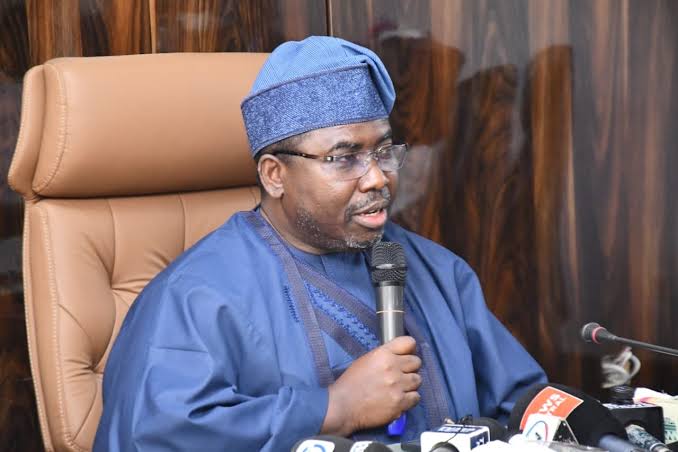
By The Independent National Electoral Commission has flagged artificial intelligence-driven disinformation as a serious risk to the integrity of the 2027 general elections, even as the commission moves to audit its electoral technology systems and weighs holding a mock presidential election ahead of time. INEC Chairman Prof Joash Amupitan (SAN) raised the alarm Wednesday in Abuja, arguing that electoral technology and communication can no longer be managed as separate concerns.
Amupitan spoke through a keynote address delivered on his behalf by National Commissioner Sani Adam (SAN) at the 13th Annual International Conference of the Association of Communication Scholars and Professionals of Nigeria, themed “Media, Technology and Elections in Africa: Navigating Digital Disruption and the New Dynamics of Electoral Communication.”
According to a statement from INEC’s Director of Voter Education and Publicity, Victoria Eta-Messi, Amupitan told the gathering that the commission’s credibility now rests on more than just the integrity of the ballot, the Bimodal Voter Accreditation System and result sheets; it also depends on whether voters understand and trust the electoral information reaching them.
He pointed to BVAS and the INEC Result Viewing Portal as tools designed to tackle longstanding transparency concerns by letting citizens see polling-unit results before they travel to collation centres. But he didn’t shy away from the technology’s track record, acknowledging that the 2023 general election showed how electoral systems can themselves become a source of public distrust when they fail to work as expected. Legitimacy, he argued, only comes when systems perform reliably, voters actually understand them, and any shortcomings get explained honestly rather than glossed over.
On the practical side of preparing for 2027, Amupitan said INEC is running a comprehensive audit of its technology infrastructure, covering system redundancy, penetration testing and disaster recovery planning. The commission is also weighing a mock presidential election to stress-test voter accreditation, result transmission and result viewing under conditions that mirror an actual election day.
The bulk of his warning centered on generative AI. Amupitan said the technology has made synthetic audio, video and images cheaper to produce and harder to detect, and noted that fabricated political content has already surfaced during recent election cycles elsewhere in West and East Africa.
Furthermore, the INEC Chair argued the danger extends well past crude fabrication into algorithmic microtargeting, where conflicting political messages can be aimed at narrow slices of the electorate without any shared factual basis. “The danger lies not only in outright fabrication but also in algorithmic microtargeting, which allows conflicting messages to reach narrow segments of the electorate without a shared factual foundation,” he said, adding that such content can reach millions of social media users well before fact-checkers or electoral authorities have a chance to verify it.
Amupitan also touched on the financial side of preparations, disclosing that INEC has proposed a substantial budget covering technology and election operations, including replacement accreditation devices for those lost or damaged in the last electoral cycle. The commission is still waiting on the full release of those funds, though its ICT team has already begun talks with manufacturers, and work on the technology audit and proposed mock election is continuing in parallel with the budget process.
To address the broader threat, Amupitan laid out a five-point strategy: integrating technology and communication planning under one umbrella; setting up a rapid-response mechanism to counter false claims within the same news cycle they emerge in; proactively disclosing known vulnerabilities and the safeguards in place against them; deepening collaboration with media scholars, fact-checkers and technology platforms; and investing continuously in public media literacy. He closed by calling on media professionals, technology experts, scholars and other stakeholders to work alongside INEC to strengthen public understanding of and confidence in the electoral process ahead of 2027.