


 By
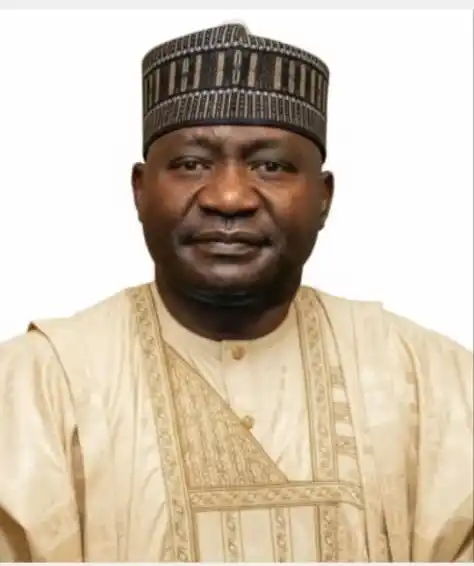
By Defence Minister Gen. Christopher Musa (retd.) has offered a rare public breakdown of how Nigerian security forces sometimes rescue kidnapped victims without killing or arresting a single terrorist, a tactic that has drawn public curiosity following recent operations in Kwara State and other parts of the North.
Starving Terrorists of Oxygen, Not Bullets
Speaking Thursday on Channels Television’s Politics Today, Musa was pressed on how troops manage, in many cases, to pull off bloodless rescues without paying ransom. His answer centred on logistics rather than firepower. The strategy, he said, involves pinpointing where terrorists are holed up, sealing off their escape routes, and cutting their access to food, water, fuel and other basic supplies needed to survive.
Musa argued that terrorists, for all their weapons, are no more eager to die than anyone else. He said that once troops close in, even the mere presence of a drone overhead is often enough to send captors scattering and abandoning their victims behind. Framing the approach as denying oxygen rather than seeking confrontation, he said that once a location is identified, the goal becomes blocking every avenue of survival, since terrorists who can no longer sneak in fuel, water or food simply cannot hold out.
CBN Tracking Ransom Money
Musa also touched on the financial side of the fight against kidnapping, suggesting that ransom payments themselves can double as a tool for tracing terrorist networks. He credited the Central Bank of Nigeria with stepping up efforts to trace funds tied to criminal activity, saying that even money flowing in from other areas can now be tracked back to its source.
A Warning Over Palliative Motorcycles
The minister used the appearance to press state governors to rethink handing out motorcycles as palliatives, warning that some of these machines end up in the hands of terrorists and give them added mobility. He appealed directly to governors to halt the practice of giving out motorcycles as palliatives, arguing that the very same bikes often end up being used by terrorist groups.
Where governments insist on distributing motorcycles, Musa suggested opting for smaller capacity models rather than higher-powered ones, since larger bikes give armed groups the speed and range to slip in, strike and vanish before security forces can respond. He went further, alleging that motorcycles distributed through constituency projects and other palliative schemes have a track record of finding their way back into the hands of bandits.
Musa’s comments come against a backdrop of continued public concern over kidnapping for ransom across Nigeria, alongside scrutiny of recent operations in which troops secured the release of abducted victims in Kwara State and other northern states without recording the arrest or killing of a single terrorist involved.