


 By
By - UNIOSUN debuts in the Times Higher Education World University Rankings at 1201-1400, becoming the highest-placed state-owned university in Nigeria
- The university ties with Babcock University and UNN in its band, while outranking older state and federal institutions including OAU, UNIBEN and LASU
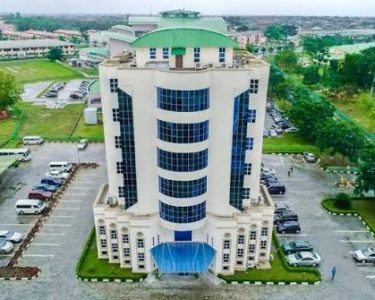
- Development follows a run of infrastructural expansion and new academic programmes under VC Odunayo Adebooye, though the ranking itself is driven overwhelmingly by research output rather than buildings
Osun State University has entered the global rankings for the first time as Nigeria’s best-performing state-owned university, according to the 2027 Times Higher Education World University Rankings released Wednesday.
UNIOSUN landed in the 1201-1400 band, a debut placement that puts it ahead of every other state university on the list. Lagos State University and Olabisi Onabanjo University trail behind it in the 1801-2000 band, while Kwara State University, Ekiti State University, Delta State University Abraka and Rivers State University all fall into the lowest 2001+ category. No state-owned Nigerian university placed higher than UNIOSUN in this year’s edition.
The university’s placement also positions it ahead of several long-established federal institutions, including Obafemi Awolowo University, University of Benin, Nnamdi Azikiwe University and University of Maiduguri, all of which sit one band lower at 1401-1600. Within UNIOSUN’s own band, it shares the 1201-1400 placement with Babcock University and University of Nigeria, Nsukka, meaning those three are statistically tied rather than ranked against each other.
What the Score Breakdown Shows
THE’s detailed data for UNIOSUN schedules its overall score between 30.5 and 33.2, built from five weighted pillars. The university’s strongest showing came in Research Quality, scoring 43.8, followed by International Outlook at 40.3. Research Environment came in at 25.6, Teaching at 23.6, and Industry income and patents scored lowest at 17.6.
That breakdown suggests UNIOSUN’s ranking has been driven overwhelmingly by the strength and international reach of its research output rather than by industry partnerships, institutional income, or campus infrastructure, none of which factor directly into THE’s scoring pillars. Industry, in particular, is an area THE’s own methodology flags as one of the harder pillars for younger universities to score highly on, since it depends heavily on patents and commercial research funding built up over time.
A Ranking That Lands Alongside a Run of Institutional Growth
The rankings debut arrives on the back of a period AfrikTimes has tracked closely at UNIOSUN. At its 16th convocation earlier this month, the university graduated 4,357 students, including its first-ever cohort of 90 medical doctors, while VC Adebooye pointed to a run of completed infrastructure, a FIFA-standard sports complex, a three-in-one science laboratory building, and several new lecture theatres, alongside newly launched programmes in Cyber Security, Software Engineering, and International Relations and Diplomacy among others.
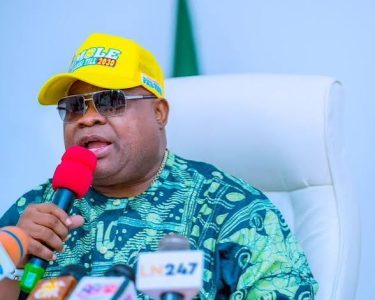
Separate reporting gathered over the same period shows the Osun State Government under Governor Adeleke has directed significant infrastructure and administrative attention toward the university since 2022, including a 57-office complex at the College of Health Sciences, a 350-capacity student hostel, a medical research access road, and support that helped the medical school clear MDCN accreditation requirements ahead of its first MBBS cohort. The administration has also restored student bursaries, implemented the 2025 FGN-Staff Union Agreement, and reconstituted the university’s Governing Council.
None of that spending, however, maps directly onto what THE actually measures. Physical infrastructure, enrollment growth and administrative restructuring do not appear as scored indicators anywhere in the ranking’s methodology, whereas research citations, international collaboration and postgraduate research output do. Whatever role state investment played in building UNIOSUN’s capacity to conduct and publish research, and universities elsewhere have shown that better facilities and staff welfare can indirectly support academic output, the ranking itself is answering a narrower question than “how much has the government spent.” It is measuring what the university’s researchers have actually produced and how that work has travelled internationally, and on that specific measure, UNIOSUN’s own academic output is what the numbers reward.
The Bigger Picture
Nigeria posted 29 ranked universities in this year’s THE list, up from 24 the previous year, the most of any country in sub-Saharan Africa. UNIOSUN’s inclusion, alongside four other Nigerian universities ranked for the first time, contributed directly to that jump.
For a university that only recently produced its first medical graduates and is still expanding into fields like criminology and peace studies, breaking into the global rankings at all, let alone outranking institutions decades older, marks a notable point in UNIOSUN’s institutional trajectory. Whether it can sustain or improve that position will likely depend on the pillar where it currently scores weakest, industry income and patents, an area that typically takes state universities considerably longer to build than research output or international partnerships.