

 By
By - ADC presidential candidate Atiku Abubakar directly challenges President Tinubu’s Independence Day declaration that Nigeria has entered an “age of prosperity”
- Atiku questions the specific October 1 transport fare cut Tinubu announced, demanding the routes, old and new prices, and beneficiary numbers be published
- He unveils a capped, audited production subsidy tied to locally refined fuel as an alternative to the current reform approach, and renews calls for due process for El-Rufai, Nnamdi Kanu and detained “Tinubu Must Go” protesters
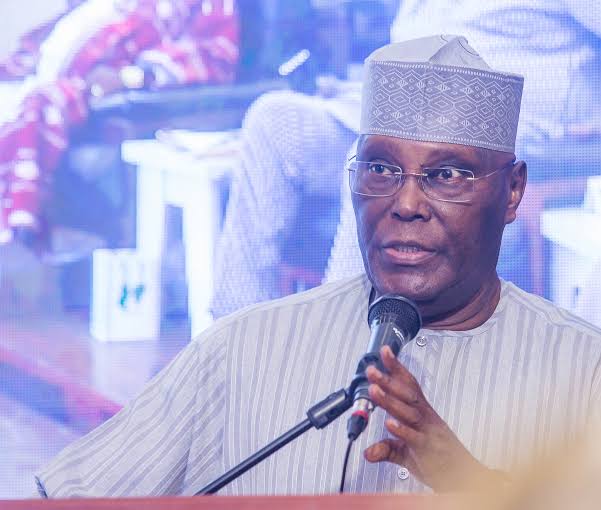
Atiku Abubakar used his own Independence Day address on Thursday to mount a direct rebuttal of President Bola Tinubu’s claim that Nigeria has moved past economic crisis into what Tinubu called an “age of prosperity,” arguing that growth figures mean little to households still struggling to afford food, fuel and healthcare.
The African Democratic Congress presidential candidate’s response came hours after Tinubu told the nation that three and a half years of economic reform had delivered undeniable results, pointing to GDP growth above 4% this year and describing the period of painful correction as over. Atiku pushed back hard on that framing, asking plainly where Nigerians were supposed to find this prosperity when they could barely afford to survive.
A Point-by-Point Challenge to the Economic Narrative
Atiku took specific aim at Tinubu’s own language, including the president’s earlier comparison of Nigeria’s economy to a cancer patient undergoing treatment. He asked why, three years into that treatment, it had become harder for ordinary Nigerians to buy food, pay for medicine or get to work, and why the government appeared to have more money while citizens had less. On inflation specifically, he argued that a slower rise in prices does not return what families have already lost, and that growth figures and export numbers mean little if they don’t translate into improved daily life.
He also pressed the government on its handling of public finances, pointing to the extension of the 2025 budget’s operation through the end of 2026 running alongside the active 2026 budget, with a 2027 budget expected soon after. He framed the overlapping budgets as a transparency problem, asking how the government could account for what had been funded, completed or left unpaid when multiple budget cycles remained open simultaneously.
Zeroing In on a Same-Day Promise
One of the sharper exchanges centred on a specific claim from Tinubu’s own speech, that cheaper transport fares would take effect from October 1. Atiku noted that commuters were still waiting to see those lower fares on the day itself, and challenged the government to publish exactly which routes had been affected, what the old and new fares were, and how many people stood to benefit, rather than leave the claim as an unverified announcement.
An Alternative Policy on the Table
Rather than simply criticising the current approach, Atiku laid out what he described as a capped and budgeted production subsidy tied specifically to fuel refined within Nigeria, including output from modular refineries, with imported petrol excluded from the scheme. He said the plan would involve published costs, independent auditing of payments, and government waste reduction to help fund it, framing the underlying principle as producing, refining, creating jobs and paying less, all within the country.
Security and Political Freedoms
Beyond economic policy, Atiku described a security situation he said had left farmers afraid to work their fields and parents afraid for children in classrooms, arguing that a government unable to make life affordable or protect lives had failed on both fronts that matter most to citizens. He also addressed political freedoms directly, calling for due process in the cases of Sheikh Sani Khalifa Zaria, former Kaduna Governor Nasir El-Rufai, and Nnamdi Kanu, and renewed an earlier call for the release of five young Nigerians detained in Borno over “Tinubu Must Go” T-shirts, arguing that political expression should not result in imprisonment.
Atiku closed his address by tying the government’s record directly to the 2027 election, arguing that Nigeria’s founders had not secured independence so that a small number of people could prosper while the majority simply survived. He positioned the coming vote as the mechanism through which Nigerians could demand the change he said the current administration had failed to deliver.