

 By
By - Transport fares stayed unchanged across at least fourteen states on October 1, despite Tinubu’s directive that CNG-powered buses should begin lowering commuter costs that day
- Missing buses, absent refueling infrastructure, and bad roads were the most common complaints from transport unions and drivers nationwide
- Ekiti bucked the trend, flagging off 15 CNG buses on Independence Day with a pledge to cut fares by 50%, while federal officials insist October 1 was a monitoring start date, not a universal deadline
President Bola Tinubu’s promise that Nigerians would start seeing cheaper transport fares from October 1 has collided with reality on the ground, as checks across more than a dozen states found commuters still paying the same prices they paid before the directive, in some cases more.
The pledge traces back to an August 27 meeting Tinubu held with Nigeria’s 36 state governors, out of which emerged the National Affordable CNG Transit Programme. On September 19, the President followed up with a public call urging governors to translate savings from gas-powered transport into lower fares for residents by the start of October, asking states to work with transport unions, support vehicle conversion, and build out the infrastructure needed to make the shift stick.
That infrastructure, more than anything else, appears to be where the rollout has stalled.
Where the Promise Didn’t Land
In Anambra, fares from Upper Iweka to Oba and from Awka to Onitsha stayed exactly where they were before the directive, with some drivers saying they had never heard of the federal CNG buses and gas stations in the state sitting idle. A transport operator pointed instead to bad roads and the closed First Niger Bridge as the real cost drivers, arguing that vehicle damage and longer detours made fare cuts impossible regardless of fuel type.
Delta told a similar story. Only a handful of CNG-branded buses sat parked at a government lodge in Asaba, and the local transport union said it had received none of the promised vehicles, leaving fares untouched. In Imo, drivers quoted fares as high as N9,000 between Owerri and Awka, up roughly half from previous levels, and dismissed the CNG conversation entirely in favour of a blunter demand, that the government simply lower the price of petrol itself.
The pattern repeated in the north. Sokoto and Kebbi commuters paid the same N5,000 to N6,000 fares as before, though Kebbi’s state-owned buses offered a modest N3,500 alternative on one route, limited in reach. In Jigawa, passengers in Dutse said nothing had changed despite assurances the fare cut was coming, even as the state’s road transport union confirmed around 100 vehicles had actually been converted to CNG under the programme, conversions that had yet to show up in what commuters were paying.
Gombe, Edo, Ondo, Osun, Oyo and Ogun all reported fares holding steady or climbing. In Osun specifically, the state’s Commissioner for Information, Kolapo Alimi, said the state was still waiting on CNG buses promised by the Federal Government, and pointed to its tight finances as a separate obstacle to rolling out subsidised transport on its own. In Oyo, a trader summed up the public mood bluntly, suggesting she would wait through the weekend to see whether the President’s word would hold, after boarding a bus Thursday at the same fare as always.
Partial Progress in a Few States
Not every state came up empty. Kaduna’s free CNG mass transit scheme, already running across eight routes with 100 buses, has reportedly carried 3.2 million passengers and saved commuters more than N3.5 billion over its first year, though fares outside that specific network remained high. Plateau’s subsidised bus service was moving roughly 13,000 commuters daily at a fraction of commercial rates, a programme officials there said predated the federal push entirely. Enugu’s government-run CNG buses charged a flat N300 against N600 on regular commercial routes, but limited operating hours and routes meant most commuters still had no real alternative outside peak windows.
The Federal Government’s Defence
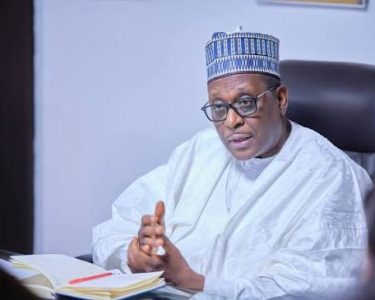
Ismaeel Ahmed, who chairs the Presidential Initiative on Compressed Natural Gas and Electric Vehicles, pushed back on the idea that October 1 was ever meant as a simultaneous, nationwide switch. He described the date instead as the point from which the Federal Government would begin tracking how fare reductions were unfolding state by state, arguing that visible progress already existed in places like Abuja, Lagos, Kaduna, Zamfara and Borno, where electric and CNG vehicles have cut typical trip costs dramatically, in Borno’s case to as little as N15 per ride on routes that used to cost N200 to N500.
Ahmed acknowledged the programme hadn’t reached every corner of the country yet, framing the current stage as a beginning rather than a finished rollout, with further expansion expected as conversion infrastructure and bus deployment catch up to the President’s original ambition.
Ekiti’s Independence Day Launch
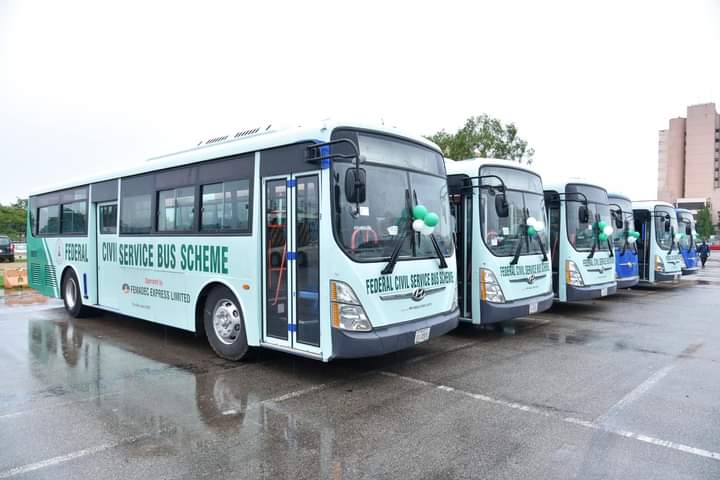
Against that uneven backdrop, Ekiti State offered one of the clearer wins for the federal programme, flagging off 15 CNG buses in Ado-Ekiti on Thursday, timed to coincide with both Nigeria’s Independence Day and the state’s own 30th anniversary. Governor Biodun Oyebanji, joined by Senate Leader Opeyemi Bamidele, described the buses, donated by the Federal Government, as a pilot phase the state intends to expand, with transport unions set to manage distribution and operation.
Oyebanji appealed directly to those unions to pass the resulting savings on to commuters, saying the shift could cut transport costs by half if implemented as intended. The state’s Transportation Agency has already mapped routes connecting Ado-Ekiti to Lagos, Ibadan, Onitsha, and Abuja, positioning the buses to serve interstate and local travel. Oyebanji credited the Federal Government’s broader economic support with giving the state room to act on the initiative, framing resource availability as the real constraint separating vision from delivery.
What the Gap Reveals
The two pictures, Ekiti’s working pilot against more than a dozen states where nothing has changed, point to a federal programme whose success depends almost entirely on how much a given state government has already invested in the groundwork: vehicles actually delivered, conversion centres built, and refuelling infrastructure in place. Where that groundwork exists, as in Kaduna, Plateau and now Ekiti, commuters are seeing real relief. Where it doesn’t, the October 1 promise has so far amounted to a date on a federal statement rather than a change at the bus stop.