

 By
By - Nigerians were sold a road by the sea. They are now being handed a detour inland, with no map, no cost and no proof.
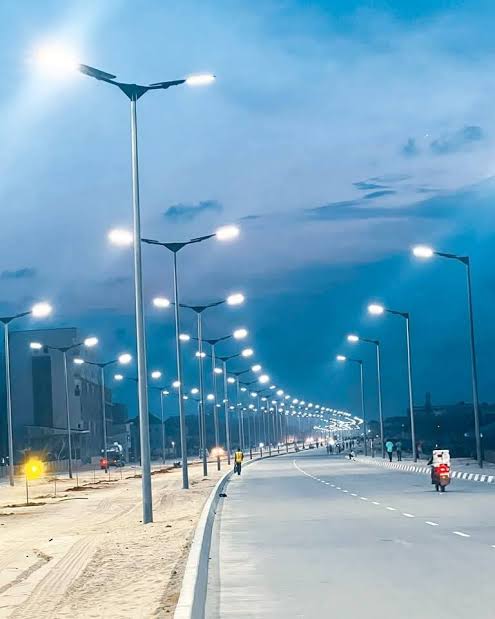
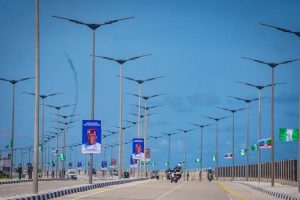
When the Lagos-Calabar Coastal Highway was launched in 2024, the promise was that a great road would run along the sea and join the towns and villages of the coast. Fishing communities that had waited decades for a proper road would finally be connected to the rest of the country.
This week, that promise broke in public.
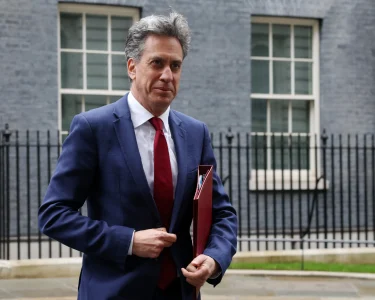
On Monday, the Minister of Works, David Umahi, told reporters that the 750-kilometre highway is “intact and cannot be changed.” In the same briefing, he said the President had given an order. “Divert, do not do any new alignments.” From Ondo into Edo State, the road will now follow the old East-West Road. That road is inland.
A coastal highway that leaves the coast is no longer what Nigerians were promised, and both things cannot be true. A road that cannot be changed does not need a new route.
The reasons do not hold together
The minister has given his reasons that the old route in Ondo crosses ground with pits more than 100 metres deep and there’s no good sand to build on. He says the East-West Road floods and must be raised by about two metres, adding that he has “no regret.”
Building on soft, wet land is hard and costly. That is true, and it deserves a fair hearing. However, a reason is not proof, and this one raises more questions than it answers.
First, the ground was never a secret. In October 2025, the minister said on live television that the project had not been fully designed and the soil report was not complete. By then, a contract worth trillions of naira had already gone to Hitech Construction without open bidding. A loan of $747 million had already been arranged for the first section. Nigerians were asked to back a road whose ground had not been fully studied. Now the people of the coast are told they must pay for that gap with their access.
Second, the reasons keep changing. In 2025, the minister said parts of the road in Ondo, Delta, Rivers, Akwa Ibom and Bayelsa would be moved inland to avoid most of the bridges. Now the reason is deep pits. Each reason may be true. But none came with a published study, and none came with a new price.
Third, the price itself keeps moving. In April 2024, Mr Umahi said each kilometre would cost ₦4 billion. Reports at the time noted that this works out to about ₦2.8 trillion for the whole road, yet the total most often quoted was ₦15.6 trillion. In October 2025, he gave ₦7.5 billion per kilometre for a standard highway. We could not find any place where the ministry puts these numbers side by side and explains the difference. Wider lanes, bridges and rail may explain part of it, but the public has been told none of that.
A contract with no contest
Hitech was picked without a competition. In fact, the minister says the firm was chosen for its skill in coastal works, and that the President never told him to choose it.
The firm did build the Eko Atlantic sea wall, and lenders have praised its speed on site. However, holding back the sea is not the same as building a long road through the swamps of the Niger Delta, while its earlier highways in Lagos were tens of kilometres long, far short of 750.
If Hitech was chosen for its coastal skill, why is the coast now too hard to build on? An open contest might have forced that question before any money was spent. Instead, we are asking it now, after the contract, after the loan, and after hundreds of homes were pulled down in Lagos to make way for this road.
In 2024, the House of Representatives set up a committee to probe the award. We could not find its report. The public has a right to know what it found.
The people left behind
The people most affected have spoken plainly, and they are Ilaje leaders in Ondo and Itsekiri leaders in Delta who say the coastal route from Olosunmeta to the Itsekiri area is about 100 to 110 kilometres, while the inland option is 170 to 190. They name community after community, from Araromi and Awoye to Ode-Ugborodo, that would be left outside the project. These are their figures, and the ministry should answer them in public.
On 11 October, an Ilaje group wrote to the President, the National Assembly and the anti-corruption bodies. It asked for an independent check of the engineering and a cost audit. A senior lawyer, Ebun-Olu Adegboruwa, has asked the President to order a review too. These are modest requests. The government has no good reason to refuse them.
The politics, and what stands on its own
Opposition leader Atiku Abubakar says a loan of up to 20 billion dollars is being prepared for this project. That claim is unconfirmed, and it comes from a rival for the presidency, so it must be treated with care. However, his main point does not depend on the claim. When the work changes, the bill must be opened.
What must happen now
The minister says nobody has abandoned the highway. Then he should prove it, and quickly, and so we call on the government to do four things.
- Publish the ground study behind the “100 metres” claim, with its date.
- Publish the new route, and name every coastal community it will serve or bypass.
- Publish the revised cost of the road, set against the old cost, kilometre by kilometre.
- Allow an independent engineer to review the Ondo decision, and let the National Assembly hold a public hearing before one more naira is borrowed for this road.
If the engineering case is as strong as the minister says, these steps will prove it. If it is not, Nigerians deserve to know that too.
A promise made to a whole coastline cannot be kept with a briefing at the State House and an order spoken behind closed doors. It must be kept in the open, with the maps, the numbers and the studies on the table.
Until that happens, the name on this road is a promise it no longer keeps.