

 By
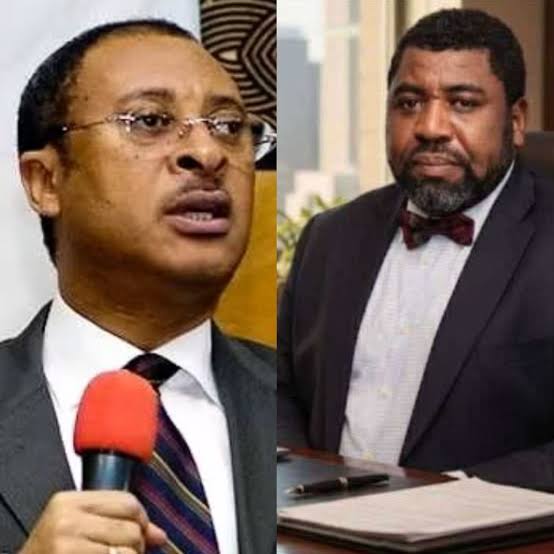
By Professor Pat Utomi, who founded a centre to teach values in leadership and has told Nigerians to demand accountability from their leaders, has vouched for the education of Anthony Kila, his friend, without seeing any of it.
In a Facebook post, he admits he has never asked for Kila’s certificates or letters of appointment, cannot say what they show, and then calls the suggestion that Kila never went to school “spectacularly stup!d.”
The same post shows why the questions matter, because Professor Utomi explains his own professorship by naming the Vice-Chancellor who led the team that evaluated him, while the body Kila names as the source of his, a Cambridge centre, is one that Premium Times says does not exist.
Interestingly, what Utomi offers in place of evidence is a reference, since he writes that Kila is a smart and good man who may have made mistakes but could not have skipped school.
A university makes a professor. It does not matter who vouches for the man afterwards. So the question in Mr. Kila’s case is who made him one. He says a centre in Cambridge did, in 2016. Premium Times found no record, website, address or alumnus for it. What it did find was the title repeated in two places, which were; the website of the institute he controls; and the website of the university whose council he chaired. Newsrooms then repeated what those pages said. The trail starts and ends with Mr. Kila’s own platforms. Prof Utomi says Nigeria is full of people who confer titles on themselves. Whether Mr. Kila is one of them is the question his documents would settle in an afternoon.
To consider what the rank demands, a professor is the top rank of a university, and by the National Universities Commission’s standard, a candidate needs a doctorate and at least three years at each of Lecturer II, Lecturer I, Senior Lecturer and Associate Professor, about 12 years in all. The candidate’s work is judged in the department and by a promotion committee, the CV then goes to external assessors, and two must approve. The rank is conferred by a university and tested by peers.
By the investigation conducted so far, Mr. Kila has not met that test. Premium Times searched UK Companies House and Nigeria’s Corporate Affairs Commission for that body and found no record, website, address or alumnus. Nine of the 22 works on his Google Scholar page were not his, and none of the rest could be shown to be peer-reviewed in a reputable journal.
PT also put the claim to people who would know. One was Jean-Marc Trouille, co-chair of the AfriquEurope Jean Monnet Network, who told the paper it was highly unlikely that Kila holds a Jean Monnet chair and said the only Jean Monnet module he knew of in Nigeria was at the University of Lagos, where Kila was not on the team.
The European Centre for Advanced Studies, the institution closest in name to the one Kila cites, which was set up by the University of Glasgow and Leuphana University, told the paper it has no knowledge of him.
The paper’s second report covers his degrees. Aston University has no record of him studying for an MBA. City St. George’s says he enrolled in a one-year course in 2000 and was deregistered without finishing.
Essex says it has never offered the diploma he listed. Perugia says it has never awarded a doctorate in political economy. The Italian university he named says it offered no bachelor’s or master’s degrees in the years he claims. Asked for proof, Kila said his documents would be ready soon. The paper first asked him in May.
Where the Defence Breaks
Kila’s own accounts of his education also disagree with each other.
The profile on the website of the institute he controls, which the university published too, says he graduated with a first-class degree in political economy and later specialised in political anthropology, while the résumé he sent the paper lists his first degree as a BA in Classic Studies and mentions no first-class degree and no first degree in political economy.
After the reporter confronted him with the first findings, that institute’s website was edited several times, the profile the paper described as misleading was removed, and the site was eventually taken offline.
Utomi’s post misstates the case. Premium Times did not report that Kila never went to school. It reported that the qualifications he listed do not match what the institutions say. One university confirmed an enrolment and a failure to complete.
Kila’s own answer has been to insist that he is a professor, to say that Premium Times acted on an incomplete understanding of the nature, origin and institutional basis of his professorship, and to tell the paper he has asked his lawyers to review the publication.
He also said he was baffled by the attention because he holds no political office and is not a government official.
The office he does hold answers that, because a pro-chancellor chairs the governing council of a Nigerian university, which is charged with general control of the university’s administration, policy, finance and assets.
The university’s own position also moved quickly. Before publication, a spokesperson, who declined to give his name, said it had no evidence that Kila was not a professor and that it does not debate issues, and days after the report, the university suspended Mr. Kila as its pro-chancellor.
Mr. Utomi’s post also helps the other side. He says that when he became a professor at Lagos Business School, the evaluating team was led by the Vice-Chancellor of the University of Ibadan. That is how a real rank works. It leaves a trail of institutions and names.
Mr. Utomi can name his evaluators. Kila cannot name an institution that exists. Utomi also blames the media that makes celebrities of such people, and he describes the disease while defending the patient. He also recalls offering ₦12 million to anyone with evidence against him. Meanwhile, Nigerians are only asking Mr. Kila for one certificate.
Prof Utomi blames part of the problem on a media that confers status, yet the title in this case did not begin in the newsroom. Premium Times found Kila described as a professor in the profiles on the website of the institute he controls and on the website of the university he chaired, and the broadcasters and newspapers that addressed him that way were repeating what those profiles said. The newsrooms did fail to check, and that failure deserves its own inquiry, but the claim came from Kila’s own biography.
Arday, the Committee and the Test
Mr. Kila built his public standing as a commentator, where many people watched him on television, listened to him on radio and read him in newspapers while he spoke about the need for honesty and transparency in governance and in public and private life. A man who asked the country for transparency kept the basis of his own title out of view for more than a decade, and a friend who has built a reputation on accountability now asks the public to take it on trust.
Utomi’s comparison with Jason Arday also fails. Arday’s death is a tragedy. His family blamed a campaign of misinformation, and police called the death unexpected but not suspicious. However, Arday held a Cambridge chair and a doctorate from a real university.
The disputes concerned plagiarism and embellished affiliations. Cambridge and Glasgow opened inquiries, so institutions were there to investigate. In Kila’s case, there is no awarding institution to investigate. The reporter also did not act as a mob. It wrote to universities, waited out data-protection refusals, and gave Kila time to answer.
But then there is the relationship. Utomi says they met in Cambridge in 2006. In January 2026, the ADC named Utomi deputy chairman of its 50-member policy and manifesto committee. Kila was on the same committee, listed as a professor. By his own account, Utomi never checked.
We cannot know why he defends Kila now. Friendship is a human reason. However, Utomi is not only a friend. He founded the Centre for Values in Leadership to build values-driven leaders. He has told Nigerians to demand stewardship and accountability from their leaders. Such a man is tested by how he treats a friend and political ally.
The task is plain and clear as daylight, and it is demanding that Mr. Kila publish his documents. Michael and Cecilia Ibru University, whose council he chaired, must say how it verified him.
The National Universities Commission, which sets the standard for the rank, should say whether anyone asked it to verify Kila before his appointment. Broadcasters must check a title before they put it on screen. A professor’s title matters because it carries authority over students, over other scholars’ careers and, in Kila’s case, over a university’s council.