

 By
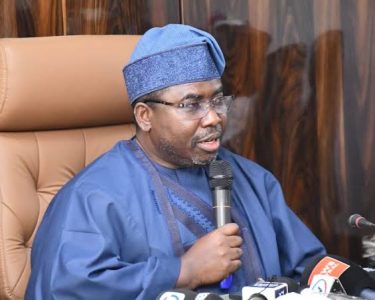
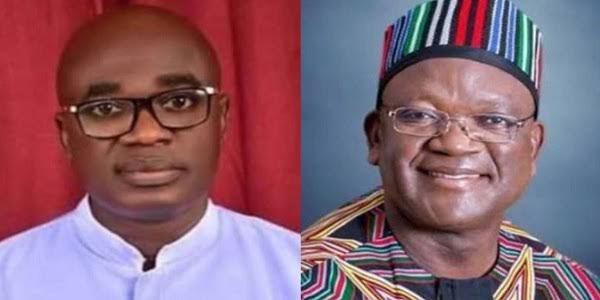
By Former Governor Samuel Ortom says he fought for and won back 23 government vehicles and ₦5 million in damages from his successor, Governor Hyacinth Alia. That account, given by Ortom in a September 2026 interview with Arise Television and unchallenged so far by the Alia camp, reads on its face like a straightforward legal win for a wronged ex-governor.
Look past the headline, though, and the dispute becomes a messier, more interesting example than it first appears. That’s not because the broader argument about Nigeria’s ex-governor entitlements is wrong, but because Benue itself is now an oddly imperfect illustration of it.
The state’s own Governors and Deputy Governors Pension Law, the statute that would have governed a handover like this, was repealed by the Benue State House of Assembly in May 2024, a full year before this vehicle dispute became public. And per Ortom’s own account, the 23 vehicles weren’t dispensed under that law’s car-replacement clause at all; he says they were approved by the State Executive Council as “used assets” after more than four years of service, which is a separate, far less transparent mechanism for moving state property to outgoing officials, one that lives in administrative practice and executive council minutes rather than in any statute a legislature can simply vote to repeal.
That version of events makes for a more troubling story than “an outrageous law is still on the books,” because it suggests scrapping the law doesn’t necessarily stop the flow of state assets to former officeholders; it just pushes the practice into channels with even less public visibility. Benue’s legislature already did what reformers elsewhere are still demanding, and a car dispute happened anyway.
Is This the Norm? Yes, in Most States, Written Into Law
Even with Benue’s law now off the books, the broader pattern it exemplified is very real and remains active in a majority of Nigerian states. Under the version that applied at the twilight of Ortom’s own administration, before his eventual successor’s assembly repealed it, Ortom sent a bill to the Benue House of Assembly in April 2023 proposing a monthly stipend equal to a sitting governor’s salary for life, a ₦25 million maintenance allowance every four years, two official SUVs, and personal domestic staff for former governors, with a smaller package for former deputies. Lawyers at the time calculated this would have cost the state well over ₦1 billion a year just for the three living former governors and their deputies combined, a burden Benue’s own lawmakers eventually cited when they repealed the law in 2024.
Benue’s reversal makes it the exception and not the rule. According to disclosures the civil society group SERAP has compiled from state pension statutes, the practice remains close to universal among Nigeria’s states, with the specific packages varying widely. Under Akwa Ibom’s Life Pension Law, a former governor is entitled to roughly ₦200 million a year, two official vehicles with chauffeurs, a furniture allowance worth 300% of annual basic salary, an aide, a cook, and lifetime security guards, plus roughly ₦100 million a year in medical coverage and five-bedroom mansions in both Abuja and the state capital.
Rivers State’s law, passed in 2012, entitles a former governor to three new cars every four years, a house anywhere in Nigeria of his choosing, free and uncapped medical care for himself and his family, and a household staff of cooks, stewards, and gardeners plus a security detail of state security operatives and police officers.
Kwara’s 2010 law gives two cars and a security vehicle, replaceable every three years, a five-bedroom duplex, and five personal staff. Zamfara’s 2006 law guarantees two vehicles every four years, two drivers, free medical care at home or abroad, and a monthly pension for life. Katsina’s pension arrangement, dated to 2007 by some accounts and described elsewhere as amended into a 2011 law, grants two cars every four years, furnished houses, and two personal aides in a state with comparatively modest revenue.
The pattern repeats with cosmetic variation across Gombe, Sokoto, Lagos, and elsewhere. Lagos’s version, signed into law in 2007 by Bola Ahmed Tinubu, who now presides over Nigeria as president, originally granted former governors 100% of the incumbent’s basic salary for life, houses in both Lagos and Abuja, six brand-new cars every three years, and further allowances on top. That original version didn’t survive intact: Lagos lawmakers cut those benefits by half in 2021 rather than repealing the law outright, despite Governor Sanwo-Olu’s own stated intention to scrap it.
Should It Be, at the Expense of Taxpayers? The Numbers Say No
The core objection from critics, SERAP among them, is straightforward, to the tune that these benefits come out of public treasuries in states that routinely struggle to fund basic services and reward tenures of four to eight years with entitlements that dwarf what career civil servants receive after three or more decades of service. Retired civil servants who served the state for 30 to 35 years often get by on modest minimum-wage pensions, while governors who served a fraction of that time secure state-funded mansions, vehicle fleets, and lifetime medical care for themselves and their families.
The fiscal mismatch sharpens against actual state finances. Katsina was reported in 2019 to be running a budget partly financed by a ₦33.4 billion loan, with internally generated revenue of only ₦35.4 billion across the first half of that year, even as its pension law obligated the state to fund houses, cars, aides, and medical care for former governors indefinitely.
Multiple states have seen pushback as a result. Imo’s government under Governor Hope Uzodimma repealed its own “Governors and Speakers Pensions and Privileges Law of 2007,” with Uzodimma explicitly calling the law illegal and designed to let a privileged few feed off the commonwealth of ordinary residents. SERAP separately secured a November 2019 Federal High Court judgment ordering the recovery of pensions from former governors who were simultaneously drawing salaries as ministers or National Assembly members, on the grounds that collecting from two arms of government at once conflicted with the spirit of their constitutional oath.
Is This Obtainable Elsewhere in Nigeria? Broadly, Yes, With Wide Variation
Nigeria’s ex-governor pension regime is not confined to Benue, and Benue’s repeal puts it in a small club rather than the mainstream. Reporting compiled from state pension laws shows the practice remains widespread (commonly cited counts run from roughly 20 to two dozen of the 36 states), even as specific packages vary considerably. Some states cap vehicle replacement at three years, others at four or five. Some provide uncapped medical care abroad; others limit coverage to Nigeria.
A handful of states, including Imo and Zamfara alongside Benue, have moved to repeal or scale back these laws in response to public pressure, and Lagos cut its benefits in half. However, the majority remain in force largely unchanged, and full repeal has proven far harder to achieve than partial reduction; Lagos’s own assembly explicitly declined to follow Zamfara’s example of outright repeal when the question came up in 2019.
Is This Obtainable in the Western Democracies That Handed Nigeria Its System? Not Remotely at the Same Scale
This is where the contrast sharpens. In the United States, there’s no equivalent of a state law guaranteeing former governors fleets of vehicles, chauffeurs, cooks, or lifetime armed security. What former US governors typically receive instead is a standard state employee pension, calculated on the same formula applied to other long-serving public employees. Former New York Governor Andrew Cuomo, for instance, receives a $50,000 annual pension covering a combined 15 years of service (11 as governor and 4 as attorney general), a modest sum next to what a Nigerian governor secures after a single four-year term. Security for former US governors isn’t federally guaranteed the way it is for former presidents; it’s typically a matter of state discretion tied to specific, credible threats, and in many states it ends when the governor leaves office.
The United Kingdom offers a similarly stark contrast. Former Prime Ministers receive no lifetime salary, house, vehicle fleet, or domestic staff. What they’re entitled to is the Public Duty Costs Allowance, capped at £115,000 a year: not a personal payment but a reimbursement mechanism for legitimate public-duty expenses like office costs and correspondence, subject to Cabinet Office scrutiny, and one that some former Prime Ministers, including Rishi Sunak, have simply declined to claim. Even Canada’s Governor General, a ceremonial head-of-state role, comes with a fixed statutory annuity, currently around $149,484 (Canadian dollars a year), set out plainly in legislation. Former Canadian governors general also have access to a separate lifetime expense account for office and travel costs, worth up to roughly $206,000 a year on top of the annuity, so the Canadian system isn’t quite as minimalist as the annuity figure alone suggests, even if it’s still transparent, single-purpose, and far narrower than Nigeria’s sprawling multi-category entitlements covering cars, cooks, furniture, and vacations all at once.
Should a Former Governor Still Move With a Convoy?
This is ultimately a question of proportionality. In Western democracies, security and logistical support for former officeholders is generally tied to demonstrable, ongoing risk rather than treated as an automatic status symbol attached to the office itself. A former governor facing credible, specific threats arising from decisions made in office has a legitimate case for continued protection, the same way any private citizen facing a documented threat might. A permanent, taxpayer-funded convoy replaced every three or four years indefinitely, regardless of whether any specific threat exists, is a different proposition, one that functions less as protection and more as an inherited perk of status.
Benue’s own experience complicates the usual reform prescription. Repealing the pension law is necessary but evidently not sufficient: per Ortom’s own account of how the 23 vehicles changed hands, state assets can still move to outgoing officials through executive council resolutions that never touch a statute book at all and are consequently much harder to track, contest, or repeal.
A serious reform agenda would need to address both tracks, which are: the formal entitlement laws that most other states still operate under; and the informal, discretionary asset-transfer practices that can persist even after a state does the right thing and scraps its law.