

 By
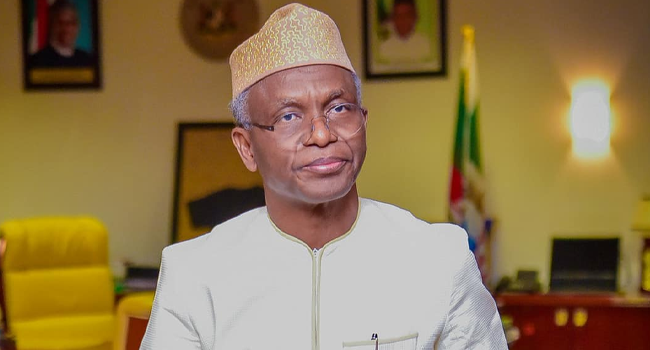
By Nasir El-Rufai is once again squaring off against the anti-graft agency holding him, this time putting a N10 billion price tag on what he calls a simple but painful grievance for not being allowed to see his own wife and son.
The former Kaduna State governor filed the fresh fundamental rights suit at the Federal High Court in Abuja on August 13, court papers marked FHC/ABJ/CS/1852/2026 show. His legal team, led by Ubong Akpan, drew the Independent Corrupt Practices and Other Related Offences Commission in as the lead defendant, with the commission’s chairman and the Attorney-General of the Federation dragged in alongside it.
At the heart of the case is a claim that feels almost domestic in its detail against the backdrop of a corruption probe: that his wife, Aichatou Asabe, and son, Abba, have been turned away time and again when they tried to bring him food and medicine while he sits in ICPC custody, with no court order or legal ground offered for shutting them out.
A Constitution, Invoked
El-Rufai isn’t framing this as a mere inconvenience; his court filings lean on Sections 34 and 37 of the 1999 Constitution, the provisions guarding dignity and private and family life, alongside Articles 5 and 18 of the African Charter on Human and Peoples’ Rights, arguing that cutting off a detainee’s family entirely crosses a constitutional line regardless of what he’s accused of.
He wants the court to say so plainly: that the ICPC’s conduct has been unlawful, and that going forward, his family and lawyers must be allowed to see him without obstruction for as long as his detention lasts. Nine separate reliefs are listed in total, and among the more striking allegations is a claim that ICPC personnel physically restrained and intimidated his wife and son during a specific run-in on July 7, an episode El-Rufai’s filing casts as evidence of a pattern, not a one-off. He says the toll of it all has been real: humiliation, anxiety, and psychological strain.
An Order Already on the Books, He Says
Court documents filed alongside the suit, an affidavit from El-Rufai’s principal secretary, Mohammed Shaba, paint a before-and-after picture. Before July 7, Shaba says, Asabe came and went freely, bringing meals and supplies without anyone stopping her. Then, he says, that stopped.
Shaba’s affidavit also points back to an earlier ruling by Justice R.M. Aikawa at the Federal High Court’s Kaduna division, which had ordered the ICPC to let El-Rufai and his co-accused see their lawyers and personal doctors on request. The argument being made is that courts have already weighed in on this, and detainees, El-Rufai included, aren’t supposed to disappear into a legal black hole cut off from everyone.
Separately, El-Rufai remains the lead defendant in a criminal matter, FHC/KD/73C/2025, brought against him by the Federal Government and still working its way through the Kaduna division of the Federal High Court.
Not His First Round With the Commission
This isn’t the first time El-Rufai has hauled the ICPC into court since it turned its attention to him. Back in February, he filed a separate N1 billion suit over a search of his Abuja home, arguing the raid trampled on his rights to dignity, liberty, a fair hearing and privacy. That case was later amended, with the magistrate who signed off on the original search warrant dropped from the list of defendants.