

 By
By Away from the dueling press statements issued by the Accord Party and the Osun APC, AfrikTimes reached out directly to residents who were present at the Naira and Kobo motor park in Ikire when the shooting broke out.
Separately, Senator Lere Oyewumi, the Deputy Minority Leader of the Nigerian Senate and a son of the town, addressed the incident in a video circulating online, in which he described arriving at the scene shortly after the killings and remaining there for hours in an effort to prevent the situation from escalating further.
What Residents Told Our Correspondent
Our correspondent spoke by phone with three residents who were in Ikire on the day of the shooting, and their accounts did not fully agree with one another.
Read Also: Ikire Killings: Accord, APC Trade Blame as Two Die in Garage Shooting
One resident said the trouble began when transport workers loyal to the Accord Party attempted to take over the park, and that operators aligned with the APC opened fire in what this resident described as an act of self-defence against the takeover attempt.
The other two residents disputed that version entirely. Both said the park was calm and functioning normally that morning, with buses loading passengers as usual, when gunshots suddenly rang out. One of them said a driver was killed, along with a man who was inside a parked vehicle at the time. The other resident went further, alleging that officers from the Ikire Divisional Police Headquarters, led by the DPO, were seen moving through the area alongside a man this resident described as a known thug working for the APC, and that shooting from that group was what led to the deaths of bystanders.
None of the three accounts has been independently verified, and they point in different directions on who bears responsibility for what happened.
Senator Oyewumi’s Account, Given in a Video Address
Senator Oyewumi, speaking to a group gathered around him in a video that has since circulated widely, said he had just returned from Abuja the night before and was at home in Ikire when word of the shooting began to spread and people started converging on his residence. He was preparing to leave for a meeting with the state government to brief the governor on the incident when the situation took a turn.
He also gave an account of a tense sequence of calls involving the police leadership. He said that while he was on his way toward Osogbo, the Commissioner of Police (Election) had already alerted the traditional ruler, who then called him directly with what the commissioner had relayed. According to Oyewumi, the message passed on through the monarch was that the DPO had reported his firearm seized by thugs in Ikire, and that the town risked being set ablaze if the weapon was not returned within two hours. As soon as he got off the phone with the monarch, Oyewumi said he called the commissioner (Election) directly, who asked him to head to the scene of the crime, adding that a team of police was already being dispatched from Osogbo.
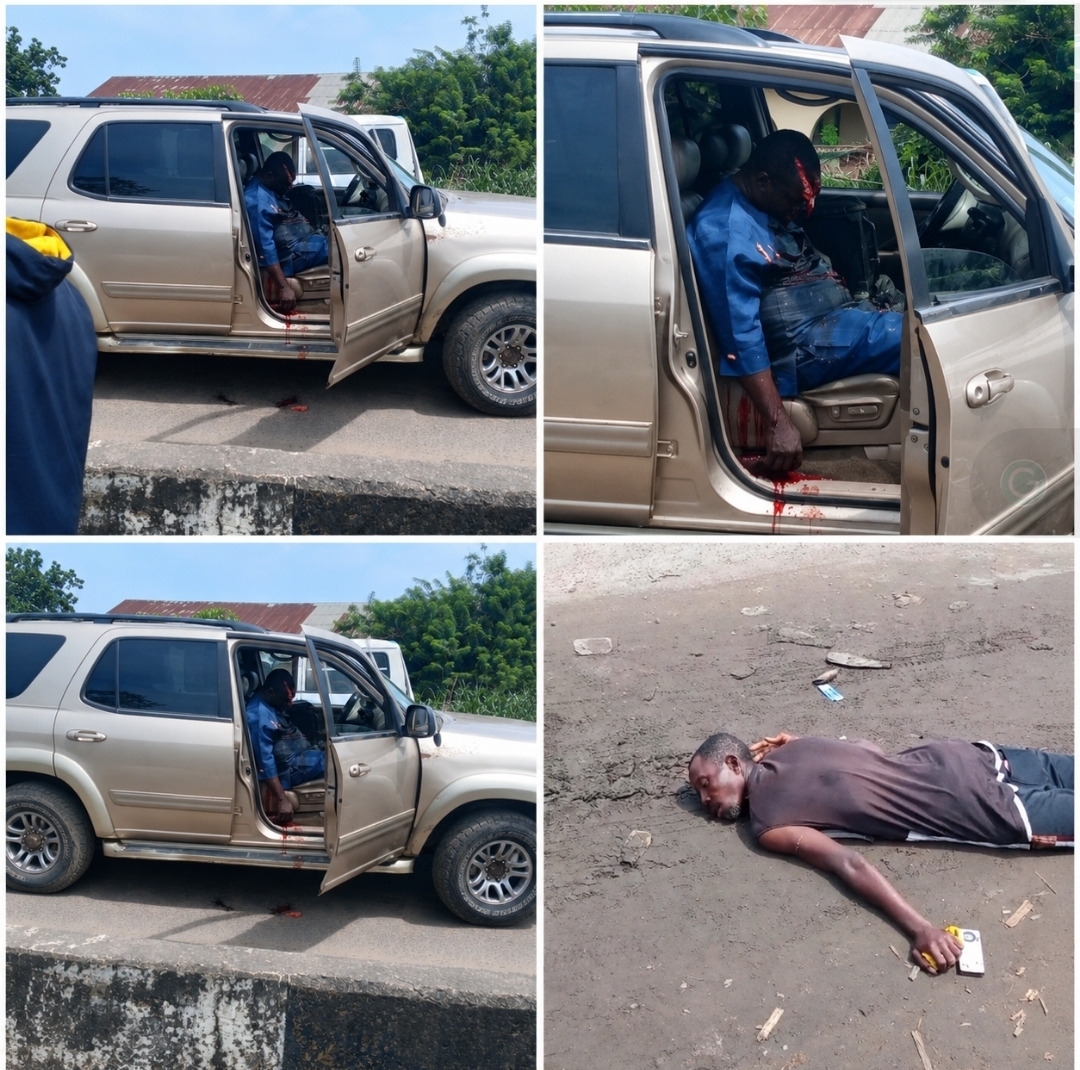
It was on turning back that Oyewumi said he found two bodies at the scene. One person had been shot on the road, and the other was killed while still seated inside his vehicle, which he called the more disturbing of the two. According to the senator, witnesses at the scene told him that a group had arrived at the junction and opened fire before anyone had even properly stopped to see who they were, sending everyone at the park running. He said the first victim appeared to have been caught by a stray bullet, while the second was a driver who had parked to rest while his vehicle, which was being loaded with passengers bound for Ibadan, waited nearby.
He said that when he asked people at the scene what had triggered the shooting, he was told there had been no dispute or confrontation to explain it. He said he found no evidence of the kind of thug presence or garage rivalry that had troubled the town in the run-up to the election, and stressed that even during those earlier disputes, shootings of this kind had not occurred. He added that the fatalities did not appear to have reached senior police officers through the DPO, noting that when he later spoke with the commissioner about it, the commissioner seemed unaware that two people had actually died.
The senator said he waited at the scene for roughly two hours, during which he alleged police in Ikire made repeated attempts to remove one of the bodies, at one point using tear gas to send people away from the scene. He also described defusing a separate volatile situation involving dozens of vehicles that arrived from Ibadan after relatives of one of the deceased mobilised in anger and reportedly considered attacking the police station, an escalation he said he talked them out of by appealing directly to the crowd.
Oyewumi credited the newly arrived Commissioner of Police with responding seriously once informed, saying the commissioner met with him and the traditional ruler at the palace and pledged a full investigation, with a promise that whoever was responsible would be held accountable. Oyewumi was sharply critical of the DPO’s conduct more broadly, describing the officer as having behaved erratically throughout his time in the division, including during the pre-election period, and questioning why an officer would resort to force in the absence of any active crisis.
The senator also drew a connection to a string of earlier killings in the area, saying more than seven people had died in Ikire in the three months before the election, allegedly at the hands of thugs, without a single arrest being made in any of those cases. He argued that this pattern of impunity has emboldened perpetrators, and appealed for the violence to stop now that the election itself is over, arguing that residents deserve to be left in peace to await the next electoral cycle rather than face continued bloodshed.
A Town Still Waiting for Answers
Between the conflicting accounts from residents and the detailed but still one-sided narrative Senator Oyewumi gave in his video address, what remains consistent is that two people died in Ikire in circumstances that nobody AfrikTimes spoke to could fully explain, and that no arrests had been announced at the time of this report. The competing versions of events, layered on top of the separate accusations already traded between the Accord Party and the APC, underline how contested the facts on the ground remain, and how much now rests on whatever investigation the new Commissioner of Police has promised to carry out.