

 By
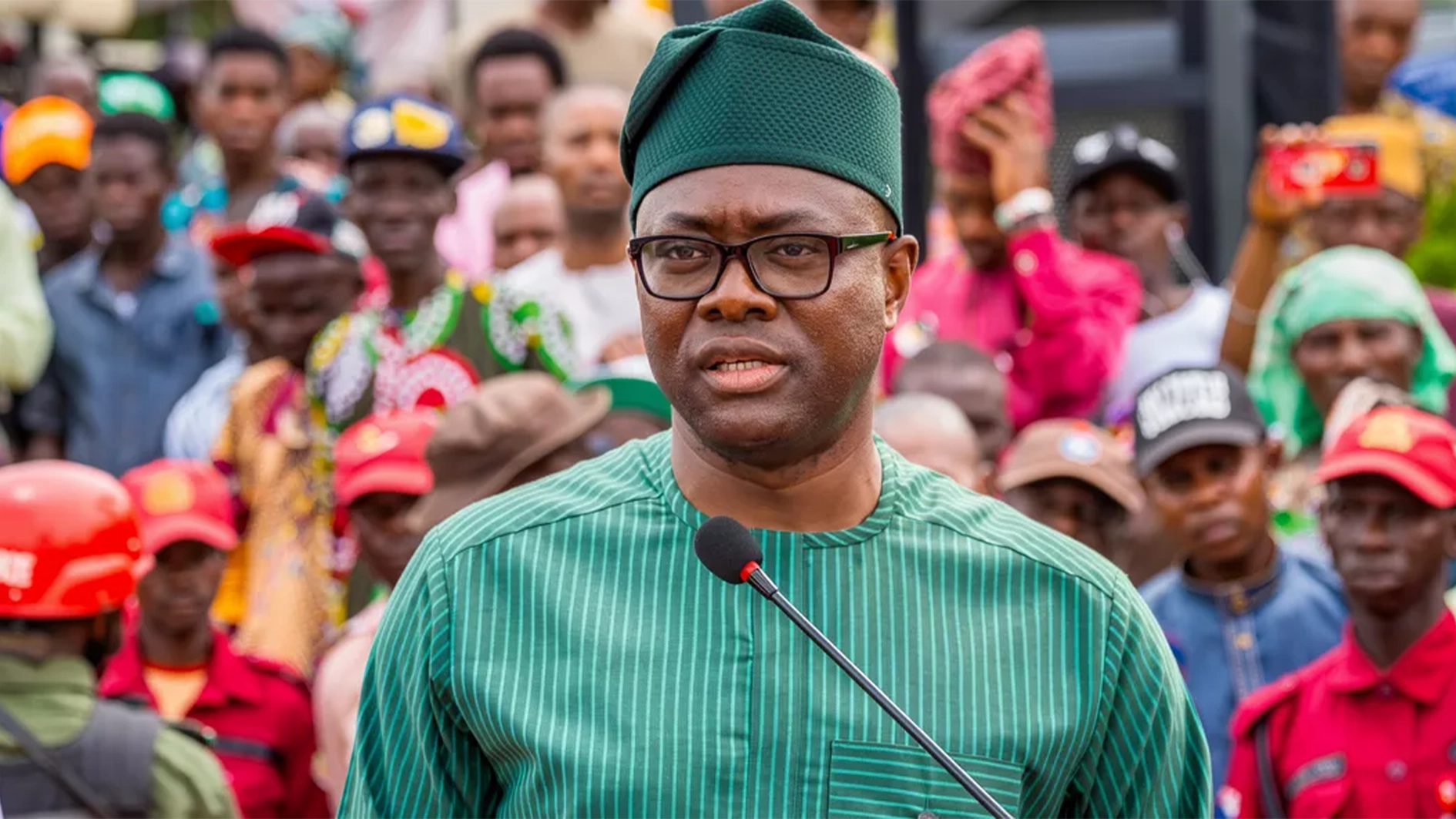
By Oyo State Governor and Allied Peoples Movement presidential candidate Seyi Makinde has ruled out bringing back the fuel subsidy, arguing instead that Nigeria should reprice the crude it supplies to its own refineries to bring down petrol costs.
Speaking Monday at the commissioning of the APM presidential campaign office in Abuja, Makinde was careful to distinguish his proposal from a return to the old subsidy system, framing it instead as a matter of pricing crude fairly for a country that actually produces it.
The subsidy debate has become a defining fault line ahead of 2027.
President Bola Tinubu removed the fuel subsidy during his May 29, 2023, inauguration, a decision that drove up the cost of goods and services even as his government continues to defend it as economically beneficial.
Former Vice-President Atiku Abubakar, who once campaigned on scrapping the subsidy himself, has since reversed course and now promises to restore it if elected, a pledge that has drawn mixed reactions across the country.
Makinde rejected that route entirely, questioning the logic of pricing Nigerian crude as though the country imports it. He illustrated the point with a simple analogy.
“If a community grows food, the people of that community should not have to buy that food as though it travelled halfway around the world before reaching them.
So why should crude oil supplied to Nigerian refineries be priced as though Nigeria does not produce crude oil? Nigeria’s oil must provide a real and measurable benefit to Nigerians,” he said, arguing that benefit should be built into the price of crude supplied for domestic refining from the outset, rather than addressed through pump-price interventions after costs and inefficiencies have already piled up.
Transparency across the whole supply chain
Makinde tied his pricing proposal to a broader call for openness across the entire petroleum value chain, from crude production and domestic allocation through refining, transportation, distribution, taxation, and retail margins.
He argued Nigerians deserve to see exactly how fuel prices are determined and where the money goes.
“Nigerians must be able to see how the final price is reached. We need complete transparency across the petroleum value chain, from production and domestic crude allocation to refining, transportation, distribution, taxes, and retail margins.
Nigerians should know what they are paying for, who receives what and where inefficiencies are increasing the final price,” he said, describing this transparency as the essence of what he’s calling the Reset Nigeria agenda.
“It means that we stop accepting systems that nobody can explain. It means that government must show its workings,” he added.
Betting on a campaign others have dismissed
Makinde acknowledged that some observers have already written off his presidential bid as inconsequential but said he’d faced the same skepticism when he first ran for governor of Oyo State, only for voters there to prove the doubters wrong.
He framed dismissals of his campaign as, by extension, dismissals of the millions of Nigerians, traders, farmers, workers and small-business owners, who he said believe the country is capable of doing better.
“But we count. Our voices count. Our experiences count. Our ideas count. And, together, our votes will count,” he said, calling for the Reset Nigeria conversation to move beyond political circles and into everyday spaces.
“That is why Reset Nigeria cannot be a conversation among politicians alone. It must become a conversation in our homes, markets, schools, offices, farms, factories, and communities.
We want to hear from the trader who struggles whenever transport costs rise.
We want to hear from the farmer who cannot afford to move produce to the market,” he said, extending the invitation to young Nigerians he described as working hard without a clear path forward.
He closed by framing his candidacy as bigger than any one contest. “They may discount one candidate. But they cannot discount millions of Nigerians united behind a better future.
Let us build a country in which government is transparent, leadership is accountable, and Nigeria’s resources work for the Nigerian people,” Makinde said.