

 By
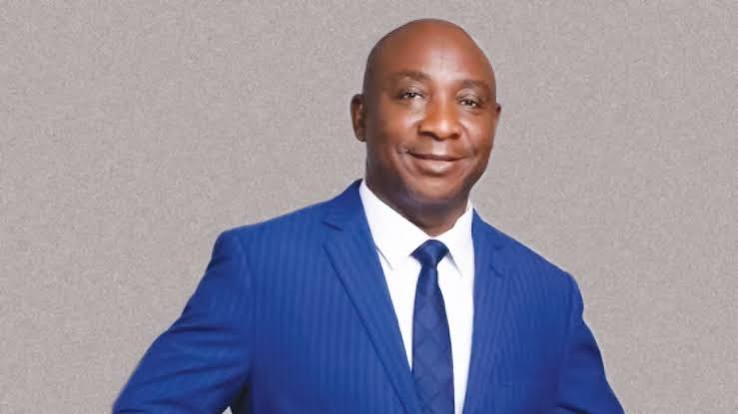
By The NFF president resignation is now official, as Ibrahim Gusau has announced his exit from the Nigeria Football Federation at a news conference in Abuja on Thursday, closing out three years and eleven months in charge. By his own account, the decision behind this NFF president resignation came down to something simple: love for the country and a commitment to football’s development.
He didn’t walk alone. Board members from the NFF’s Executive Committee joined him in stepping down, according to the Super Eagles’ account on X. Pressed for details on the wider fallout from the NFF president resignation, Gusau said he couldn’t yet confirm exactly who among his board had followed his lead, since those members hadn’t communicated their decisions to him directly.
What triggered the NFF president resignation
Speculation about Gusau’s future had been building for a while, and it crested after the Super Falcons suffered a first in the country’s football history, missing out on the 2027 FIFA Women’s World Cup entirely, beaten 2-1 by South Africa in the play-off. That defeat followed a quarter-final exit from the Women’s Africa Cup of Nations at the hands of Cameroon. The men’s side hasn’t fared much better: the Super Eagles missed both the 2022 and 2026 World Cups, and the Golden Eaglets have failed to qualify for the FIFA U-17 World Cup in three straight editions.
Money troubles have compounded the pressure behind the NFF president resignation. The federation has faced scrutiny over its handling of a ₦17 billion Federal Government intervention fund released in 2024, alongside a fact-finding committee report alleging that board members and officials leaned on national team invitations for financial gain.
“I have decided to resign my position as the President of NFF, after consultations with my family and friends,” Gusau told reporters. “I have also advised my board members, those who are willing, to resign as well.”
Gusau defends his record despite the resignation
Even in leaving, Gusau wasn’t ready to write off his tenure. He pointed to gains in coaching education, citing CAF B and C Licence courses and a Coaching Instructors’ Course conducted under his watch, with a CAF A Licence programme set to begin on September 16. He credited his administration with stabilising the domestic league system, calling it one of the toughest problems the board inherited.
On refereeing, he argued that quiet progress had been made. Nigeria had struggled for years to get its officials onto continental and global stages, but Gusau said his board pushed young referees into the pipeline and gave them room to develop. “Today, we are beginning to see the results,” he said, noting that Nigerian referees officiated at the last U-17 World Cup and the Women’s Africa Cup of Nations in Morocco, with some taking charge of semi-final matches.
Infrastructure, he admitted, remains the sorest point. “As a board, we sat down and identified infrastructure as one of our greatest needs,” he said, adding that funds from FIFA’s development programmes had gone toward the effort, with work underway to secure permanent accommodation and training facilities for the national teams. “I believe history will judge us on this, and Nigerians will remember that we played our part.”
What comes next after the NFF president resignation
Gusau made clear his exit isn’t a full goodbye; rather, he said his experience, relationships and connections within African football would remain available to Nigerian football “whenever we are needed.” His departure now sets the stage for the NFF’s elective congress, scheduled for September 27 in Lafia, Nasarawa State, where the federation will have to find someone to pick up where he left off.