

 By
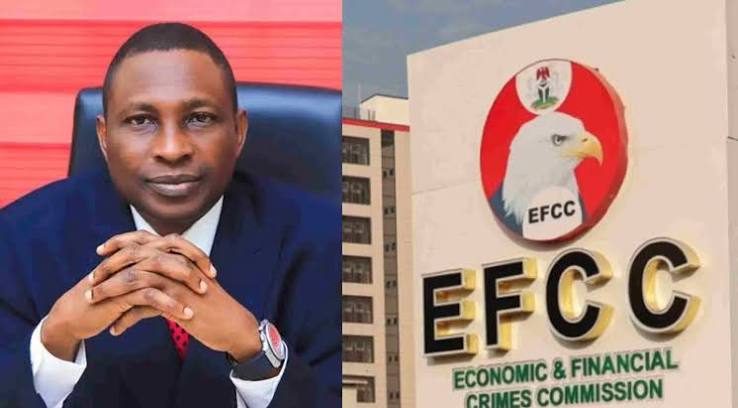
By President Bola Tinubu’s directive to the Economic and Financial Crimes Commission to vacate the court order freezing Osun State’s government account has triggered widespread criticism of the commission’s chairman, Ola Olukoyede, across social media, with many users on X and Facebook calling for his resignation or removal.
On X, according to a post by user @Otunse1, Olukoyede should immediately tender his resignation, and his continued stay in office was clear evidence that he is being influenced. According to another user, A.M. Temidayo, Olukoyede has presided over an erosion of the commission’s credibility, and his eventual exit from the EFCC will be remembered as one of the most ignominious departures in the commission’s history, marking a legacy of an anti-corruption institution turned into a tool for settling political scores.
According to a post by user Samuel Omogor, the commission has been selectively targeting states controlled by opposition parties, while another user, Nefertiti, said Olukoyede had abused his office and should honourably step aside. Political commentator J.J. Omojuwa also described the entire EFCC Osun controversy as a mess, saying there was, in his words, only one solution.
Reactions on Facebook followed a similar pattern. According to a post by Gbenga Shoyemi, if President Tinubu genuinely had no prior knowledge of the EFCC’s action, then Olukoyede should be sacked immediately for embarrassing the country’s democratic system. According to another user, Onatoye Temitope Michael, Olukoyede does not have the integrity and capacity to remain as the boss of the commission.
According to a post by Segun Ben-Ajayi, President Tinubu had effectively distanced himself from the EFCC chairman’s decision, and had shown more ethical conduct than Olukoyede, who is a pastor with the Redeemed Christian Church of God, with the user going as far as comparing the chairman unfavourably to a notorious biblical betrayer. According to Deji Fasusi, Olukoyede should honourably resign following the President’s intervention, describing the commission’s conduct as an abuse of public institutions. Other users, including Dada Bukola Francis and Francis Gbenga Silas, called on the EFCC to restore public confidence through fairness and transparency, with Silas specifically urging that Olukoyede be reprimanded over what he described as interference in Osun State affairs ahead of the election.
Lawyers and Civil Society React
Beyond public sentiment online, the controversy also drew reactions from lawyers and civil society figures. According to constitutional lawyer and principal partner at Liberty Semper Fidelis LP, Tokunbo Afikuyomi, President Tinubu’s intervention demonstrated a commitment to constitutional democracy and electoral fairness. He, however, stressed that the EFCC must formally return to court to seek discharge of the freezing order rather than rely on executive fiat, arguing that this approach respects the constitutional doctrine of separation of powers by allowing the judiciary to determine the matter. Afikuyomi also urged all institutions involved in the Osun election, including security agencies, the Independent National Electoral Commission, political parties, the media and the judiciary, to emulate the President’s commitment to protecting the integrity of the process.
Earlier reactions had also come from the President of the Nigerian Bar Association, Afam Osigwe, SAN, who faulted the reported freezing of the account, warning that any blanket restriction on a state’s finances without due legal process could cripple governance and amount to an abuse of power.
According to the Executive Director of the Civil Society Legislative Advocacy Centre, Auwal Musa Rafsanjani, the controversy underscored the need to harmonise constitutional provisions with the statutes establishing anti-corruption agencies to eliminate legal overlaps. He said the EFCC appeared to have acted within its statutory powers, while the Osun State Government was equally entitled to challenge what it considered an encroachment on its constitutional autonomy. Rafsanjani described Tinubu’s intervention as a political solution driven by public pressure, though he maintained that preventive action remains an important part of anti-corruption work, and cautioned that public resources at both federal and state levels should never be deployed for election campaigns, regardless of which party controls a state.
According to the Executive Chairman of the Centre for Anti Corruption and Open Leadership, Debo Adeniran, Tinubu’s intervention appeared to have been driven more by public outcry over the timing of the account restriction than by any finding that the EFCC acted unlawfully, and was aimed at protecting public confidence in the electoral process while distancing the presidency from allegations of political interference. According to Adeniran, the President had done the right thing by listening to the voice of the majority of Nigerians, and if the EFCC had genuine grounds to investigate, it could continue monitoring the account and act after the election. He maintained, however, that state governments must not deploy public funds for electioneering, and urged the commission to continue tracking suspicious transactions while avoiding actions capable of creating an impression of electoral interference.
Osun APC Demands Apology From Adeleke
Meanwhile, the Osun State chapter of the All Progressives Congress on Thursday called on Governor Ademola Adeleke to apologise to President Tinubu and the Minister of Marine and Blue Economy, Adegboyega Oyetola, over what it described as false accusations linked to the EFCC’s restriction of the state government’s account.
According to a statement signed by the party’s spokesperson, Kola Olabisi, President Tinubu’s explanation did not absolve the Osun State Government of alleged complicity in the issues that prompted the EFCC’s action, and the President’s intervention only addressed the timing of the action, which had created room for political interpretation. According to the statement, Governor Adeleke and his political associates owe President Tinubu and Minister Oyetola an apology for wrongly accusing them and the APC of turning the anti-graft agency against the Accord Party and the governor.
The statement described the episode as a lesson for the Accord Party and its governorship candidate on the need for political maturity before making public statements, and called for an end to what it termed needless attacks directed at President Tinubu, Oyetola and other APC leaders and members in Osun State. The party further argued that Tinubu’s directive reflected his disposition as a unifying national figure, and, according to the statement, expressed hope that Governor Adeleke would reciprocate the President’s gesture by withdrawing political charges against the newly sworn-in executives of the National Union of Road Transport Workers, adding that one good turn deserves another.