


 By
By The Obalufon Alayemore Festival has returned to the ancient town of Ido-Osun, and this year’s edition happens to be one of its most visible in recent memory. The rhythmic thud of the gangan (talking drum), the aroma of traditional delicacies, and a sea of vibrant aso-ebi attire transformed the town this week as the Alayemore Palace once again became the centre of Yoruba cultural life in Osun State.
On Monday, July 20, 2026, the annual Obalufon Alayemore and Osun Olojudo Traditional Festival officially opened, launching a run that continues through August 1, when Osun Olojudo will be coming up. Organizers describe it as more than a calendar ritual; it is a living history lesson tied to Obalufon Alayemore, the warrior-monarch credited with migrating from Ile-Ife to found the Ido-Osun kingdom centuries ago.
What Is the Obalufon Alayemore Festival?
Speaking to our correspondent on Sunday, July 19, 2026, Sunday Omolade, the Aworo of Olojudo Obalufon Alayemore of Ido-Osun, situated the festival within that founding history, describing the migration and the settlements it produced as the historical backbone the festival exists to commemorate; hence, positioning Ido-Osun’s royal stool, the Olojudo-Alayemore, as a direct descendant of one of Yorubaland’s most storied dynasties. He attributed to Obalufon the character of a benevolent deity who grants people’s prayers and aspirations, adding a caveat central to the belief system: every promise made to Obalufon must be fulfilled at its pledged time.

The Obalufon Alayemore Festival commemorates the dynastic link between Ile-Ife, the spiritual capital of the Yoruba people, and Ido-Osun, the town said to have been founded by Obalufon Alayemore after he temporarily vacated the throne of Ife to avoid a succession conflict with Prince Oranmiyan.
Music, Media, and Majesty at Monday’s Royal Opening of Obalufon Alayemore Festival
Monday’s opening ceremony set the tone for everything to follow. Under the watchful eye of local security and curated by premium vendors like Careplus Events, thousands of residents, cultural enthusiasts, and diaspora visitors filled the palace grounds, drawn by a programme that blended royal protocol with contemporary entertainment.
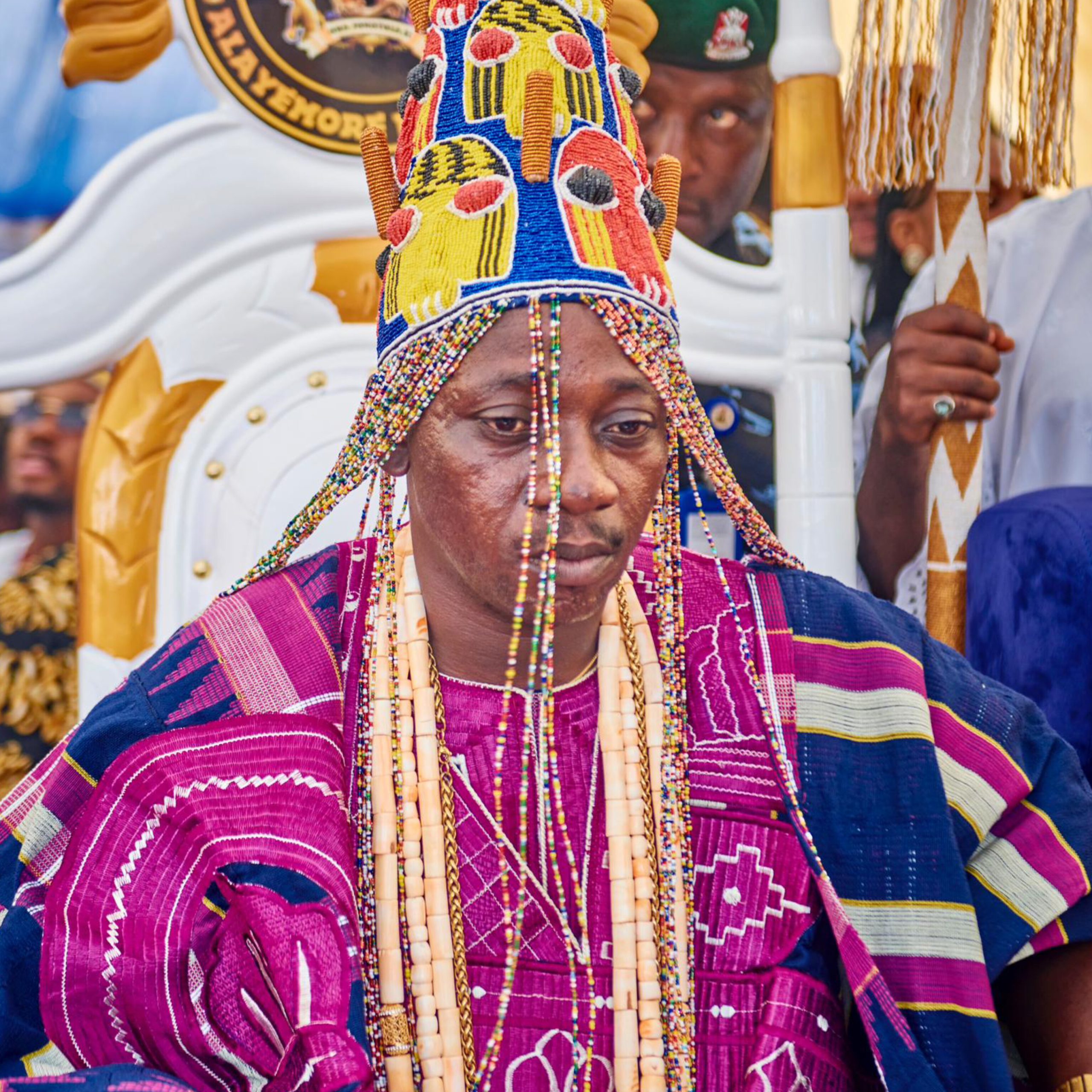
At the centre of the celebration sat the royal host, HRM Oba (Dr.) Olayinka Oyetunde Ishola Jokotola II, the Olojudo-Alayemore of Ido-Osun, who received traditional rulers, community chiefs, and visiting dignitaries paying homage to the Obalufon stool.
The palace courtyard turned into a dance floor when musical artist Oyinlomo Diamond took the stage. Backed by her live band, her performance blended deep Yoruba praise poetry (ewi) with energetic contemporary rhythm, becoming a pairing that bridged the ancient and the modern, keeping both the royal cabinet and the town’s youth dancing for hours.
Obalufon Alayemore Festival: A Deep-Rooted Historical Legacy
For residents of Ido-Osun, the Obalufon Alayemore Festival carries weight beyond entertainment, with the Alayemore of Ido-Osun serving as its foremost traditional host. The festival functions as an annual reaffirmation of the town’s lineage to Ile-Ife, the acknowledged source of Yoruba royal authority. This is a claim that matters both culturally and, at times, politically among neighbouring monarchies.
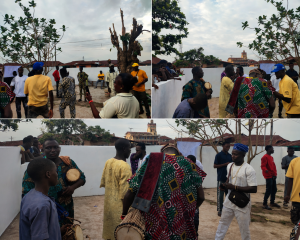
Ahead of Monday’s main event, the palace observed oro on Sunday, a rite forbidden to be witnessed by any living individual except the king, who is regarded as host not only of the festival but also of the visiting Obalufon, said in tradition to be calling on his son on the throne, Alayemore. As the Aworo explained it, the sanctity of the rite is absolute to the tune that whoever witnesses the oro has, by tradition, effectively positioned themselves as king, which is otherwise the host of Obalufon, and are sanctioned accordingly.
“This festival is our identity,” a local community youth leader remarked during Monday’s event. “Seeing our king, our elders, and artists like Oyinlomo Diamond celebrate our history makes us proud of who we are. It shows our culture cannot die.”
The visible turnout among younger attendees points to a broader pattern across Osun State, which is that Yoruba youth are using livestreaming and social media to document and circulate festivals that were once witnessed mainly in person.
Why Tradition Amid Foreign Religion?
Addressing the tension between indigenous worship and Nigeria’s dominant Christian and Muslim faiths, the Aworo argued that tradition cannot be set aside because it has long since become the town’s identity. He added that Christians, Muslims, and traditional worshippers alike pay homage to the same supreme God, simply through different channels, deities, and messengers.
Countdown to the Grand Finale on August 1
Monday’s opening was only the first act. The Obalufon Alayemore Festival builds toward a Grand Finale on Saturday, August 1, 2026, hosted by the Adenko Ruling House and expected to draw senior figures from across Yoruba royalty and entertainment. Serving as the Royal Father of the Day is His Imperial Majesty, the Ooni of Ife, Oba Adeyeye Enitan Ogunwusi (Ojaja II), who will attend in person to reaffirm the historic bond between Ile-Ife and Ido-Osun. Anchoring the entertainment segment is Fuji musician Abass Akande Obesere, billed to close out the festival for local and international attendees.
The Economic Weight of the Obalufon Alayemore Festival
Beyond its cultural and dynastic significance, the Obalufon Alayemore Festival has become a meaningful economic event for Ido-Osun. The two-week celebration typically draws a large influx of visitors, indigenes returning from Lagos, Abuja, and farther afield, alongside cultural tourists and diaspora guests who travel specifically to witness the festivities. That temporary population surge translates into brisk business for the town’s hospitality trade, food vendors, fabric and aso-ebi sellers, event caterers, and local transport operators, many of whom see their busiest fortnight of the year during the festival period.
Lodging in and around Ido-Osun fills up well ahead of the Grand Finale, and informal traders selling everything from roadside meals to souvenirs report a noticeable spike in patronage. For a town of Ido-Osun’s size, this seasonal economic activity is one of the more tangible returns the community draws from preserving and publicizing its royal heritage.
Why the Obalufon Alayemore Festival Matters
As Ido-Osun builds toward its August 1 finale when Osun Olojudo will take place, the Obalufon Alayemore Festival is doing double duty as a religious and dynastic observance for the town’s own people and as a cultural export competing for attention alongside larger, better-known Osun State festivals like Osun-Osogbo. Whether it grows into that scale or remains a smaller, locally rooted event may depend on how consistently it’s documented and reported on in the years ahead.
Editor’s note: Every effort to reach the king directly for comment proved unsuccessful, as the steady influx of visitors and guests from far and wide kept him engaged throughout. The palace’s media and communications unit, however, was helpful in the preparation of this report.