

 By
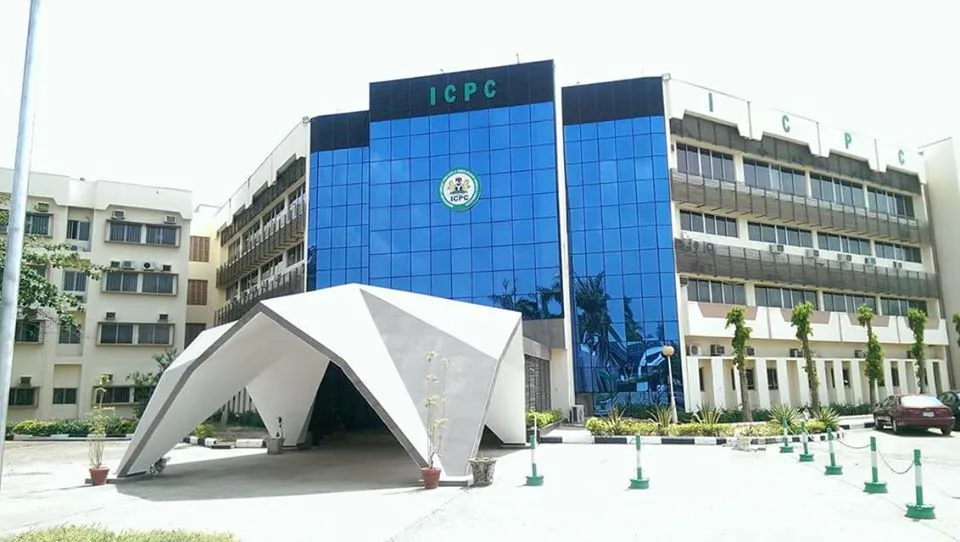
By Nigeria’s Independent Corrupt Practices and Other Related Offences Commission (ICPC) has pulled back the curtain on one of the public sector’s oldest tricks involving names on a payroll, salaries paid out every month, but no human being ever showing up to work.
In a fresh payroll verification sweep across 50 federal ministries, departments and agencies, the anti-graft body says it uncovered 908 suspected “ghost workers,” a term for fictitious or non-existent staff quietly inserted into government payrolls so someone else can collect their pay. The scheme, ICPC Chairman Musa Adamu Aliyu revealed, has allowed roughly ₦942 million in fraudulent salaries to be siphoned from public coffers.
The Force Leads, for the Wrong Reasons
Of all the institutions checked, the Nigeria Police Force recorded the highest count, with 570 suspected fake entries on its payroll, according to the ICPC boss. That single figure accounts for well over half of all the ghost workers uncovered in the exercise, raising fresh questions about internal payroll controls inside one of the country’s largest employers of labour.
The National Water Resources Authority followed at a distant second, with 80 suspected ghost names, while the Federal Ministry of Works came in with 56. The Ministry of Foreign Affairs and the Ministry of Defence rounded out the top tier, with 24 and 19 respectively.
Smaller, but no less telling, were the numbers that turned up at the Federal Ministry of Electricity and the Ministry of Industry, Trade and Investment (17 each), the Federal Ministry of Health (15), and the Office of the Head of the Civil Service of the Federation (12). The Office of the Accountant-General of the Federation and the Ministry of Interior were also flagged, though exact figures for those two were not disclosed.
One Man, Four Names, Twelve Salaries
Perhaps the most striking detail to emerge from the investigation is a single case Aliyu described where a government employee allegedly planted his wife, son, and mother-in-law on the payroll as ghost workers while also personally collecting the salaries of twelve non-existent staff. It’s a snapshot of how deeply personal and how brazen payroll fraud can get when oversight is thin.
Why This Keeps Happening
Ghost worker fraud isn’t new to Nigeria’s public sector; it’s one of the most persistent forms of leakage in government spending, thriving wherever payroll records aren’t matched against biometric or physical verification. Each recovered case is a reminder that the country’s Integrated Payroll and Personnel Information System (IPPIS), designed precisely to catch this kind of fraud, still has real gaps for insiders to exploit.
For a country routinely working to plug revenue leaks and stretch a tight budget further, ₦942 million recovered from ghosts on a payroll is a small but pointed win and a signal that the audit trail on public salaries is getting harder to fake.
Source: Punch Newspaper