

 By
By - The Osun State Government says the pro-chancellors’ body has judged the UNIOSUN vice-chancellor’s tenure extension without a full grasp of the laws involved
- COPSUN had urged Governor Adeleke to obey the Universities (Miscellaneous Provisions) Act, 2012, calling the two-year extension contrary to it
- The government says the extension takes effect on January 4, 2027, after the current tenure ends, and rests on an amendment passed by the State House of Assembly
A dispute over how long the Vice-Chancellor of Osun State University may stay in office has turned into a wider argument about whether federal law or the university’s own enabling law has the final say on how a state-owned institution is run.
The Osun State Government fired the latest shot on Monday through the Commissioner for Information and Public Enlightenment, Kolapo Alimi. His statement answered the Committee of Pro-Chancellors of State-Owned Universities (COPSUN), which had earlier called the two-year extension granted to Prof. Clement Adebooye unlawful.
What COPSUN Said
COPSUN made its position known in a communique issued after its 73rd quarterly meeting in Ibadan, signed by its chairman, Prof. Ayodeji Omole. The body told Governor Ademola Adeleke, who is the university’s Visitor, to follow the Universities (Miscellaneous Provisions) Act, 2012, as amended, and said it would formally notify him of its objection. It also asked the university’s Pro-Chancellor, who sits on the committee, to see that due process is observed so that the integrity of university governance is protected.
The Government’s Reply
The state did not dispute that federal law can override a state law where the two conflict. Its argument is that this only matters once it is shown that the federal Act reaches UNIOSUN in a way that can displace the law that created the university. That law is the Osun State University Establishment Law, 2006, passed by the state legislature.
The government pointed out that the Constitution lists university education as a concurrent matter, which lets state assemblies set up universities. It accepted that federal bodies keep a legitimate role in standards, accreditation and professional requirements, but said this should not be confused with the statutory power to govern a state university.
It also leaned on the legislative record. The State House of Assembly has passed the Osun State University Establishment Amendment Bill, 2026, and the government said this makes it wrong to describe the extension as the Visitor changing the law on his own. In the same breath, it said a Visitor cannot amend legislation by executive declaration, and that neither a professional body nor a staff union can do so through a press statement.
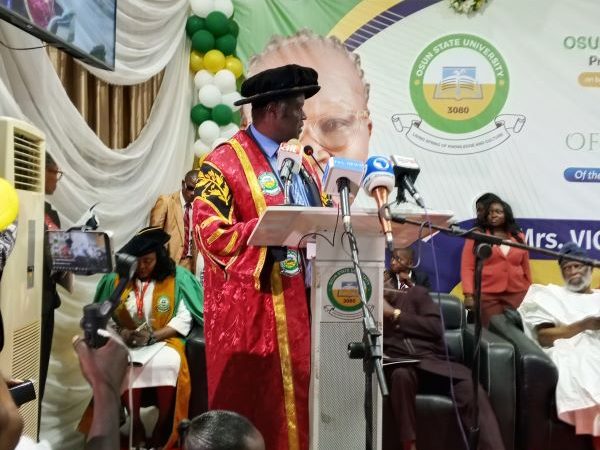
On timing, the government said Adebooye’s present tenure runs to January 2027 and that the added term starts on January 4, 2027. In its view, nothing about an already completed tenure is being changed after the fact. It added that the governor had explained the reasoning, including the consultations and legislative steps involved, at the university’s 16th convocation.
Autonomy and Its Limits
Addressing COPSUN’s worry about university autonomy, the government said autonomy is not immunity from lawful legislative action. It argued that the roles of the Visitor, Governing Council, Senate, management, staff unions, the National Universities Commission and professional regulators should stay separate, so that regulation does not blur into governance.
It described COPSUN’s use of the word “illegal” as premature and asked the committee to examine the full legislative record and the final legal status of the amendment first. The state also asked that the matter be settled through the Constitution, relevant statutes and official records, rather than through rival press statements, and called for engagement among COPSUN, the NUC, regulators, the Governing Council, unions, the Visitor and the state.
What Remains Unsettled
The government’s reply leaves the central legal question open. Whether the 2012 federal Act binds UNIOSUN’s governance arrangements, and whether the 2026 amendment survives that test, is something neither side has settled publicly. No court has ruled on it, and the government itself framed the issue as one of constitutional competence still to be established.