


 By
By Disruptions at Hormuz, Bab al-Mandeb and Suez are only half the story. Pressures are also piling up along their land borders
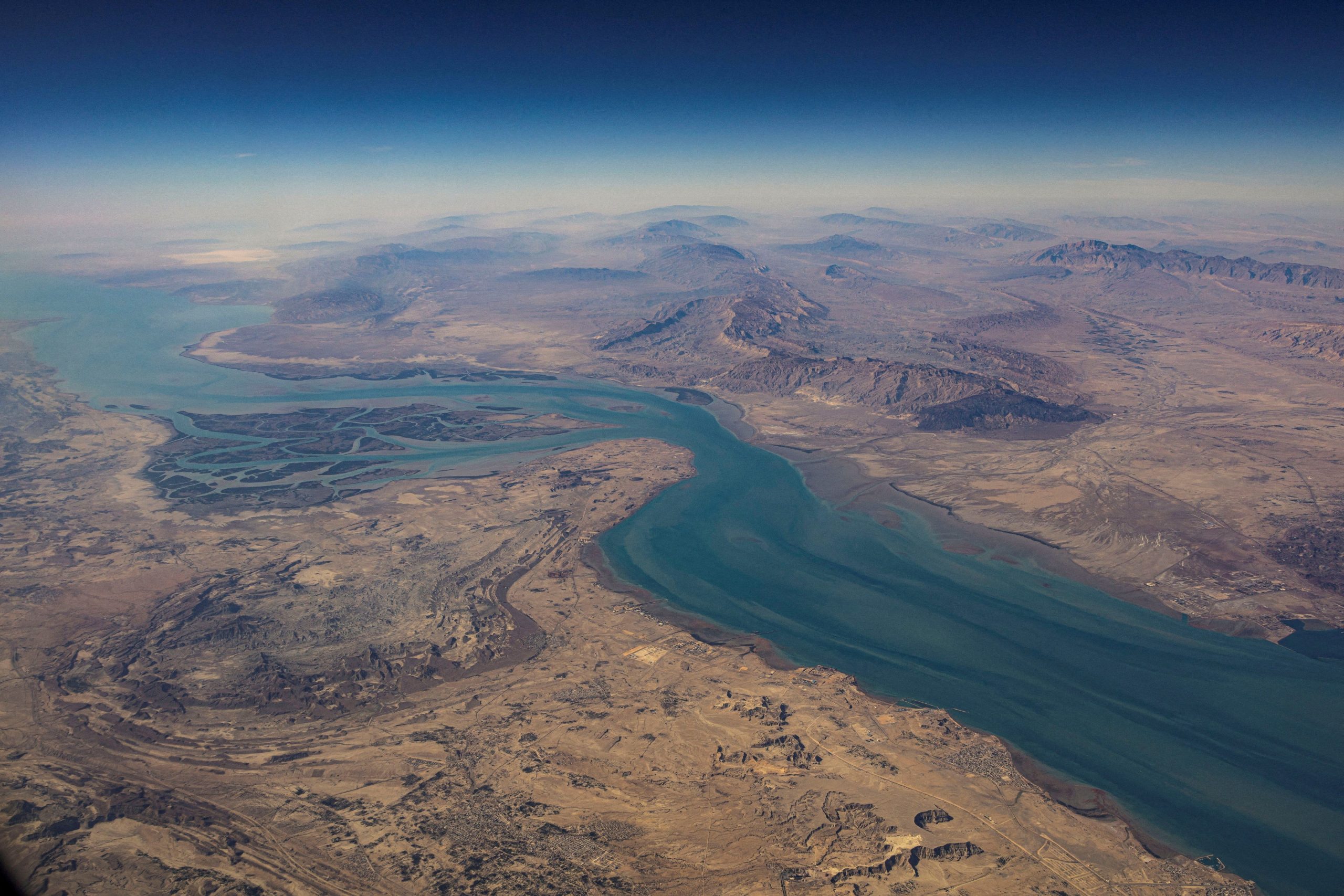
The war on Iran has turned the region’s shipping map into a weapon.
Every extra day of tension around Hormuz, every skirmish near Bab al-Mandeb, every convoy rerouted around the Cape of Good Hope instead of Suez – each adds a small charge to fuel bills, food prices and currencies.
Less discussed is that the three countries absorbing some of the worst of these shocks – Pakistan, Turkey and Egypt – are simultaneously managing tensions on their own borders, with India, Greece and Israel respectively. Instability through Sudan and Libya adds another layer of risk.
Iran, notably, is itself a neighbour to both Turkey and Pakistan. Yet while none of these states is a direct party to the war on Iran, all three are nevertheless fighting on two fronts at once: an economic front at sea, and a security one on land.
The logic is straightforward. Insurers price in the risk of a tanker being struck near Hormuz, where Iran retains significant leverage over passage. Shippers price in the risks of Bab al-Mandeb, after Houthi forces pushed into Dhubab, tightening their grip on the strait. And Suez, one of Egypt’s most reliable sources of foreign currency, has seen its revenues collapse by more than 60 percent.
None of these countries needed a new war to hurt. Pakistan’s inflation had already hit a record 38 percent in 2023, with reserves barely covering two weeks of imports. Egypt’s pound had already fallen from roughly 30 to the dollar towards 50. Turkey’s inflation had scorched past 85 percent in late 2022.
The war reopened wounds barely closed, just as each state was also watching its own borders.
Multiple fronts
Pakistan shares a 900km border with Iran, and Islamabad has spent much of this war condemning strikes by all sides and mediating a ceasefire, while also fighting an active border conflict with Afghanistan and managing last year’s brief escalation with India.
Inflation, beaten into single digits by early 2026, crept back to seven percent in February, and by August had surpassed 11 percent as oil prices surged. Reserves recovered to $22.5 billion, but the rupee’s stabilisation around 277 to the dollar remains fragile against a widening current account gap.
Pakistan manages not one border but three. The Council on Foreign Relations still ranks another India-Pakistan confrontation as a live risk after last year’s four-day exchange of strikes, while conflict with Afghanistan continues along the Durand Line, even as Islamabad plays peacemaker over Iran.
It is too exposed west to stay out of the war economically, yet too exposed east and north to call its security settled.
Turkey’s exposure, meanwhile, runs through energy and trade. Ankara has spent years positioning itself as a logistics bridge between Europe, the Gulf and Asia – a strategy that depends on sea lanes staying open.
Inflation, ground down from 85 percent to around 30 percent by early 2026, has edged back up, amid soaring energy and food prices.
According to ING Group, every $10 rise in Brent crude adds $4-5 billion to a current account gap near $45 billion, while insuring Turkish debt now costs over 300 basis points, the highest in nine months.
Ankara’s logistics bridge ambition sits alongside an escalating dispute with Greece. Officials have spent this year reasserting the Blue Homeland doctrine, aimed at preserving its maritime boundaries, and warning Athens against “reckless” moves.
Greece’s deepening ties with Israel have sharpened the rhetoric, with Foreign Minister Hakan Fidan calling Greek deployments to Aegean islands a threat, amid a return to hardline posturing unseen since 2023’s Athens Declaration.
 A ship moves through Egypt’s Suez Canal on April 16 2025.
Direct exposure
Egypt’s exposure is the most direct, being physical.
The canal that earned $9.4 billion in the last full year before Houthi attacks began was down to less than $4.7 billion in the most recent fiscal year.
Inflation, fought down from a 38 percent peak in 2023, ticked back up to around 15 percent this summer after Cairo raised fuel prices by 14-17 percent in March, alongside limits on bread prices.
The canal is only one of three pressures.
To the east, tensions with Israel over the Sinai Peninsula’s demilitarised status have been building for months; according to Israeli assessments, roughly 40,000 Egyptian troops are permanently stationed there, beyond 1979 treaty levels, though increases are coordinated with Washington and require Israeli sign-off.
While mass displacement from Gaza into Sinai has receded as a scenario, the prospect remains alive in the minds of some Israeli government figures: Finance Minister Bezalel Smotrich has spoken of building a “migration administration”, while National Security Minister Itamar Ben Gvir has unveiled a seven-year plan targeting 1.86 million departures.
To the south and west, the picture is no calmer.
Sudan’s civil war has become, per one assessment, the “fault line of Northeast Africa”, threatening Port Sudan and the wider Red Sea corridor, even as the same waters already squeeze Suez.
Libya’s fragmentation compounds this belt of instability.
Egypt and Libya are particularly exposed, since energy costs translate quickly into social pressures.
Instability in Sudan and Somalia affects Cairo’s calculations, even as it defends its interests over the Grand Ethiopian Renaissance Dam.
What emerges is a pattern, not three unconnected stories.
Insecurity at Hormuz, Bab al-Mandeb and Suez reaches a Pakistani household choosing between fuel and food, a Turkish exporter recalculating shipping times, and an Egyptian ministry watching a currency it cannot defend indefinitely.
Each shock lands on a state also absorbing pressures on its own borders, with Pakistan squeezed between India and Afghanistan while mediating over Iran; Turkey escalating with a Nato ally over Aegean waters while marketing itself as a stable energy corridor; and Egypt boxed between a tense Sinai frontier and a disintegrating southern neighbourhood.
The deeper danger is not in any single price spike, disrupted shipment or border skirmish, but in both pressures compounding at once, in states that were already stretched before the war began.
Governments with deeper reserves can absorb some of this.
Where they cannot, the costs are pushed downwards, onto workers whose wages lag behind prices, migrants whose remittances shrink, and communities living along tense borders.
The views expressed in this article belong to the author and do not necessarily reflect the editorial policy of AfrikTimes.