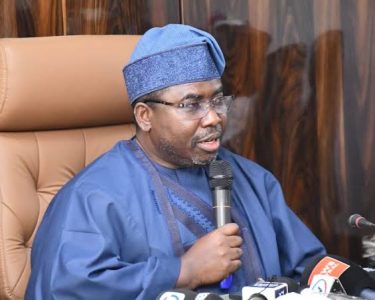

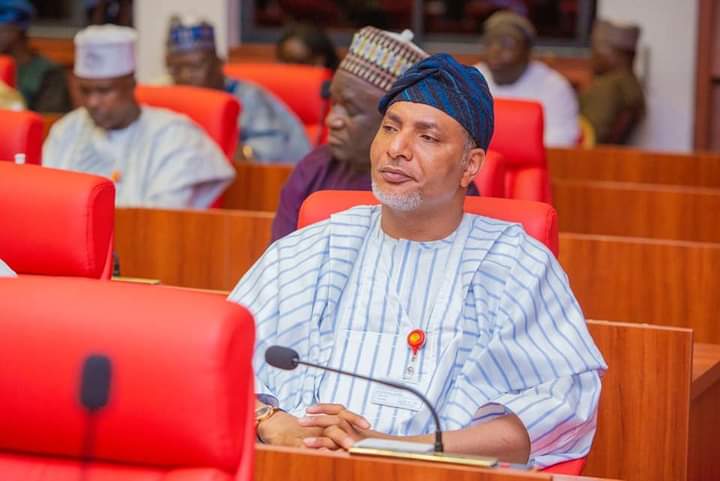

 By
By - Hundreds of APC members in Alanamu Ward defected to PDP on Saturday, continuing a pattern that began with Senator Saliu Mustapha’s own August exit after losing the Kwara governorship primary
- The official narrative, that AbdulRazaq’s Senate ambition “squeezed out” Mustapha, holds up only if you accept Mustapha’s framing of events at face value, and several details complicate that reading
- The more useful question isn’t who wronged whom, but what the episode reveals about how little actual party structure survives contact with individual political fortunes
The easy version of this story writes itself, beginning from where a sitting senator loses a governorship primary, discovers the outgoing governor is coming for his Senate seat too, and walks out the door in protest, taking hundreds of loyal foot soldiers with him. Evidently, that version has been recycling in Kwara’s local press for weeks, and Saturday’s defection from Alanamu Ward fits it neatly.
It’s also a version that asks almost nothing of Mustapha himself, treats a party-sourced “presidency directive” as fact, and quietly skips past Mustapha’s own role in creating the arrangement he now calls a betrayal. A more critical read of the same timeline produces a messier, less flattering picture for everyone involved.
The Convenient Timing of Mustapha’s Principles
Months before the governorship primary, Mustapha was not a bystander to AbdulRazaq’s Senate ambitions; he actively endorsed them.
Speaking ahead of APC’s senatorial primaries, he told party members the governor deserved the Kwara Central seat given his contributions to the party, and appealed for unity around that outcome. At the time, this cost Mustapha nothing because he fully expected to be governor by 2027, vacating the Senate seat regardless of who inherited it.
Once the governorship primary went against him on May 22, the arrangement he had publicly championed became, in his own telling, the thing that destroyed his political career. It’s worth sitting with what that sequence actually shows. Mustapha’s objection to AbdulRazaq taking the Senate seat appears tied less to a principled view of party process and more to whether he personally still needed that seat as a consolation prize. However, that is not necessarily damning due to the fact that most politicians act this way, but it’s a materially different story than “the party betrayed a loyal senator.” It’s closer to a senator whose convictions shifted exactly when his interests did.
An Unverified Claim Doing a Lot of Work
The narrative that AbdulRazaq’s Senate bid followed “a directive from the presidency concerning governors moving to the Senate under APC” comes from unnamed party sources cited in regional reporting, not from any confirmed APC national directive, Villa statement, or documented policy.
This may well be true, as several APC governors nationally have pursued similar post-tenure Senate moves, suggesting an informal pattern. However, treating it as an established fact, rather than an unconfirmed claim doing convenient explanatory work for Mustapha’s camp, is exactly the kind of thing that shouldn’t survive a skeptical read. If this directive exists in any documented form, that document hasn’t surfaced in available reporting, and until it does, “sources said” should stay flagged as exactly that.
What APC’s Process Actually Failed To Do
Set Mustapha’s personal grievance aside, and there’s a structural problem worth naming on its own terms. A party that allows a governor to simultaneously influence a governorship primary (AbdulRazaq openly endorsed a different candidate, Seriki, while Mustapha was still in the race) and then position for the very Senate seat held by one of the primary’s losers, without ever formally reconciling those two ambitions in advance, is not running a transparent succession process. It’s running an improvised one and discovering the collisions only after they happen publicly. Shockingly, the governor’s allegiance eventually tilted towards the Northern part of Kwara, crowning Rt. Hon. Danladi as the APC’s candidate for the 2027 guber poll.
Interestingly, the G15 faction’s reconciliation push in June and its subsequent failure suggest party leadership either couldn’t or wouldn’t resolve the overlap before it metastasized into defections, posing as a real institutional failure, independent of whether Mustapha’s own conduct deserves sympathy.
What the Defectors’ Own Words Reveal
Perhaps the most telling detail is what the Alanamu Ward defectors said about why they moved. Their spokesman, AbdulRazaq Adio, didn’t cite governance failures, policy disagreements, or dissatisfaction with the APC’s record in Kwara.
He said the group would follow Mustapha “wherever he chooses to pursue his political career. ” That is not a defection driven by ideas. It’s a patronage network relocating with its patron, which raises an uncomfortable question for anyone trying to read this as a story about party accountability. It’s worth asking if these members were ever APC members in a meaningful sense, or were they always Mustapha’s personal network, merely operating under the APC banner for as long as it served him?
If the latter, the 12 ward executives and hundreds of Alanamu defectors don’t actually tell us anything about APC’s standing with ordinary Kwara voters. They tell us that one senator’s personal coalition has changed its letterhead. And with all honesty to other leaders in the state, this is a part of an interesting story of a “ruling party crisis,” which is already writing itself in Kwara ahead of 2027.
The Unresolved Questions
None of this settles cleanly. It’s possible both things are true at once: that Kwara APC genuinely mishandled a predictable succession collision, and that Mustapha’s outrage is more about lost personal advantage than principle. Nigerian politics rarely offers a clean innocent party in stories like this, and a report that casts Mustapha purely as an aggrieved reformer or the APC purely as a mismanaged machine is doing the reader’s thinking for them rather than giving them the material to judge it themselves.
What can be said with more confidence is that this isn’t a slow-burning crisis with room to resolve itself. The 2027 general election is only months away, which means Kwara APC is heading into the actual contest—governorship, Senate, House of Assembly, and House of Representatives races alike—with this rupture still unhealed and its own ward structures actively hemorrhaging to the opposition in real time. There is no further primary cycle left to absorb the shock or reset the terms; whatever damage the Mustapha exit has done to APC’s grassroots network in Kwara Central is the damage the party will be campaigning with.
Whether the above proves fatal to APC’s chances in the senatorial district or whether the party’s institutional weight in Kwara is simply too large for one senator’s personal coalition to meaningfully dent, is the question actually worth watching between now and election day.