

 By
By Traders close early, passengers shun night travel, and residents ask why guns used in a campaign are still firing seven weeks after the vote
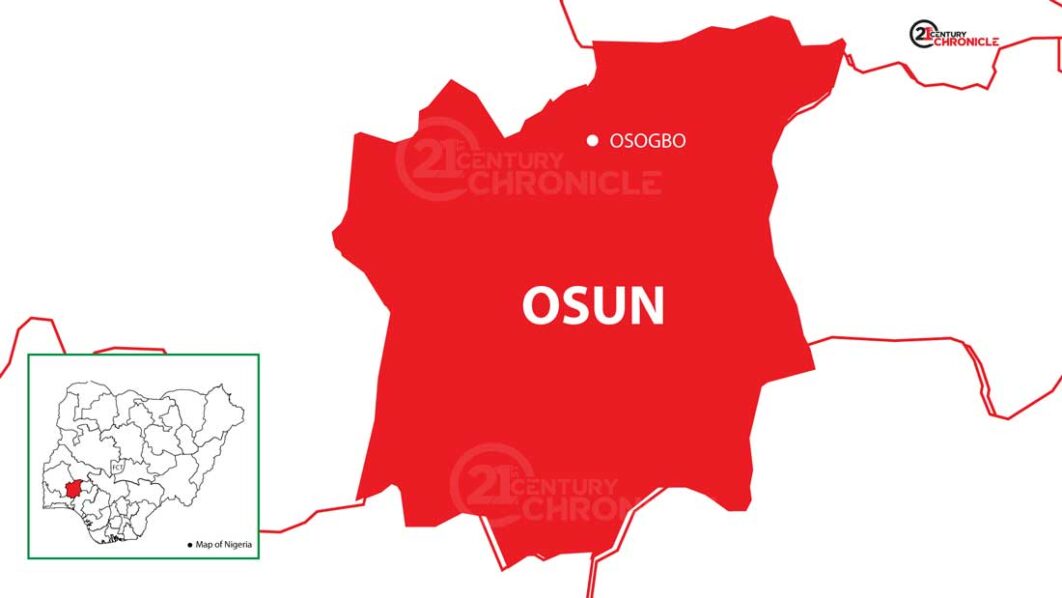
Seven weeks after the August 15 governorship election returned Governor Ademola Adeleke for a second term, peace has remained out of reach in Osun, as gunmen have struck in lounges, garages and street corners across Osogbo, Ilesa, Ikire and Ile-Ife.
Police describe most of the attacks as clashes between rival cult groups, while others are tied to a leadership contest in the state’s transport union. The result is a state where ordinary people now plan their working hours around the possibility of gunfire.
The Latest Attacks
The most recent violence came over a single weekend in Osogbo. On Friday evening, gunmen stormed a lounge at Owo-Eba, along the Osogbo to Ilesa road. The Osun State Police Command spokesperson, Abiodun Ojelabi, confirmed that two people died at the scene. They were identified as Adebayo Taoreed, popularly called Small Rugged, and Oluwaseyi Daniel, known as OSHA. Several others were taken to hospital with gunshot wounds. The command described the incident as a suspected cult clash.
On Sunday morning, another resident, Rasak Wahab, known as Ojo Iku, was shot. Police said the attack happened in the Arowomole area of Osogbo, where suspected cultists invaded the area, and that Mr Wahab was taken to hospital and was responding to treatment. Residents and some media reports placed the incident at Ita-Olokan, around 9.30am, and a number of those reports said he later died. The police statement did not support that account at the time of filing this report. Police believe the assailants belong to a rival cult group.
The Commissioner of Police, Ibrahim Zungura, described the incidents as disturbing and directed the command’s tactical teams to relocate to the Oke-Baale axis and stay there until normalcy returns. He also ordered intelligence-led raids on suspected hideouts and locations linked to criminal activity in the state capital.
These attacks followed a string of others. On August 24, nine days after the poll, two innocent people were killed by stray bullets in Ikire, according to AfrikTimes’ investigative findings, which established the whole scenario as a political attack. One of them, Nureni Sobowale, was returning to Bayelsa State with his family after a burial in Ibadan when he was shot in the head inside a moving Sequoia vehicle.
On September 13, Olalekan Oyeyemi, widely known as Emir Ajagungbade, a chieftain of the Accord Party and an aide to the governor, was shot dead along with another person at the Mayfair garage in Ile-Ife.
Two days later, Adejuwon Adekunle, known as Asa, was killed by gunmen near a recreation centre in the Dele Yes Sir area of Osogbo. In all, at least seven people have been confirmed dead in post-election violence, according to local reports. Before the election, at least ten others had been killed, with the Accord Party and the All Progressives Congress trading blame.
Life at the Parks
The motor park has become the centre of the anxiety. Parks are crowded, busy, and loosely policed, which makes them easy targets and dangerous places to be during a shootout.
Traders at the Old Garage in Osogbo say they now begin packing their goods around 6 in the evening so that they are not caught in someone else’s fight. The situation of things had gone beyond what a security meeting could solve. A commercial driver at the Ilesa Garage said passengers no longer want to board buses after seven at night, a sharp change for a park that once loaded well into the evening. He asked why people were still dying after an election that had already been decided.
Residents in other parts of Osogbo describe a similar pattern, as people now fear staying outside at lounges, relaxation spots, and street corners at night. Families in neighbourhoods close to recent shooting scenes say they keep children indoors and avoid travelling after dark. AfrikTimes observes that security has since been relaxed, leaving room for gangs to settle scores in the State capital, Osogbo, and some other parts of the State. The worst-case scenarios could end up victimising innocent bystanders and make them pay with their lives if shootings continue in public places.
In the same vein, the economic cost is already visible, as shorter trading hours causes lower daily earnings for market women, drivers, food sellers and park workers who depend on evening business. Transport operators say fewer passengers are travelling late, which shrinks revenue across the sector.
The Transport Union Dimension
Control of motor parks has emerged as a recurring theme in most of these attacks. The Ile-Ife attack that claimed the life of Mr Oyeyemi has been associated by several accounts with a dispute over park control. The state government recently moved to proscribe the National Union of Road Transport Workers, and the Assembly passed a Transport and Park Management Bill, which became law yesterday, Monday, October 5, 2026, after the Governor’s assent. The APC has described the bill as unconstitutional, a position that reflects the political sensitivity of who manages the parks and collects their revenue.
Police have so far arrested Waliyi Adejare, known as Jay Jay, whom reports describe as an ally of the factional NURTW chairman, Nurudeen Alowonle, over the Ile-Ife killing. The Amotekun Corps said its commander voluntarily handed four operatives attached to Mr Alowonle to the police for investigation. The agency stressed that the operatives were not arrested and urged the public not to sensationalise the matter before the police complete their work. The Osun APC has separately called on the police to arrest Mr Alowonle and another union figure, Olayemi Ojo, also called Sibi, a demand the police have not publicly endorsed. Governor Adeleke has directed the Commissioner of Police to arrest everyone involved in the killing, saying there would be no sacred cows.
What Government and Security Agencies Say
On September 16, the Special Adviser to the Governor on Security Matters, Samuel Ojo, said the administration would not shield anyone found to be involved in the resurgence of violent crime. He said an emergency meeting of service commanders, chaired by Deputy Governor Kola Adewusi, was attended by the Commissioner of Police, the Director of the DSS, the Army, the NDLEA, Immigration, Corrections, Civil Defence and Amotekun. According to him, the commanders gave an assurance that further loss of life would be prevented and that the peace the state enjoyed before the election would return.
Residents point out that at least three more people were shot after that assurance. Police maintain that arrests are ongoing. Before the election, the Force Public Relations Officer said 34 illegal firearms had been recovered in the state and that investigators would establish where they came from before prosecuting the owners. Police have also arrested suspected cultists and political thugs in several communities, recovering pistols, a single-barrel gun, cartridges, cutlasses, and axes from some of them. The outcome of the investigation into the source of the weapons has not been made public.
Questions Over Weapons and Political Links
Beyond the immediate security response, a broader question is being raised in public debate, as commentators and civic voices have argued that groups engaged for political purposes during the campaign were left armed once the contest ended, and that the same groups are now involved in revenge attacks.
Some have alleged that politicians recruited cult members and garage youths as security during the election, and that branded vehicles linked to political figures have been seen near crime scenes. Political parties have traded accusations over who bears responsibility; however, what is not in dispute is that unlicensed firearms remain in circulation. During one post-election attack in Ikire, assailants took a patrol vehicle and an AK-47 rifle from police officers.
Security analysts note that off-cycle governorship elections in Osun have repeatedly been followed by tension, and that illegal arms recovered after one cycle tend to resurface in the next. That history is what makes residents sceptical of promises alone.
What Residents Want
Across the affected areas, the demand is consistent, as residents want visible and sustained policing at motor parks and public gathering points during evening hours. They want arrests that lead to prosecution and not only parades of suspects. They want a credible weapons recovery programme that includes accounting for firearms that circulated during the campaign. Traders want assurance that they can stay open until their usual closing time. Transport workers want the leadership dispute in the union settled in a manner that does not put passengers at risk.
Civic groups and community leaders have also urged the state government to engage the transport unions, political parties and youth groups in a peace process that addresses the underlying contests over park revenue and political patronage. Others have called for the police to publish regular updates on investigations, so the public can see that the deaths are being pursued and not forgotten.
The Test Ahead
The government has made its commitments publicly, and the police have begun raids in Osogbo. The measure by which both will be judged is not rocket science. Residents want to know whether a trader can stay at her stall past dusk, whether a driver can load passengers at night, and whether a family can travel between towns without fear.
Until those things return, the assurances made in meeting rooms will continue to compete with what people see and hear on the streets.