

 By
By The Federal Government has unveiled a 10-point package to soften the effect of rising petrol prices on households, businesses and transporters. The centrepiece is a 30-day discount on petrol sold at NNPC Limited stations. Opposition figures promptly dismissed it as a short-term, election-driven move.
Finance Minister and Coordinating Minister of the Economy, Taiwo Oyedele, announced the measures on Thursday at a press briefing in Abuja on fuel prices and the subsidy question. He said the package was built to ease immediate pressure on Nigerians without bringing back a blanket subsidy.
The 30-Day Discount
Under the first measure, NNPC will sell petrol at a reduced margin for an initial 30 days, with public transport operators given priority nationwide. Oyedele explained that the government would essentially let petrol go at cost price and insisted this did not amount to a subsidy.
The announcement follows recent price listings from NNPC, which put petrol at N1,355 per litre in Lagos and Rivers and N1,370 per litre in Abuja.
Price Ceiling Under Negotiation
The government is also negotiating a ceiling of N1,350 per litre on the ex-gantry, or landing, cost of petrol. Under the proposed arrangement, refiners and importers would carry any shortfall when costs climb above that figure, then recover it later when crude prices or the exchange rate improve, without breaching the cap.
Oyedele described the plan as a way of smoothing prices over time, not suppressing them. He argued that stable prices reduce uncertainty, and noted that transport fares tend to rise quickly and fall slowly. The ceiling will be reviewed monthly, adjusted where necessary, and the figures made public.
The Full List of Measures
- A 30-day petrol discount at NNPC stations, with priority for public transporters.
- Increased forward sales of crude oil to local refineries as output rises, to help insulate domestic petrol prices from global swings.
- A negotiated N1,350 per litre ceiling on petrol landing cost.
- Collaboration with states to stamp out illegal road levies, pursued under the 2025 tax reform laws.
- Expanded cash transfers to vulnerable households, plus subsidised credit for small businesses and consumers.
- A faster rollout of compressed natural gas (CNG) vehicles, with operators encouraged to pass savings on to passengers.
- A possible excess profit tax on operators who exploit the situation anywhere along the energy value chain.
- A cut in unnecessary regulatory requirements and costs that raise the prices of goods and services.
- A National Strategic Fuel Reserve to secure supply and limit the impact of global disruptions.
- Better urban traffic and logistics management, including the use of NIPOST address codes to make deliveries cheaper and more efficient.
Excess Profit Tax, Reserve and Tax Relief
On the proposed excess profit tax, Oyedele said proceeds would be used only to cushion fuel price effects, through transport support or vouchers for urban minimum wage earners. He added that the government would work with the National Assembly on stronger tax relief for low-income earners under the 2027 Finance Bill.
On the strategic reserve, he said refined products would be released under clear, published rules whenever a global disruption or hoarding threatens price and supply stability. He said this would deter artificial scarcity and market manipulation while keeping a deregulated market stable.
Waiver Already Granted
The minister also disclosed that the Federal Government had granted a full waiver of taxes and duties on petrol, valued at more than N3.3 trillion for the period ending September 30, 2026.
Reiterating the government’s position, he said none of the measures restores a blanket subsidy, warning that doing so would trade long-term harm for short-term relief.
Opposition Reaction
The response from opposition quarters was swift and sharp.
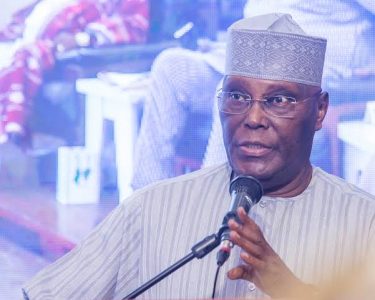
Presidential candidate of the African Democratic Congress, Atiku Abubakar, rejected the discount in a statement by the Director of Strategic Communication of his campaign council, Phrank Shaibu. He called it a “panic-driven publicity stunt” and asked what happens on “Day 31” when the discount expires. He also faulted the government for restricting the relief to NNPC stations and for not stating how much motorists would save per litre or guaranteeing that transporters would lower fares.
Atiku said the government’s move vindicated his own proposal for capped, budgeted production support tied to locally refined petrol, and promised to make life affordable if elected.
The Nigeria Democratic Congress (NDC) and the Obidient Movement were equally critical. The movement’s Director of Media and Communications, Onyeka Dike, asked what had changed after three years in which Nigerians were told the pain of subsidy removal was necessary. He linked the timing to the 2027 election and said 30 days of discounted fuel could not undo three years of hardship.
NDC National Publicity Secretary Osa Director called the move tokenism and an “election year Greek gift”. He questioned how a limited number of NNPC outlets could serve a population above 200 million, warning of congestion and possible stampedes at filling stations, and accused the administration of trying to bring back subsidy through the back door.
Background
The debate comes more than three years after President Bola Tinubu announced the end of the petrol subsidy in his May 29, 2023 inaugural address. The decision sharply raised pump prices and remains one of the defining economic policies of his administration.