

 By
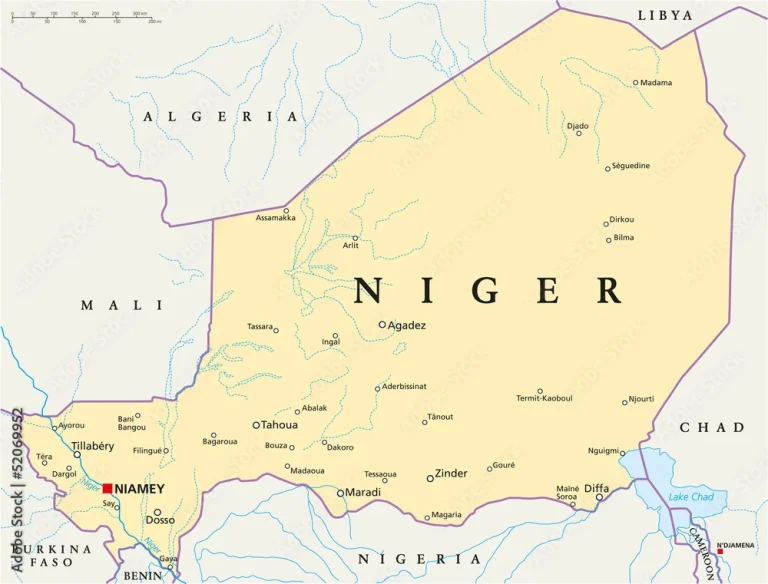
By Niger’s state broadcaster went off air on Saturday morning following a night of sustained gunfire across parts of Niamey, including near a military base by the capital’s airport that has already come under jihadist attack twice this year.
What triggered the shooting remains unclear, as Niger’s military, which has governed the country for three years since a 2023 coup and has spent roughly a decade battling jihadist insurgents, urged the public to stay calm and avoid circulating unconfirmed reports, while confirming on its official social media accounts that security forces had been mobilised to defend the country.
Residents described a chaotic scene. One person told AFP the area around Base 101 in Niamey was rocked by heavy gunfire and explosions, an account echoed by several other witnesses nearby. Footage filmed by a local journalist near the airport suggested the shooting began around 1 am local time and carried on without pause until sunrise. A resident on the western side of the city separately reported hearing intermittent small arms fire in the early morning hours, while another described watching a military vehicle attempt to head toward the base before being forced to turn back, noting that the sound of the weapons involved seemed far heavier than anything typically used by motorbike-riding militants. Social media users also posted about explosions and gunfire concentrated in the administrative district, home to both the presidential palace and the national television headquarters.
By 9am, Tele Sahel’s usual programming had been replaced by a black screen on both satellite and online platforms, and residents said soldiers had cordoned off access to the presidential palace and the television station. Online videos also showed armoured vehicles moving in to reinforce the area near the airport.
A Base Already in Jihadist Crosshairs
This is not the first time the airport area has come under fire this year. In January, the Islamic State in the Sahel struck the base, followed in late June by an assault from the rival Group for the Support of Islam and Muslims, al-Qaeda’s regional affiliate. The two groups, beyond targeting civilians and Niger’s military, have also been locked in their own competition for dominance across the wider Sahel region.
Authorities said the January attack left 20 assailants dead and four soldiers wounded, an assault that junta leader General Abdourahamane Tiani later attributed to a systemic weakness that had left the army’s air capabilities exposed. The June assault, according to the defence ministry, was more costly still, killing at least 11 soldiers and two civilians alongside 22 of the attackers. Niger’s army repelled both incidents.
Why the Location Matters
The Islamic State affiliate and its al-Qaeda rival also operate across the borders in Burkina Faso and Mali, both of which are likewise run by military juntas that came to power through coups and share Niger’s pivot away from established Western allies, France in particular, toward closer security ties with Russia. All three countries have since withdrawn from the regional bloc ECOWAS.
Base 101 itself carries particular weight in that realignment. Located inside Niamey’s international airport complex, it houses the headquarters of Russia’s Africa Corps contingent stationed in the country as well as the command structure for the joint force of the Alliance of Sahel States, the security pact linking Niger, Burkina Faso and Mali. The base also drew attention late last year and into January over a large shipment of uranium concentrate that had been held there awaiting export, a shipment that, as of the latest reporting, has shown no sign of having moved since.