

 By
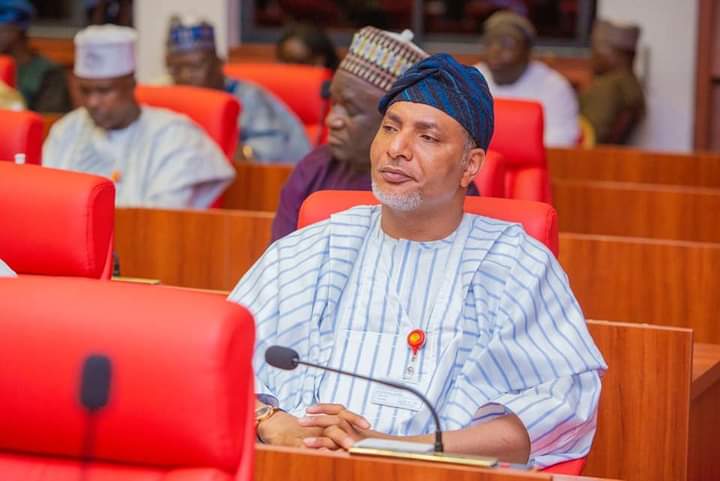
By The senator representing Kwara Central Senatorial District, Saliu Mustapha, has formally resigned from the All Progressives Congress (APC) and defected to the Peoples Democratic Party (PDP), receiving the party’s senatorial ticket for the district hours after his exit from the ruling party, in a fast-moving political realignment that has thrown Kwara APC’s ranks into open crisis ahead of the 2027 general elections.
The Resignation
Mustapha announced his departure from the APC in a post on his verified Facebook page late Thursday, August 20, attaching a resignation letter dated August 14, 2026, and addressed to the ward chairman of Gambari Ward I, Ilorin East Local Government Area. In the letter, he cited unspecified “recent developments” within the Kwara APC as his reason for leaving. He said the move followed weeks of consultation with stakeholders, supporters, and constituents across the senatorial district.
He framed the decision as consistent with his long-held political philosophy that politics should be anchored on people, principles, and purpose, adding that when a political platform no longer aligns with those convictions, the honourable course is to seek a new one. He thanked President Bola Tinubu and the APC leadership for the relationships and experience gained during his time in the party. He assured his constituents that changing platforms would not diminish his commitment to representing them.
Mustapha, who also holds the traditional title of Turaki of Ilorin Emirate, was elected to the Senate on the APC platform and had been one of the prominent figures in the G15/TOP group, a bloc of aggrieved APC stakeholders in Kwara State.
Swift Move to PDP
The resignation proved to be only the first step. In a video sighted by journalists on Friday, August 21, Mustapha was formally handed the PDP’s Kwara Central senatorial ticket by the party’s state chairman, Issa Bawa, confirming him as the PDP’s candidate for the district ahead of 2027, a turnaround that came barely hours after his APC exit became public.
The move had reportedly been building for weeks. Reports from as early as August 10 indicated that the crisis within Kwara APC had deepened and that Mustapha was weighing a defection, following his defeat in the party’s governorship primary, his failure to secure the APC’s Kwara Central senatorial ticket, and mounting internal disagreements ahead of 2027.
Sources say the PDP’s Kwara Central ticket had effectively been held open for Mustapha. Speculation intensified when the party’s then senatorial candidate for the seat, Yinka Otukoko, signalled a willingness to step aside, responding to a post on the WhatsApp platform “Kwara Commission” by suggesting his ticket was meant for either Mustapha or another aspirant, Mashood Mustapha (popularly known as “MM”), a former federal lawmaker. Billboards bearing Mashood Mustapha’s image had also surfaced around August 12, fuelling uncertainty over who the PDP would ultimately settle on. An unnamed senior PDP stakeholder had at the time suggested MM’s name was “pencilled down” for the slot, pending a final party decision. That calculation has now been overtaken by Saliu Mustapha’s emergence as the confirmed candidate.
With the ticket secured, Mustapha is now positioned for a keenly watched contest against Governor AbdulRahman AbdulRazaq, the APC’s candidate for the same district, in 2027, a race expected to carry broader implications for the balance of political power in Kwara State heading into the governorship and House of Assembly elections.
PDP Uses Defection to Attack APC and Governor AbdulRazaq
The Kwara PDP wasted no time capitalising on the development. In a statement issued Friday by the party’s State Publicity Secretary, Olusegun Adewara, the PDP characterised Mustapha’s exit, he was a founding member of the APC and a key figure in the 2013 merger that created the party, as proof of deep leadership failure under Governor AbdulRazaq.
Adewara accused the governor of presiding over a fractured and internally weakened party that was increasingly rejected by ordinary Kwarans, declaring that its “centre can no longer hold.” He went further, describing the Kwara APC as a “runaway car heading to doom” and alleging that AbdulRazaq had grown uncomfortable with the political stature of rivals within his own party, treating them as threats to be sidelined.
The PDP statement also invoked the earlier resignation of the Haske of Lafiagi, Ambassador Kolo Jiya, along with other APC figures from Kwara North, as further evidence that prominent stakeholders were losing confidence in the governor’s leadership. Adewara used the moment to appeal directly to other APC members he suggested were staying out of fear or reluctance, urging them to “summon courage” and leave what he called the “skidding APC vehicle” before it lands them in political trouble.
The party positioned itself, under the leadership of former Senate President Bukola Saraki (the Waziri of Ilorin), as the platform for restoring what it termed purposeful leadership and shared prosperity in Kwara State.
APC’s Response
Kwara APC spokesperson Babatunde Olawale said, when contacted, that the party had not yet issued an official reaction to Mustapha’s resignation, adding that any position would be communicated in due course. Efforts to reach Governor AbdulRazaq directly were unsuccessful; his Deputy Chief Press Secretary, Mashood Agboola, reportedly ended a call with a correspondent seeking comment before he had finished speaking.
Context: A Deepening Kwara APC Crisis
Mustapha’s defection lands amid a broader wave of political realignment inside the Kwara APC ahead of 2027, with growing internal disagreements and a string of high-profile exits, including Ambassador Kolo Jiya’s, signalling wider discontent within the party’s structure in the state. His departure removes a sitting senator and long-standing party founder from APC’s ranks and hands the PDP a significant name in its bid to challenge APC dominance in Kwara Central.