

 By
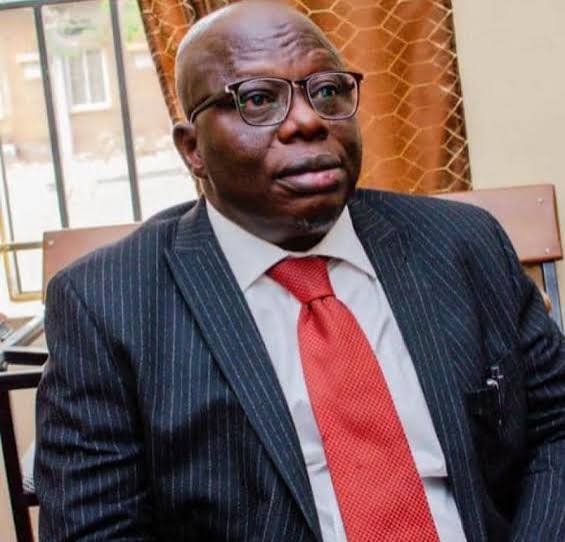
By Osun State’s finances got a public airing on Monday, and the picture that emerged wasn’t entirely flattering. At an audit forum in Osogbo attended by heads of Ministries, Departments and Agencies, civil society groups, and professional bodies, State Auditor-General Kolapo Idris laid out his findings on the state’s 2025 accounts, and his headline recommendation was to cut off overhead funding to any ministry that can’t properly account for its books.
The report identified a familiar list of problems behind that call. Idris pointed to negligence by some internal auditors, missing or improperly prepared accounting documents, fictitious expenditures, wrongly computed statutory deductions and outright abuse of approval and payment processes. His prescription combined discipline with development, more training for accountants and internal auditors to sharpen service delivery, alongside a harder line on the ministries themselves.
“Direct stoppage of release of overhead to ministries that have not rendered proper accountability as noticed by the Auditor-General,” he recommended, pairing it with a call for total adherence to standards guiding the preparation of accounting books and records, and a stronger inspectorate and management services department within the Accountant-General’s office. Still, he was careful to note the state wasn’t starting from a bad place. “Sincerely speaking, over the years, Osun State has been doing well in following necessary financial regulations and appropriation laws,” he said.
Motor parks are pocketing everything
If one section of the report stood out for sheer specificity, it was Idris’s breakdown of what’s happening at motor parks across the state, a case study in revenue simply walking away. By law, he explained, 30% of whatever accrues at motor parks belongs to the operators, while 70% is meant to flow back to the government. In practice, none of it does.
“Up to today, none of them has ever given anything to the government of the state. They take all 100%. That is why you see them living fat,” Idris said, describing a system where the state is supposed to control the flow by printing the receipts operators use, yet still ends up with nothing to show for it. He added that the state, for its part, had committed to maintaining the garages, providing security, toilets, lighting and other basics to keep them habitable, an obligation that makes the operators’ refusal to remit anything back sting a little more.
Beyond the motor parks, Idris pushed for a more aggressive revenue drive targeting the informal sector broadly. “Thousands of informal sectors need to be captured,” he said, arguing that internal revenue authorities need to properly capture these operators so government can collect what it’s owed. He closed his remarks by charging stakeholders to work together toward building a more robust Internally Generated Revenue base.
The numbers behind the warning
The financial detail Idris presented gives the recommendations their weight. Osun’s total revenue inflow for 2025, spanning FAAC receipts, Value Added Tax, IGR, capital receipts and development partners’ funds, came to ₦363,628,291,927.66. Total expenditure for the year, covering personnel costs, overhead, other recurrent spending and capital expenditure, stood higher, at ₦385,682,554,674.77. The state opened 2025 with a balance of ₦60,205,607,471.63 and closed it at ₦38,151,344,724.52, a drawdown that lines up with a year in which spending outpaced revenue.
That trajectory sits against a backdrop of genuine revenue growth. PUNCH Online had earlier reported that Osun’s Internally Generated Revenue more than doubled in 2024, climbing to ₦54.7bn from ₦25.3bn the year before, with total 2024 inflows reaching ₦306.8bn, made up of ₦159.7bn in statutory allocation, ₦66.8bn in VAT, and ₦25.4bn in capital receipts and development partners’ funds.
The numbers tell a state that has been growing its revenue base but still spending faster than it takes in, one where the Auditor-General’s warning about loose accounting and unclaimed motor park revenue reads less like a footnote and more like the explanation for why the gap keeps showing up.